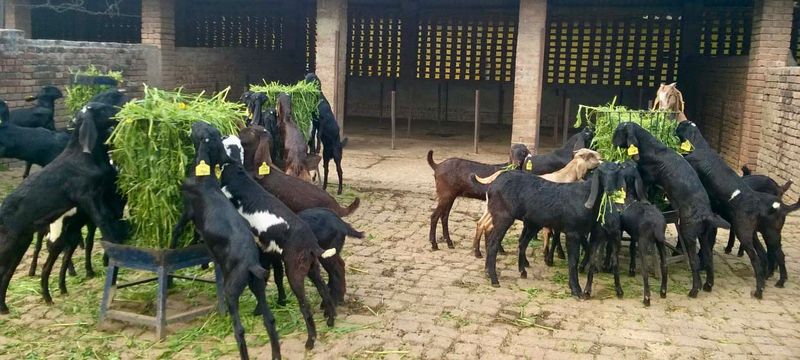
Goat farming is emerging as a promising agri-business model across the state, offering rural households a sustainable source of income, nutrition and resilience, experts say.They say March and April are ideal months for starting a goat unit in the state because of moderate temperatures and abundant fodder availability, which ease management and reduce initial costs.Punjab Agricultural University’s Krishi Vigyan Kendras (KVKs) are promoting the practice, citing low investment, quick returns and adaptability to diverse farming systems.Often dubbed a “poor man’s cow”, goats are versatile animals that thrive on minimal resources. They provide meat, milk, fibre and manure, making them ideal for integrated farming, the experts add.“With scientific housing, balanced feeding and preventive healthcare, goat farming can evolve from a traditional practice into a profitable enterprise,” says Aparna Gupta, an expert from KVK, Ropar.The experts are encouraging farmers to adopt semi-intensive systems that combine controlled grazing with stall feeding, well-suited to the state’s climatic conditions.According to the experts, a scientifically designed shed, adequate ventilation and access to fodder cultivation are key to maintaining productivity.They say an acre of land can support 25-30 goats, including fodder production. Breeds like beetal, barbari and jamunapari are recommended because of their high reproductive potential and market value.Gupta says goats reach sexual maturity within a year and typically produce one to two offspring per parity. With a gestation period of 150 days, a herd of 50 goats can yield a monthly profit of ₹363 per animal, making it viable even for small and marginal farmers, adds Gupta.She says procurement of quality breeding stock is facilitated through institutions like Guru Angad Dev Veterinary and Animal Sciences University here and its regional centres. Adult goats weighing 30-35 kg fetch Rs 12,000 to Rs 17,000, and government assistance is available for larger units.The experts say goat farming is a strategic investment because of strong demand for chevon and flexible marketing options.The KVKs and Farm Advisory Service Centres across the state are guiding farmers in transforming this age-old practice into a modern agri-business, says Satbir Singh, an expert from a KVK.He says goat farming offers far more than supplemental income, it provides stability, flexibility and resilience in an increasingly uncertain agricultural landscape. With low investment, quick turnover and assured markets, goats fit into diversified farming systems, Sings says, and adds that their high reproductive potential and adaptability mean even small and marginal farmers can generate steady income through it.Goat farming ensures quick capital recovery and a steady cash flow, making it a “walking ATM” for small and marginal farmers, adds Singh.