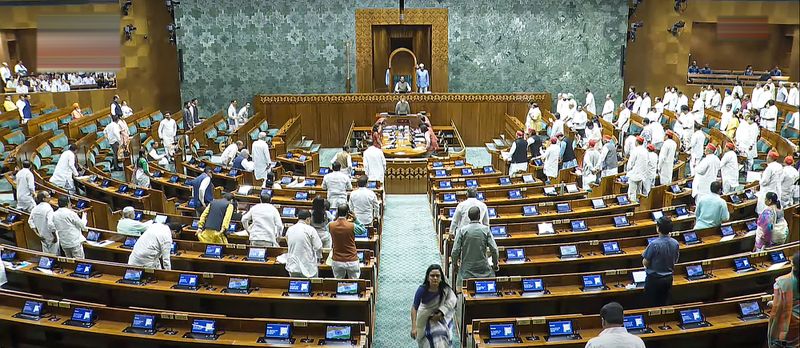

The government has proposed a new “designated authority” to take over, manage and sell assets created from foreign funds by NGOs whose licence under the regulations of the Foreign Contribution (Regulation) Act (FCRA) has been cancelled or hasn’t been renewed. These assets may initially be held temporarily and can eventually come under permanent government control.These are some of the key provisions of the Foreign Contribution (Regulation) Amendment Bill 2026, which was introduced by the government in the Lok Sabha recently. The legislation was termed “dangerous and draconian” by the Opposition members.The amendment empowers the government to act decisively in cases where registration is not restored. It can transfer such assets to a government department or sell them. The proceeds from any sale will be deposited into the Consolidated Fund of India, marking one of the strictest provisions in the proposed law.The Bill further introduces automatic cessation of the FCRA registration if an organisation fails to apply for renewal, its renewal application is rejected, or the validity period expires. Once the registration ends, the entity cannot receive or utilise foreign funds.In a significant shift, the government will now prescribe timelines for both receiving and utilising foreign contributions. This means organisations will no longer be allowed to hold foreign funds indefinitely.During the suspension of the FCRA registration, organisations will face strict limits, and will not be allowed to sell, transfer or mortgage assets created from foreign funds without prior government approval.The Bill mandates that no investigation under the FCRA provisions can begin without prior approval from the Centre. However, the amendment reduces penalties for violations. While earlier provisions allowed for up to five years of imprisonment, the new Bill caps punishment at one year, or a fine, or both. The government has described this as a rationalisation of penalties.Besides, the responsibility for FCRA violations will not be limited to the organisation alone. Directors, trustees, governing body members, office-bearers and any individual involved in management will also be held accountable under the law.If an organisation shuts down, becomes inactive or ceases to exist, its foreign funds and assets created from them will permanently vest with the government through the designated authority.As Minister of State for Home Nityanand Rai introduced the Bill in the Lok Sabha on March 24, several Opposition members objected to it, with Congress MP from Chandigarh Manish Tewari alleging that it gives “wide and unguided executive control over property”. TMC MP Pratima Mondal termed it as “draconian” and “dangerous”.