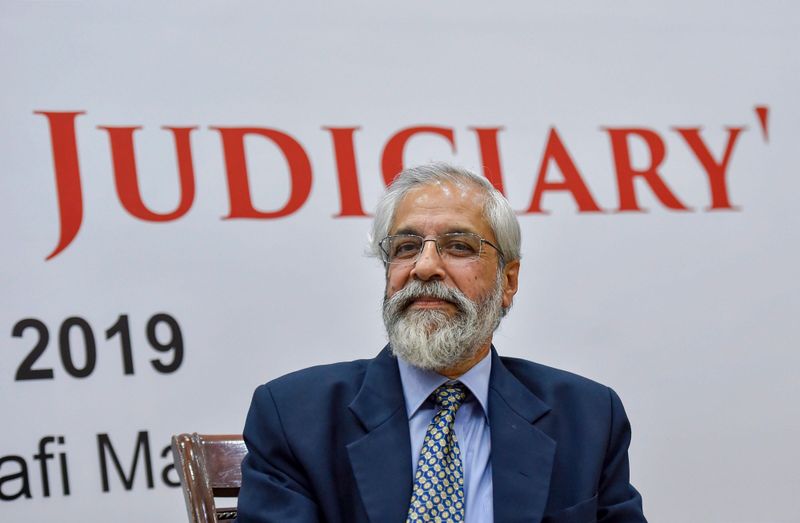

Former Supreme Court judge Justice Madan B Lokur on Tuesday said the ruling dispensation has “taken the Collegium system for a ride”.Speaking at a conference organised by the Association for Democratic Reforms (ADR) and National Election Watch (NEW) in the national capital, he said several recommendations made by the Supreme Court Collegium were either rejected outright or kept pending by the government for years.“Recommendations made by five judges of the apex court, presided over by the Chief Justice of India, were outright rejected or kept in abeyance for three to four years by the government. In one case, a judge had to wait eight months for clearance,” Justice Lokur said.“Certainly there are problems with the collegium system. That is why we are now at a point where there is talk of removing the current Chief Election Commissioner (CEC),” he added.Justice Lokur also flagged the lack of a clear procedure for removing the Chief Election Commissioner.“There is no clear-cut procedure laid down to remove the CEC, except on the recommendation of the election commissioners,” he said.“The CEC can only be removed in the same manner as a Supreme Court judge through impeachment. According to the law, the process can begin on the recommendation of election commissioners, but the circumstances under which such a recommendation can be made are not specified. Moreover, it is also unclear whether such a recommendation would be binding on all parties concerned,” he added.He suggested that the Chief Election Commissioner should instead be appointed through a two-thirds majority of both Houses of Parliament in a joint session.“Most importantly, the CEC should be acceptable to all parties,” he said.Justice Lokur also advocated bringing back election tribunals to expedite the hearing of election petitions and improve governance and grievance redressal.He noted that the pendency of election-related cases in courts reflected a “sorry state of affairs”.“Petitions against election winners, including those accused of corruption and other crimes, remain pending in courts for months. What would have happened if former Prime Minister Indira Gandhi’s election petition had been decided five years later?” he asked.“We need a system where election petitions are decided within a stipulated time,” he said.Suggesting a possible solution, he said retired judges could be brought on board to constitute election tribunals to handle such disputes.Election tribunals were specialised judicial or quasi-judicial bodies established to resolve disputes and complaints arising from elections, including issues such as candidate disqualification, voter fraud and procedural irregularities.However, the 19th Amendment to the Constitution (1966) abolished these tribunals and transferred jurisdiction over election petitions to high courts in an effort to ensure more consistent legal adjudication in disputes relating to parliamentary and state legislative elections.