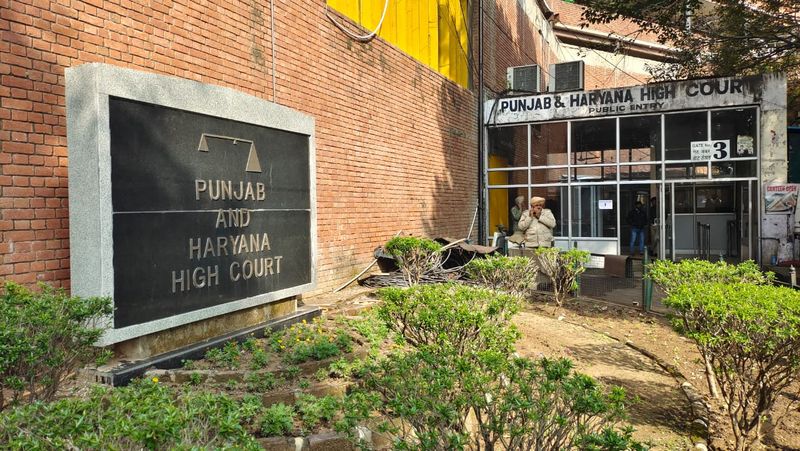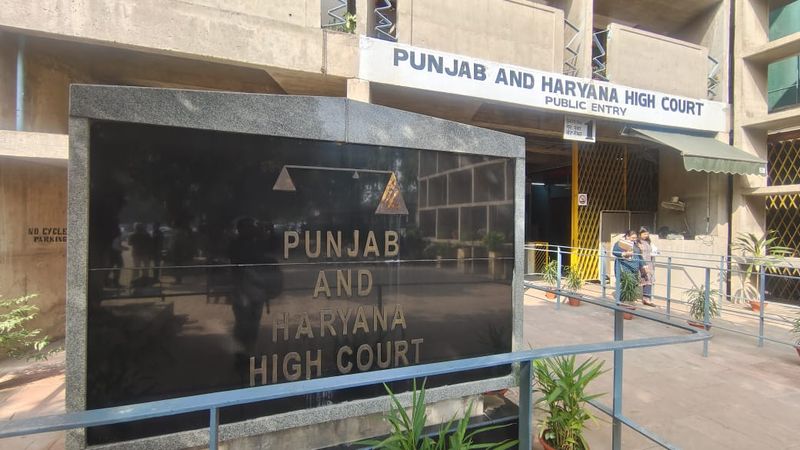

A month after the Punjab and Haryana High Court came down heavily on Punjab and Haryana for continuing violation of Supreme Court’s 2014 judgment on curbing arbitrary arrests particularly in matrimonial disputes, Justice Sudeepti Sharma on Thursday termed their compliance affidavits “false” and “purely paperwork”.Justice Sharma also directed Chief Secretaries and DGPs of both the states to file affidavits detailing the measures taken on ground since the receipt of the ‘Arnesh Kumar judgment’, including exact dates of communications, training, and awareness programmes for police officials.Justice Sharma made it clear that record demonstrating compliance was required to be produced in black and white, showing original correspondence and actions taken from the date the judgment was received. A complete list of officials against whom show-cause notices, charges, or suspension orders were issued for non-compliance was also directed to be submitted. The UT Administration was also directed to furnish similar records.At the onset, Justice Sharma observed that circulars and letters placed before the bench were not accompanied by actual training or awareness programmes for police officers. “Anything that you have put on the notice board of a police station? Any lecture conducted? The officials who have come to assist you… they don’t know anything. Just ask them about the Arnesh Kumar judgment. They don’t know anything… This is not actual compliance… You are taking out fake letters,” Justice Sharma reprimanded.The court made it clear that the states could not claim ignorance of their obligations following Supreme Court judgments. “Do not say you were not given instructions regarding these judgments. Whenever any judgment is passed, you are duty bound to comply with it,” Justice Sharma observed.Referring to the binding nature of the Supreme Court’s directions, Justice Sharma asserted that police officers were duty-bound to comply with judgments promptly and that mere charge-sheeting of erring officials did not absolve the top administration. “The contempt is made out against Chief Secretaries and the Directors-General of Police… who are required to ensure compliance,” Justice Sharma said.“All your Chief Secretaries and DGP of both the states are liable for contempt…. I want to give them one chance. Otherwise… I’ll call them, and the charges would be framed against both of them,” Justice Sharma added.The bench also criticised the perfunctory approach of treating judgments as mere administrative exercises. Referring to claims on generating awareness regarding the judgment, Justice Sharma asserted: “Special awareness? As if it is awareness regarding child marriage”. The bench added that awareness was required to be substantive, directed at actual compliance, not just paperwork.The bench, during the course of hearing, also noted repeated discrepancies in dates, orders, and standing instructions submitted in affidavits, with some documents dating years after the judgment, or copied without evidence of implementation.Justice Sharma asserted that the affidavits were “signed without reading” and in the absence of awareness regarding the actual compliance status. “They’ve just signed it. They have been not even read it. I can ensure you. If I call them and ask them what is written in this, they will look here and there,” the bench asserted.The directions and observations came in a contempt petition relating to non-compliance of the directions issued by the Supreme Court in “Arnesh Kumar v State of Bihar and others”. The high court noted that it was “very frequently observed” that contempt petitions were being filed before it against the states of Punjab and Haryana for disobedience of the Supreme Court’s judgment dated July 2, 2014.The apex court, in its judgment, had asserted its endeavour was to ensure that police officers did not arrest accused unnecessarily and Magistrate did not authorise detention casually and mechanically. It had asked the state governments to instruct police officers not to automatically arrest in cases under Section 498-A of the IPC on subjecting a married woman to cruelty and other offences punishable up to seven years.The police officers were also directed to be provided with a check list. They, in turn, were asked to forward the check list “duly filed” and also “furnish the reasons and materials which necessitated the arrest”, while producing an accused before the Magistrate for further detention.The Magistrate, while authorising detention of the accused, were asked to peruse the report furnished by the police officer and authorise detention only after recording satisfaction. Among other things, the judgment added that the decision not to arrest an accused was required to be forwarded to the magistrate within two weeks from the date of the institution of the case.