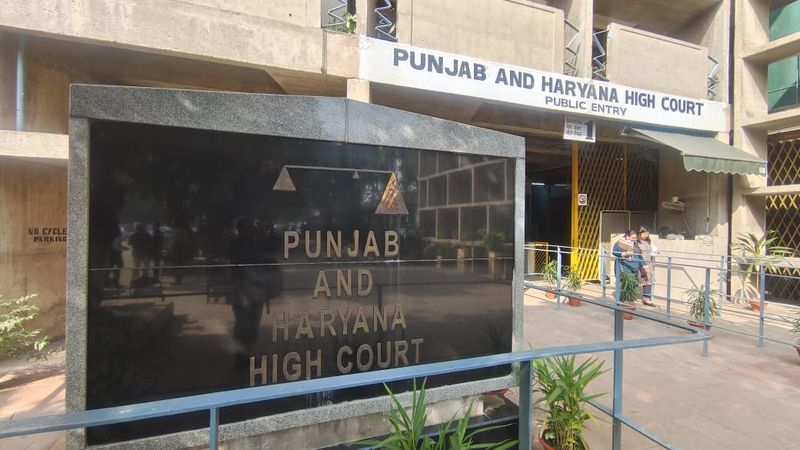

Approximately 10,458 candidates selected against 12,341 posts across 24 groups — including Staff Nurse, Junior Coach, Electrician, Fire Operator-cum-Driver —will now continue in service. Acting on a bunch of petitions, the Punjab and Haryana High Court has held that the earlier decision cancelling their recruitment was wrongly applied to them. The ruling brings relief to the government employees in Haryana living under uncertainty since May 2024 after their appointments were set aside.The relief came after the division bench of Justice Ashwani Kumar Mishra and Justice Sudeepti Sharma allowed 57 review petitions and held that the earlier judgment cancelling the entire CET-based recruitment had been wrongly applied to these 24 groups. The court made it clear that the earlier decision would now operate only for “Groups 56-57”, where the impact of the disputed criteria was found to be material. The bench, among others, was assisted in the matter by senior advocates Chetan Mittal, DS Patwalia, Rajiv Atma Ram Akshay Bhan and Rupinder Khosla.The controversy dates back to May 5, 2022, when the Haryana Government introduced the Common Eligibility Test (CET) policy for recruitment to Group-C and Group-D posts through the Haryana Staff Selection Commission. The process had two stages— CET-I as a qualifying test and CET-II for final selection — and included up to five additional marks under a “socio-economic criteria”. This provision was challenged, and on November 16, 2023, the high court stayed its operation. Subsequently, on May 31, 2024, a division bench struck down the criteria as violative of equality provisions and set aside the entire recruitment, directing fresh selection within six months. The state’s challenge was dismissed by the Supreme Court on June 24, 2024, leading to the termination of thousands of appointments and triggering the present round of review petitions by affected candidates.On re-examining the matter, the bench drew a clear distinction between Groups 56-57 – where the candidate-to-post ratio was very high and socio-economic marks materially affected shortlisting – and the remaining 24 groups, where candidates were fewer than four to five times the posts.For these 24 groups, all eligible candidates were permitted to appear in CET-II without any shortlisting; no socio-economic marks were actually granted in CET-II results declared on February 5, 2024, and March 11, 2024. Besides this, the commission categorically confirmed through affidavits that 10,233 selected candidates were common to both lists with and without socio-economic marks. The court found that the original judgment’s adverse findings related specifically to Groups 56-57 and were erroneously extended to the 24 groups.It also noted that none of the selected candidates had been impleaded or heard before their appointments were cancelled, causing “actual prejudice”.Rejecting objections on maintainability, the bench ruled that the dismissal of the state’s plea by the Supreme Court without grant of leave did not bar the high court from reviewing its own judgment.In its operative order, the bench observed despite repeated opportunities not a single instance was brought to the court’s notice where a candidate qualifying in the CET-I was denied the opportunity to appear in the CET-II. Marks under socio economic criteria had, thus, otherwise no impact. The division bench, therefore, erred in quashing the CET results. The candidates selected and appointed against the posts included in 24 groups shall be allowed to continue in service in accordance with law.