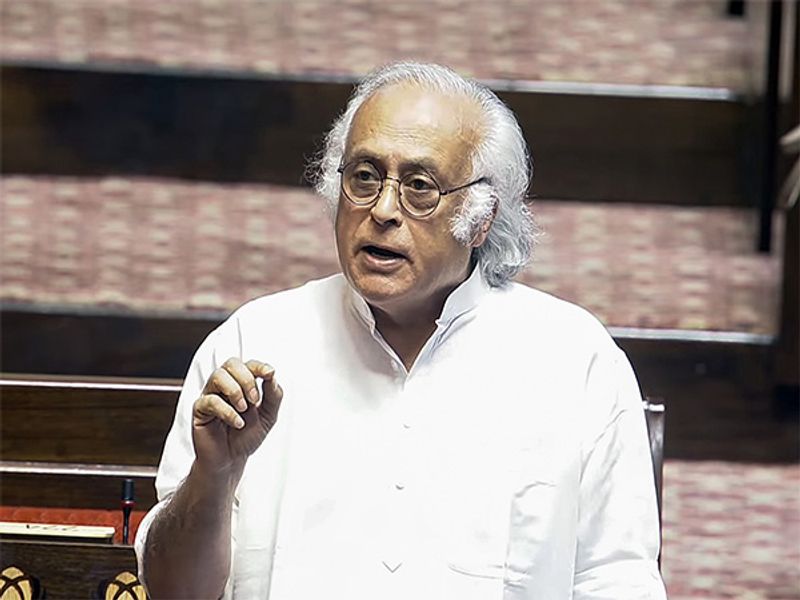
The Budget session began with noise instead of numbers, and protest instead of policy. As repeated disruptions paralysed the Lok Sabha, the Congress on Thursday drew a hard line, saying Parliament could not function if the Leader of the Opposition was denied the right to speak on what it called the most important business of the House.The party said the standoff was no longer about procedure or decorum, but about the basic working of Parliament. According to the Congress, all Opposition parties were united on one point: if Rahul Gandhi was not allowed to speak during the Motion of Thanks to the President’s Address, there was little chance of the House running meaningfully.Congress general secretary in-charge of communications and Rajya Sabha MP Jairam Ramesh said the obstruction had become the single issue dominating the Opposition’s protest. He claimed Rahul was cut short when he began raising what the party described as core concerns related to national security, foreign policy and defence.Ramesh alleged that senior members of the government showed no willingness to listen. He said the PM, the Home Minister and the Defence Minister were all unwilling to hear the Opposition leader out, turning the debate into a one-sided exercise.Taking the protest beyond the Lok Sabha, the Congress pointed to coordinated action in the Rajya Sabha. Ramesh said Leader of the Opposition in the Upper House Mallikarjun Kharge had underlined that both Houses function as connected pillars of Parliament. He said undermining one, weakened the other.To underline that point, Opposition MPs in the Rajya Sabha staged a walkout, protesting what they called the systematic denial of space to the LoP in the Lok Sabha. Ramesh said Rahul had not been allowed to speak for four consecutive days, a situation the Opposition believes strikes at the heart of parliamentary democracy.The Congress also sought to turn the government’s argument back on the BJP by invoking its own past. Ramesh reminded Prime Minister Narendra Modi and the ruling party of events from June 10, 2004, when then Prime Minister Manmohan Singh was prevented by the BJP from replying to the Motion of Thanks.He said although a debate had taken place that year, Singh was blocked from delivering his reply. According to Ramesh, the then PM addressed the issue the following year, on March 10, 2005, when he thanked the President twice, covering both 2004 and 2005, and publicly recalled how he had earlier been stopped from responding.Drawing a contrast, Ramesh argued that the current situation was more serious. He said the debate itself had not taken place this time, and the Opposition leader was being silenced at the very start of the Budget session.“This is not a minor disruption,” he suggested, and said the Motion of Thanks sets the tone for the entire session. If the Leader of the Opposition was denied the floor at this stage, Parliament was reduced to a formality rather than a forum for scrutiny, he argued.Later, Ramesh shared a video clip on X of Singh’s 2005 speech, highlighting the former PM’s reference to the 2004 episode. The post was aimed at reminding the BJP of its own parliamentary record and countering what the Congress sees as selective outrage.