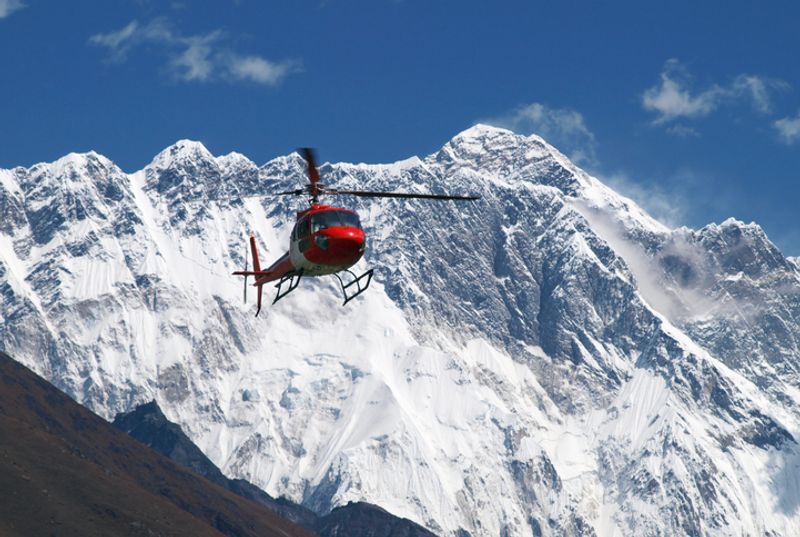

The Nepal Police have charged 32 individuals, including trekking agency owners, helicopter operators, sherpas and hospital staff, in one of the largest insurance fraud scandals in the Himalayan tourism sector.The long-running scheme allegedly involved deliberately making foreign trekkers and climbers ill to trigger expensive helicopter evacuations, which were then billed to international insurers for millions of dollars. Investigators say the scam targeted popular Mount Everest trekking routes between 2022 and 2025.According to Kathmandu Post, some tourists were encouraged to feign illness, while others were reportedly made genuinely sick through substances such as baking soda added to their food.The resulting gastrointestinal symptoms mimicked altitude sickness, prompting emergency helicopter rescues that appeared medically necessary.“This was a highly organised scheme,” said a senior police official. “Guides, Sherpas, helicopter operators and medical personnel colluded to exploit tourists and international insurance systems.”Investigators allege that once rescues were underway, operators fabricated medical and flight documents, exaggerating claims or billing multiple passengers as separate evacuations to inflate payouts.Police estimate that over 300 fraudulent helicopter rescues were carried out, generating nearly $20 million in bogus insurance claims.In some cases, a single flight costing a few thousand dollars was billed as multiple evacuations, with fake manifests and medical reports amplifying the total.The Kathmandu District Court has already seen initial defendants appear, while others remain at large. Prosecutors are seeking severe penalties under Nepal’s organised crime and fraud laws, including fines and long prison terms.Nepal’s tourism sector, which attracts over a million visitors annually, has suffered reputational damage due to the scandal. Some international insurers have already stopped covering trekkers in Nepal due to previous fraud concerns.The scheme was first reported in 2018, prompting a government inquiry, but authorities say lax enforcement allowed the scam to persist and even grow.“When there is no action against crime, it flourishes,” said Manoj Kumar KC, chief of the Nepal Police’s Central Investigation Bureau.Officials are now pushing for stricter oversight and transparency in Nepal’s adventure tourism industry. New regulations require all rescue operations to be formally reported to authorities to prevent future abuse. Tourists and climbers are urged to verify medical and evacuation procedures independently during the ongoing 2026 Everest climbing season.