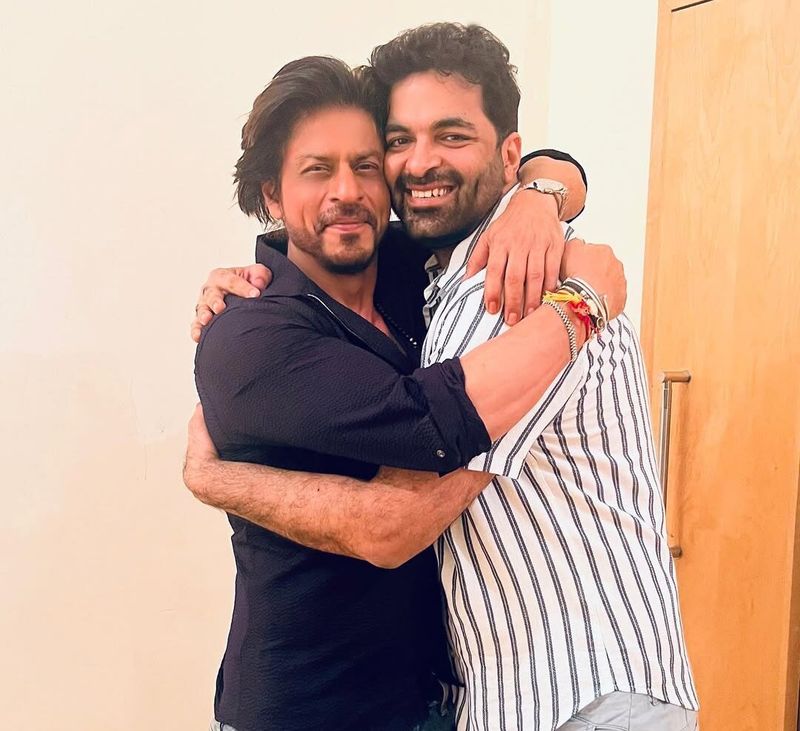

Screenwriter Sumit Arora, known for his work in films such as “Stree”, “Jawan” and “Border 2” as well as series “The Family Man”, says he always knew writing was what he wanted to pursue but coming from a middle class family, he first needed to have a stable career.Meerut-born Arora said he grew up surrounded by books from Hindi literature and his mother instilled a love for reading in him early in his life. He began writing at the age of 14. Initially, he would write articles and columns in newspapers but soon realised that it was not enough to sustain.Arora said he doesn’t remember the moment he made up his mind to come to Mumbai but knew that he had to be financially stable to survive in the city.”I don’t know how I got here. I came to Mumbai when I was still completing my degree. I also wanted to make money. I realised that where I was writing, there was not much money. I came from a humble background and money was a real requirement. Without that, life would have been really stressful.”I had the option to get a degree and find a very good job or utilise my talent in a place where I could earn more money,” Arora told PTI in an interview.Mumbai had its own set of challenges and Arora realised that it was not easy at all to get into films. He switched to writing for television. Some of the shows he worked on as a writer were “Chhoona Hai Aasmaan”, “Dill Mill Gayye”, “24” and “Sadda Haq”.His first film as a writer was 2015’s comedy “All Is Well”, starring Abhishek Bachchan and Rishi Kapoor.But it was “Stree”, the 2018 horror comedy directed by Amar Kaushik, that brought him widespread recognition. He wrote the dialogues for the movie. Kaushik is a close friend of Arora, and their bond goes back to their early days in the city when both were struggling to make films.”He (Kaushik) was trying to make his first film, I was trying to write my film. We used to discuss different ideas and stuff. Actually, we worked on a couple of stories that didn’t get made.”Amar told me that he was doing a film with Raj & DK (Raj Nidimoru and Krishna DK) and they are producing the film with Maddock. He asked if I was interested in writing the dialogues and I said I would love to because I really liked Raj and DK’s work.” Arora received a sample and was asked to develop, which he later got to know was the audition for the job. Before him, three-four writers had already tried their luck.Starring Shraddha Kapoor and Rajkummar Rao in the lead roles, “Stree” emerged as a huge hit at the box office and kicked off Maddock’s horror-comedy universe, which now also includes titles like “Stree 2”, “Bhediya”, “Munjya” and “Thamma”.”Stree”, Arora said, was and is “a piece of his heart”. It is also the film that helped him land some of the most important projects of his career, such as “The Family Man”, “Dahaad”, “Jawan” and most recently, “Border 2”.Working on “Border 2” felt like a wish fulfilment for Arora, who remembers watching the first part in 1997 as a 10-year-old boy.”I was like a kid in the candy store. I saw the film with my father and the memory is still very clear in my head. When I got this offer, the kid in me got really excited and I re-watched the original… Working on a film like this is a huge responsibility and a bit scary because it is carrying forward the legacy and there is Sunny Deol, who has been a huge star since the 90s. I had to keep his aura in mind while writing.”Some of the dialogues Arora has penned, such as “Vo stree hai, vo kuchh bhi kar sakti hai” from “Stree” or “Bete ko haath lagane se pehle baap se baat kar” from “Jawan” have become part of pop culture. His personal favourite from “Stree” is the line uttered by Pankaj Tripathi’s character Rudra where he says: “Ye naye Bharat ki chudail hai, ye padhi likhi bhi hai.” Arora also loves the poem that SRK’s character recites in “Jawan”.What is the secret recipe to write dialogues that stay in the collective memory of the movie-going public?Arora said it is important to stay as honest as possible to the script and remember how they are going to sound when a particular actor says those lines, whether it is SRK, Sunny Deol or Manoj Bajpayee.”You cannot do ‘dialogue-baazi’ for the sake of ‘dialogue-baazi’. I can’t write anything out of context for the sake of it. Everything works because the film is working, and not because one dialogue is interesting.”When people watch something in a dark theatre, then they are focused entirely on that narrative. Anything that can throw them off that narrative, however beautiful and powerful dialogue or a moment in the screenplay, will not really go well. So while dialogues should be memorable, and today it has become about becoming meme-worthy and going viral, it really works when it works in the film. Then it is alive.”Arora is now writing for Kabir Khan’s new film and a show that he cannot name just yet. He is also working on his directorial debut.But amid all this, his personal writing has taken a hit.”It is a sore point in my life right now. I keep thinking that I must take out time to write for myself. I want to write a memoir; I want to write poetry. In fact, I have written a bunch of poems that I need to publish into a collection. There is also the idea for a novel but my film work leaves me with no time to pursue these things. I’m really enjoying my film writing but I need to get back to these things as well,” he said.