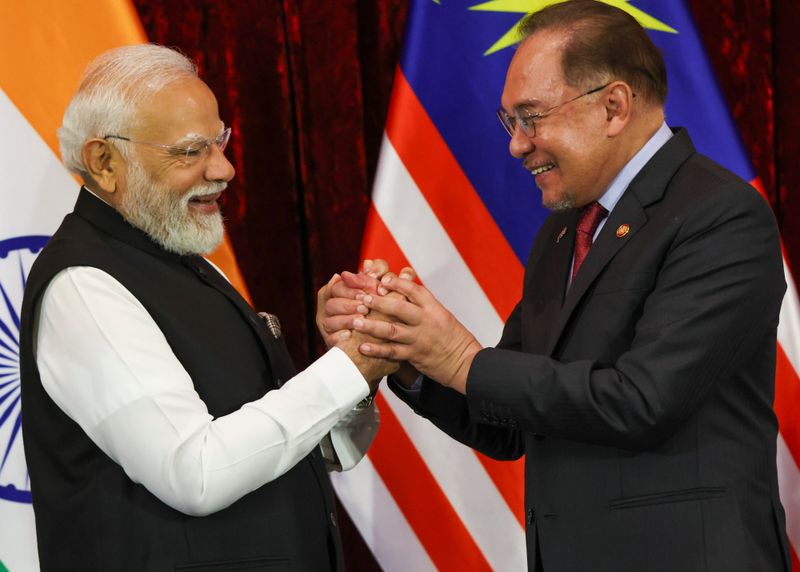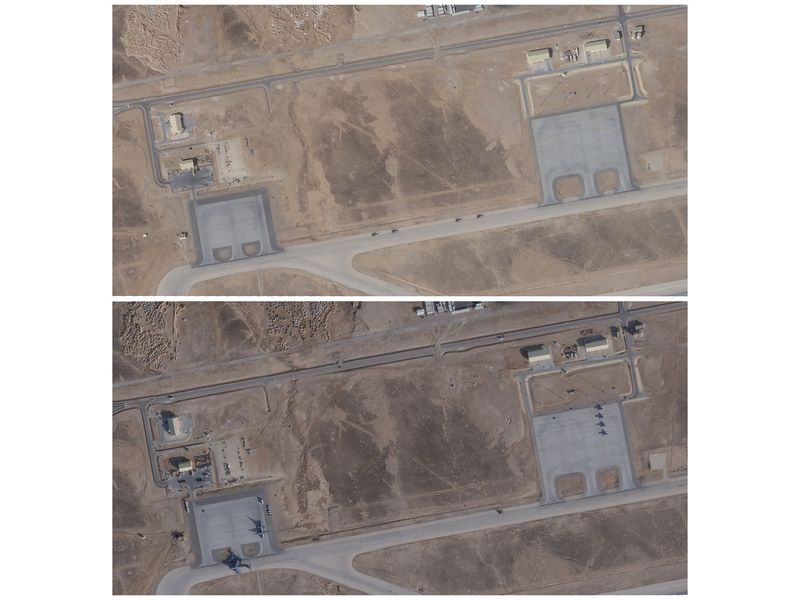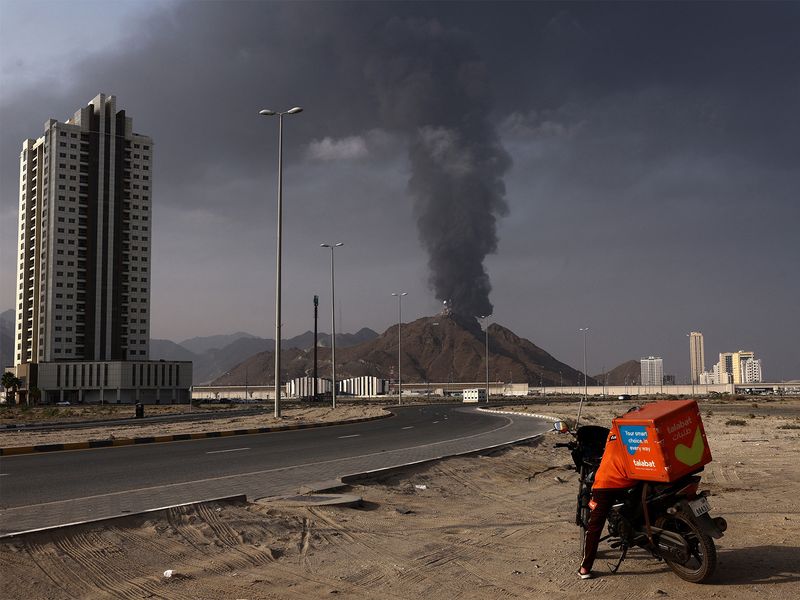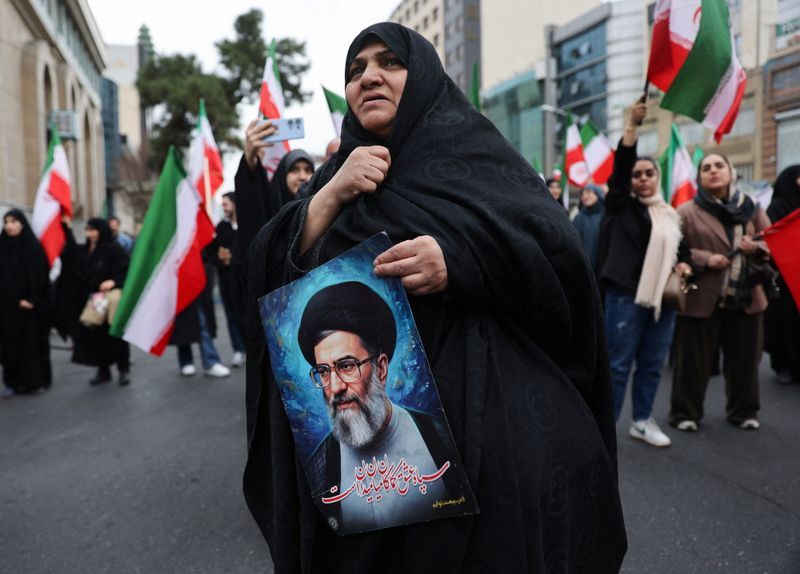

With the US-Israel-Iran conflict continuing relentlessly into the second week, The Tribune Edit—Op-Ed articles vividly deconstruct the ifs and buts, why and who of the war. Former diplomats and ambassadors who have worked closely in West Asia and veteran journalists bring out a clear picture of what the war entails and discuss India’s response threadbare amidst the simmering tensions.Caught off guard by Op Midnight Hammer last year, Tehran is on a stronger footing this time to face Op Epic fury, writes former Ambassador to Iran Gaddam Dharmendra in his Edit piece Iran is prepared for the long haul. Iran’s resilience and counter-strike capabilities are dragging the US into one of its most consequential conflicts in decades. It’s possible that things may not have deteriorated this rapidly had airstrikes not targeted 86-year-old Khamenei. The adverse downstream consequences of the US-Israeli actions are stacking up multidimensionally, he adds.Meanwhile, in Trump’s topsy-turvy Washington DC, there is a dense fog over the objectives of the attacks on Iran, writes former Ambassador to Egypt and UAE Navdeep Suri in his Edit piece Op Epic Fury: The inmates are running the asylum. The real problem for Trump was the regime itself, but regime change has consequences, he asserts. For the Iranians, hating the theocratic regime doesn’t mean embracing the US and Israel. Iran’s own response to the bombings appears to have caught the US by surprise. Tehran clearly hopes that its attacks will force the rulers of Qatar, UAE and Saudi Arabia to use their special relationship with Trump and bring the war to an early halt.The US assumption, based on Israeli arguments, that the assassination of Iran’s Supreme Leader Ayatollah Ali Khamenei would make the Iranian regime collapse is probably mistaken, writes ex-Ambassador to UAE and Iran KC Singh in his Edit article Iran regime change may elude Trump. A prompt ceasefire is unlikely; unless the Iranian regime gets replaced by a pro-West government, stability may not return to the Gulf anytime soon, he writes. Iran would want to be seen extracting revenge from Israel and the US, he opines. Plus, Prime Minister Narendra Modi’s unwillingness to criticise Israel during his recent visit, just 48 hours before US-led air strikes on Iran, has robbed India of its neutrality.The Israeli foreign minister told the media a few days back that Modi was not aware when the Israelis-US were going to bomb Iran. That leaves us with two kinds of reactions to the Israeli admission. First, what kind of friend are the Israelis not to tell their best friend, India, about their best-laid plans? Two, one should thank God the Israelis didn’t tell the PM about their bombing of Iran when he was in Tel Aviv — Modi must finally understand how best friends hold their cards close to their chest and not tell. PM Modi must know that India is not part of the Israel-US sanctum sanctorum, writes Editor-in-Chief Jyoti Malhotra in the article A peculiar silence in the heart of Delhi in her weekly column The Great Game. India should not be in faux alignment with powers that bomb girls’ schools in Iran, she adds. Atmanirbharta means choosing wisely, to act in the national interest by both doing or not doing, she opines, and this atmanirbharta, non-alignment, can be India’s only compass to lead us in the right direction.Meanwhile, the Opposition is characterising Modi government’s muted response to the air strikes as unprincipled. On the contrary, India’s silence should be seen as a sign of maturity, not abdication or cowardice as Sonia Gandhi has chosen to view it, writes senior journalist R Jagannathan in his Op-Ed piece Modi’s muted response to Iran strikes is not unprincipled.The task before India is to shield its core interests of energy, security, trade flows and the welfare of the diaspora, while contributing, wherever possible, to stability and dialogue, writes ex-Ambassador to Oman Anil Wadhwa in his article India needs to shield its core interests.The conflict has become a testing ground — for new weapons, for recycled designs and for the doctrines that will shape future battlefields, writes our London Correspondent Shyam Bhatia in his Op-Ed article Iran testing ground for new weapons. One of the clearest examples is the first confirmed combat use of a US one-way attack drone LUCAS, whose architecture mirrors Iran’s Shahed 136. Earlier, after Iran captured a US RQ-170 Sentinel surveillance drone in 2011, Tehran claimed it had reverse-engineered aspects of the aircraft to inform its own unmanned systems. The circle appears to have turned again, with Washington deploying a drone modelled on Iranian architecture against Iranian targets, he writes.For India, this conflict is not a distant theatre. It is a live case study. The broader lesson is industrial as much as tactical. What distinguishes this conflict is the speed of adaptation. The balance between cost, scale and survivability is being recalibrated in real time. Geography, economics and human connections bind India to the Gulf and West Asia in ways that cannot be wished away, writes Bhatia.Back home, speaking at the first Dr Manmohan Singh Memorial Lecture, former German Chancellor Angela Merkel said what impressed me about Dr Singh (when they first met in April 2006) was his alert and curious gaze, which radiated experience and openness in equal measure. To me, he radiated a natural authority that did not, however, act intimidatingly but rather gave me courage — the courage to ask questions and courage to conduct open conversations. We can no longer simply view democratic orders as unshakeably given. If we want to continue living in democracies, we must actively stand up for them. The excerpts of her speech appeared in our Op-Ed column Manmohan Singh gave me the courage to ask questions.