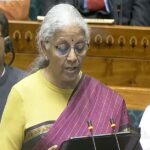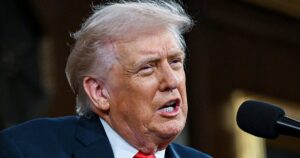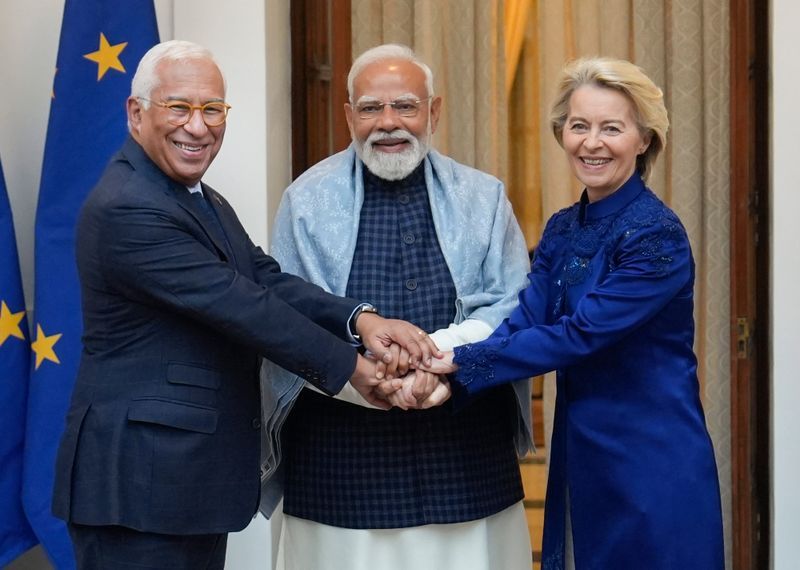

India and the European Union have signed a long-awaited free trade agreement, a crucial and a major achievement for both parties, especially amid global uncertainty. There couldn’t have been a better time than a day after we celebrated our 77th Republic Day. The agreement was also a reprieve for Europe as it is looking to reduce its economic dependence on the US after Trump raised the Greenland issue, writes senior financial journalist Sushma Ramachandran in her Edit piece Litmus test for India-EU bonhomie. Though there is mutual recognition of the value of a close partnership, sustaining deeper ties will entail compromises on both sides in the long run. Both Brussels and New Delhi must go all out to reduce the red tape. The present bonhomie in India-Europe relations will be tested on the ground in the coming days, she avers.The US National Defense Strategy was released by the US Department of War on January 23. The National Security Strategy (NSS) document also issued by the US White House recently is focusing on the Indo-Pacific. It leaves Europe vulnerable and Asia uncertain, says former Foreign Secretary Shyam Saran in his Edit piece NDS confirms the Trumpian playbook. The NSS and the NDS have relegated Europe to the geopolitical margins and made it clear that Europe will have to look after its own security. Like Europe, India is vulnerable too. Associations like the Quad and the AUKUS, the nuclear submarine alliance of Australia, the UK and the US, do not figure in the NSS document. The NATO allies were served up insults and abuse and threatened with another round of tariffs. The US has become unusually conciliatory towards China ‘if it keeps its demands reasonable and cabined’ and the NDS makes no mention of Taiwan. With this background, India should take Canadian PM Carney’s suggestion seriously — that the ‘middle powers’ should work together to shape a new international order, he writes.India possesses significant latent leverage — its market size, its strategic geography and its role in balancing China — but this has not always been translated into bargaining power, writes ORF’s Distinguished Fellow Manoj Joshi in his Op-Ed article Why strategic autonomy still matters. The current US approach is overtly transactional, and India is no longer automatically viewed as a strategic bet worth sustained concessions. The danger for India lies in mistaking comfort for trust, he writes. India must uphold its autonomy which does not meant isolation. Rather, it has meant the ability to engage widely without being constrained by the preferences of any single power, he writes.Meanwhile, according to the Economic Survey 2025-26 tabled in Parliament, India’s economy is projected to expand at a rate of 6.8 to 7.2 per cent in the fiscal year 2027. Faster GDP growth will not improve the well-being of India’s billion-plus citizens, writes former Planning Commission member Arun Maira in his Edit piece There’s more to growth than GDP. With the present pattern of growth, India’s GDP must grow at 12 per cent per annum for the next few years to generate enough employment. Rather than the goal of climbing higher than other countries on the GDP ladder, India’s economic reformers should reform the process of economic growth itself, he suggests. One of the solutions is to change the design and governance of a business enterprise. Workers must be the owners of the enterprises so that they earn the profits made from their work and increase their own wealth, rather than passing on the profits to increase the wealth of financial investors. Another solution requires more people to live and work in rural areas, and engage in smaller agriculture, manufacturing and service enterprises. This will require a reversal of migration from urban/formal enterprises to rural/informal ones, India can’t afford to continue with the urban-industrialisation model.In her weekly column The Great Game, Editor-in-Chief Jyoti Malhotra writes about Amitav Ghosh’s latest book Ghost-Eye. It is a story of love without limits, without pretence; he mixes fact and fiction and makes it his own, she writes in her article The fact-fiction brew of Amitav Ghosh. She takes the reader through many of his works like River of Smoke, The Glass Palace, Gun Island, The Hungry Tide and Sea of Poppies and links them wonderfully to the present day, and in some cases historical events. When one reads Ghosh, it redeems the connection between books, reading, education and learning, she avers.2026 has opened with an unusually long chain of elections in India’s neighbourhood – Myanmar completed its three-phased elections in January; Bangladesh and Thailand go to polls in February; and Nepal in March. This means India will have to engage with a variety of new political faces in its eastern neighbourhood. Whoever takes on power, including so-called anti-India forces, Delhi will have to find pragmatic ways to double down on its regional economic and connectivity strategy. The future health of bilateral relations will hinge on New Delhi’s ability to engage with a new generation of leaders, writes Constantino Xavier, Senior Fellow, Centre for Social and Economic Progress in his Op-Ed article Ballots and uncertainty in the eastern neighbourhood.