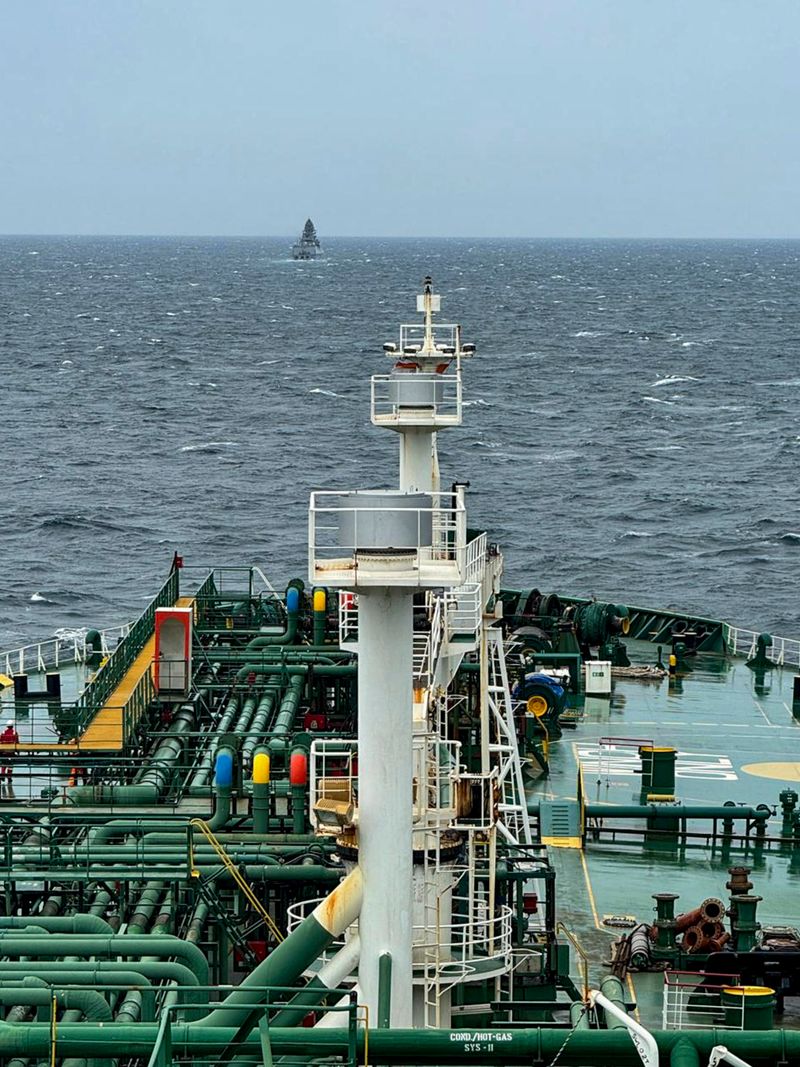

Iran has said it is permitting vessels from select “friendly nations”, including India, to transit the strategically critical Strait of Hormuz, even as restrictions continue for others amid the ongoing West Asia conflict.Iranian Foreign Minister Abbas Araghchi said Tehran has allowed passage for countries such as China, Russia, India, Iraq and Pakistan, signalling a calibrated approach to maritime access in the conflict zone.The statement formalises what had earlier emerged through diplomatic channels — that India-bound vessels are being given operational leeway despite heightened tensions in the region.In recent days, at least four Indian-flagged tankers have successfully transited the strait following high-level engagements between New Delhi and Tehran.Providing an operational update a day back during a press conference, Shipping Ministry’s top official Rajesh Kumar Sinha had that said around 20 Indian-flagged vessels remain in the region, with six LPG-laden tankers expected to be in transit over the next few days. “Their movement is being closely monitored. In 3–4 days, we will have six loaded LPG tankers,” he said at an inter-ministerial briefing.The government also sought to reassure on maritime safety, stating that all Indian seafarers in the region are safe and no incident involving Indian-flagged vessels has been reported in the past few days.Two Indian LPG carriers — Pine Gas and Jag Vasant — successfully crossed the strait last night and are currently en route to India with cargo. While Pine Gas, carrying around 45,000 metric tonnes of LPG, is expected to reach New Mangalore on March 27, Jag Vasant, with over 47,600 metric tonnes, is scheduled to arrive at Kandla today i.e. on March 26.Following their transit, as many as 20 Indian-flagged vessels with around 540 Indian seafarers remain deployed in the western Persian Gulf region. The Directorate General of Shipping is maintaining close coordination with ship owners, recruitment agencies and Indian missions to monitor the evolving situation.The Strait of Hormuz, a vital artery for global energy supplies, has witnessed disruptions since the outbreak of hostilities, with Iran imposing selective restrictions based on geopolitical alignments. Officials in Tehran have maintained that countries perceived as “non-hostile” or maintaining cooperative ties would be facilitated passage.For India, the development carries significant economic and strategic weight. A substantial portion of its crude oil and LNG imports passes through the narrow corridor, making uninterrupted access critical for energy security.The government said India’s maritime sector continues to function without disruption, with no congestion reported across major ports. State maritime boards across Gujarat, Maharashtra, Goa, Kerala, Andhra Pradesh and Puducherry have confirmed normal operations.At Kamarajar Port, authorities have granted an extended free storage period of up to 40 days for cars bound for the Gulf, along with additional storage space to ease logistics.The Ministry said it continues to closely track shipping movements, port operations and the safety of Indian seafarers as the situation in West Asia evolves, while ensuring that maritime trade remains uninterrupted.