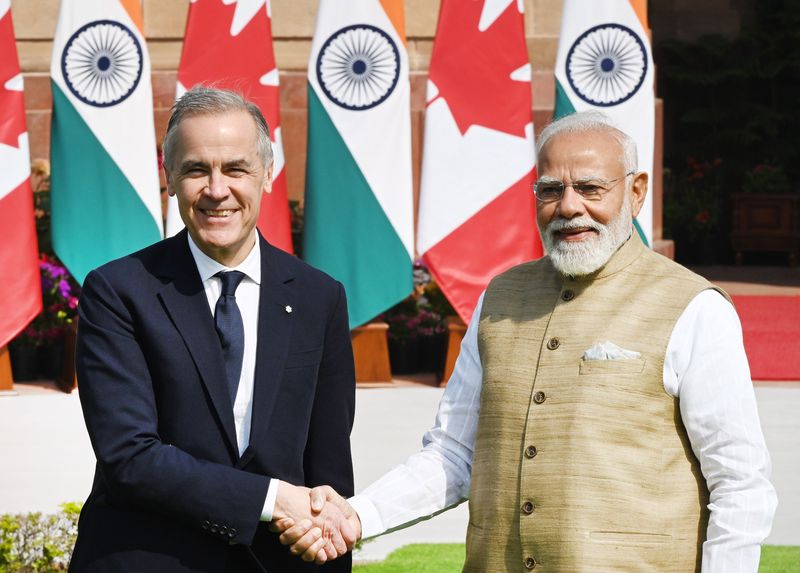

India and Canada on Monday announced a major expansion of cooperation in civil nuclear energy, including a long-term uranium supply agreement aimed at strengthening India’s energy security and clean power transition, following talks between Prime Minister Narendra Modi and his Canadian counterpart Mark Carney.The agreement comes 51 years after India’s 1974 Pokhran-I test, which used plutonium from the Canadian-supplied CIRUS reactor and led to a sharp diplomatic fallout between the two countries.The two leaders welcomed the conclusion of a CAD 2.6 billion commercial agreement between Canadian nuclear major Cameco and India’s Department of Atomic Energy for long-term uranium supply to support India’s civil nuclear energy programme, along with cooperation in the development of small modular reactors (SMRs).The agreement forms a key pillar of a renewed India-Canada Strategic Partnership, with both sides emphasising the role of nuclear energy in ensuring reliable, affordable and low-carbon power generation while advancing climate commitments.In a joint leaders’ statement issued at the conclusion of Carney’s visit to India from February 27 to March 2—the first bilateral visit by a Canadian Prime Minister since 2018—the two countries agreed to deepen cooperation across clean energy, critical minerals, technology, defence and trade.The leaders underlined that enhanced collaboration in conventional and clean energy, including civil nuclear cooperation, would contribute to diversification of energy supplies and long-term economic resilience. Both sides also agreed to advance an India–Canada Strategic Energy Partnership covering liquefied natural gas (LNG), crude oil, refined petroleum products and critical minerals essential for emerging technologies and energy transition.Significantly, India and Canada also agreed to expand cooperation in the security domain. The leaders welcomed progress under the regular bilateral security dialogue held at the level of the National Security Advisers and endorsed a shared work plan to strengthen collaboration on national security and law enforcement priorities.As pluralistic democracies, the two sides committed to deepen cooperation to address violent extremism, terrorism and organised crime, including the illegal flow of narcotics and fentanyl precursors, cybercrime, extortion, financial fraud, trafficking and transnational criminal networks. They supported the establishment of dedicated security and law-enforcement liaison mechanisms to streamline bilateral communication and enable timely information-sharing.The leaders further agreed to enhance cooperation on cybersecurity and immigration enforcement in line with domestic laws and international obligations, and called for the early convening of the next meeting of the Joint Working Group on Counterterrorism.The statement noted growing commercial momentum between the two economies, marked by the launch of negotiations for a Comprehensive Economic Partnership Agreement (CEPA), with both countries aiming to expand bilateral trade to CAD 70 billion by 2030.India welcomed Canada’s decision to pursue membership of the International Solar Alliance and its upgraded participation in the Global Biofuels Alliance, signalling deeper alignment on global clean energy initiatives.The two leaders also agreed to strengthen cooperation in emerging sectors such as artificial intelligence, digital infrastructure, space technology and resilient supply chains, alongside expanding education partnerships and talent mobility programmes.Meanwhile, senior Congress leader Jairam Ramesh welcomed the agreement but credited its origins to earlier diplomatic efforts, noting that Canada had historically assisted India in establishing heavy water reactors such as those at Kalpakkam before cooperation was halted following India’s peaceful nuclear explosion at Pokhran in May 1974.In a post on X, Ramesh said the latest agreement had been made possible due to the landmark Indo-US Civil Nuclear Agreement finalised in October 2008 under former Prime Minister Manmohan Singh, whose “insistence and persistence” enabled global civil nuclear cooperation with India despite political opposition at the time.