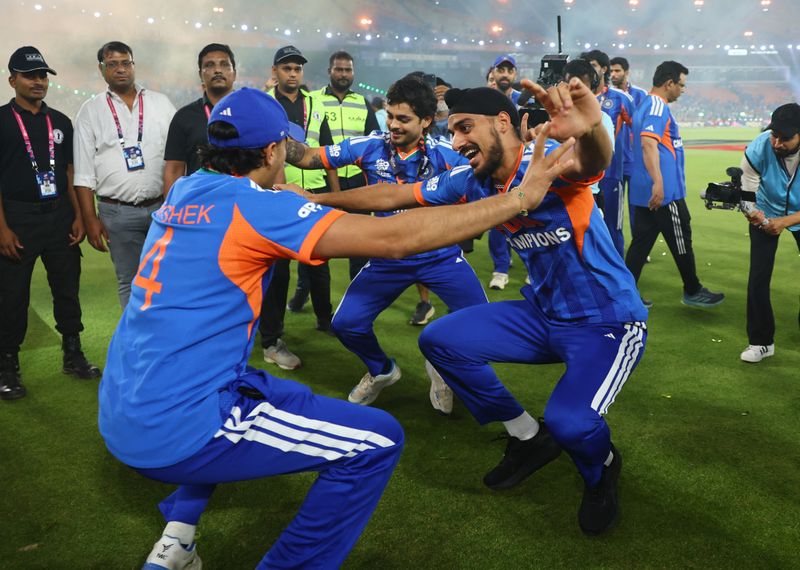

India are world champions, and deservedly so.Yet, alongside the celebrations in Ahmedabad and across the cricketing diaspora, murmurs about India being the undisputed powerhouse of world cricket were equally audible.The final itself, much anticipated and billed as a contest between two disciplined cricketing sides, turned out to be far more one-sided than most expected. India steamrolled New Zealand, and while the Indian performance was clinical, the seeds of the result were sown at the toss.New Zealand’s decision to field first on a good batting surface at the Narendra Modi Stadium proved to be a turning point.In T20 cricket, instinct often outweighs analytics. Computers, match-ups, and data are valuable tools, but only when used as reference points for strategy rather than rigid doctrines. Finals demand awareness of conditions, temperament and momentum. In hindsight, New Zealand’s decision to allow India to bat first and dictate the tempo of the game backfired badly.India’s batting line-up thrives when allowed to set the agenda, and once they sensed that freedom, they did not hesitate.Sanju Samson, who had looked increasingly assured through the tournament, walked in with clarity and intent. His innings was the pivot around which the Indian batting revolved. Samson was not merely attacking — he was dictating terms. His timing was precise, his shot selection assured, and his ability to find boundaries early immediately placed New Zealand’s bowlers on the defensive.His dominance had a ripple effect at the other end.Abhishek Sharma, who until the final had struggled to find rhythm and runs through the tournament, suddenly looked liberated. Freed from the burden of carrying the innings, he began to rediscover his timing. Together, Samson and Abhishek launched a double assault that rapidly shifted control of the game. What began as pressure on New Zealand’s bowlers soon turned into something more damaging — a sense that the game was slipping out of their grasp.Once that momentum was established, India’s middle order ensured there was no let-up.India’s Abhishek Sharma, left, celebrates with teammate Sanju Samson after scoring a half century. PTIIshan Kishan brought urgency and aggression, striking boundaries with confidence, while Shivam Dube played the enforcer’s role with typical power hitting. Their contribution ensured that the scoring rate never dipped and that New Zealand’s bowlers never regained control. What could have been a competitive total soon ballooned into something far more intimidating.By the time the innings concluded, India had pushed the total beyond the 250-run mark — a daunting target in any T20 contest, let alone in a final where scoreboard pressure can weigh heavily.Chasing such a target required early momentum from New Zealand, but India’s bowling attack quickly ensured that possibility faded.Central to that effort, as so often in recent years, was Jasprit Bumrah.Bumrah’s genius lies not just in pace or accuracy but in timing — knowing when to apply pressure and when to break partnerships. His four overs were always likely to be both miserly and productive. By conceding little and striking at crucial moments, he ensured that the asking rate for New Zealand climbed rapidly beyond reach.Once the early breakthroughs came, the chase never truly recovered. What remained was largely a formality.India’s Jasprit Bumrah celebrates the wicket of New Zealand’s Matt Henry. PTIThe game itself became one-sided, almost a no-contest, sparked by that pivotal decision to field first against an Indian batting line-up perfectly suited to dictating the pace of a match.Yet, beyond the cricket itself, the broader conversation around the tournament continued to simmer.Across global cricket circles, some pundits questioned whether India’s growing financial and administrative influence was shaping the modern game. Scheduling, venues and tournament structures often appear aligned with India’s commercial strength.Critics sometimes jokingly refer to the ICC as the “Indian Cricket Council,” suggesting that money and market power increasingly influence decisions within the sport.Such debates are part of the evolving landscape of global cricket and will no doubt continue.But finals also present opportunities.Opportunities for teams to silence those debates through performance — to demonstrate that cricketing excellence alone determines outcomes.For New Zealand, that opportunity did not materialise.For India, however, the story was different.Despite the enormous expectations and the weight of playing at home, India produced a performance of clarity and conviction. It was a side that seemed able to shut out the surrounding noise — the pressure, the commentary, the scrutiny — and focus only on the task at hand.In doing so, India did not merely win a tournament. They reaffirmed their dominance in the format and reminded the cricketing world that, when operating with purpose and confidence, they remain one of the most formidable forces the game has ever seen.