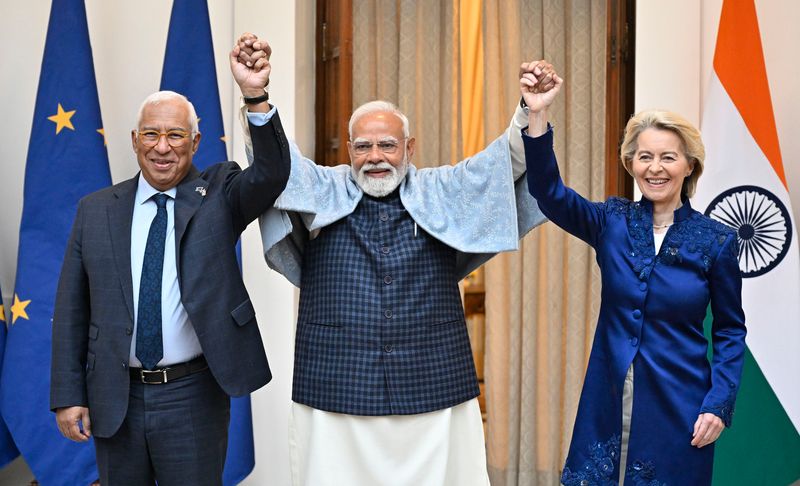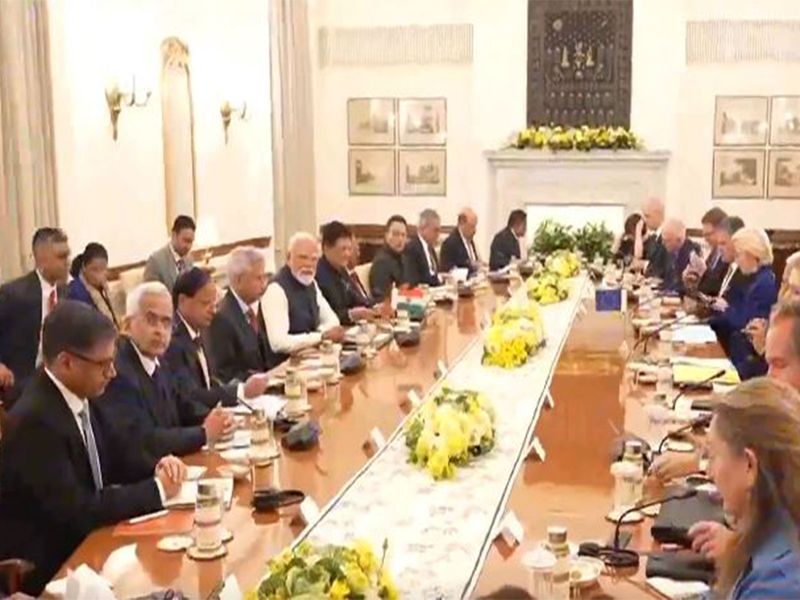

The largest trade deal ever concluded by India and EU will create a combined market estimated at over Rs 2091.6 lakh crore, bringing unparalleled opportunities for 2 billion people. The freed trade deal (FTA) delivers unprecedented market access for more than 99% of India’s export by trade value, while preserving policy space for sensitive sectors and reinforcing India’s developmental priorities.As regards medical instruments, appliances, and vital supplies, tariffs of up to 6.7 per cent have been eliminated across 99.1% of trade lines, enabling cost-competitive entry into European markets for lenses, spectacles, medical devices, measuring and testing instruments.Zero duty access in textiles and clothing, covering all tariff lines and reducing tariffs by up to 12 per cent, will open up the EU’s Rs 22.9 lakh crore import market. It will build on India’s current Rs 3.19 lakh crore in global textile and apparel exports, including Rs 62,700 crore to the EU. Such access would significantly expand opportunities, particularly in yarn, cotton yarn, cotton yarn, man-made fibre apparel.Bilateral trade at Rs 11.5 lakh croreThe bilateral trade between India and the EU has demonstrated sustained growth, valued approximately at Rs 11.5 lakh crore in 2024-25, with India exporting roughly Rs 6.4 lakh crore to the EU. India-EU trade in services reached Rs 7.2 lakh crore in 2024.India’s plastic and rubber industries will gain preferential access to the EU, a market with global imports valued at Rs 27.67 lakh crore. With India’s current exports to the EU at Rs 20,900 crore and total global exports of Rs 1.13 lakh crore, this access underscores substantial scope for growth.The reduction of tariffs of up to 26% will unlock the EU marine market for imports worth Rs 4.67 lakh crore. This enhanced market access is expected to significantly improve the competitiveness of India’s marine exports, while complementing and strengthening India’s export capacity in the marine sector, currently valued at Rs 8,715 crore to the EU.The gems and jewellery sector will become more competitive in the EU market. From tariffs of up to 4 per cent previously to gaining preferential access across 100 per cent of trade value, India’s Rs 23,500 crore jewellery exports become competitive through the FTA in Rs 6.89 lakh crore import market.Leather and footwear exports are also set to get a boost. Elimination of tariffs at entry into force of the FTA from up to 17% to zero across all tariff lines will help level the playing field for India’s exports to EU, valued at approximately Rs 20.9 thousand crore and improve share in EU’s nearly Rs 8.71 lakh crore leather and footwear imports.Sectors like textiles, leather, footwear, marine, sports goods, and toys, gain enhanced competitiveness through tariff elimination, supporting employment generation and EU market integration. The agreement is estimated to generate nearly 7 million jobs in the textile sector alone, Commerce Minister Piyush Goyal said.