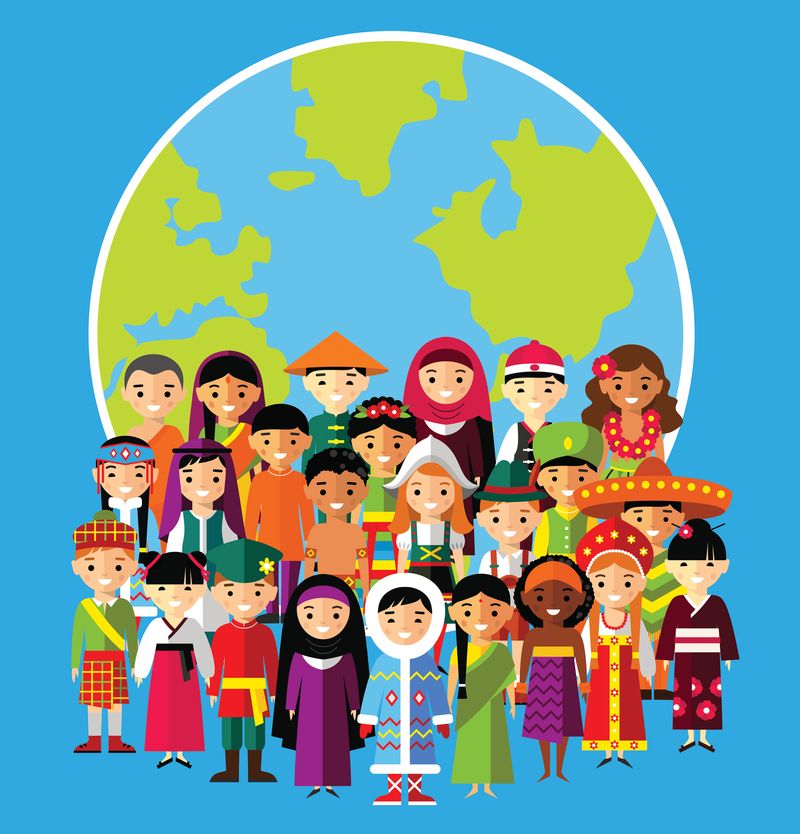
India ranks among the most religiously diverse countries when measured against other populous nations, according to a global study released by the Pew Research Centre, which mapped faith composition across 201 countries and territories.The report places India fourth in religious diversity among the world’s 10 most populous countries, after the United States, Nigeria and Russia, but ahead of Brazil and Pakistan.However, as per the study, Pakistan, where Muslims account for 97% of all residents, is the least religiously diverse of the 10 most populous countries.Using a Religious Diversity Index (RDI) that measures how evenly major religious groups are represented, researchers found that India falls in the “moderately diverse” category—a classification covering the largest share of the global population. The study divides people into seven categories: Christians, Muslims, Hindus, Buddhists, Jews, followers of other religions and those with no religious affiliation.The findings underline India’s distinctive demographic structure: While Hindus form the majority, the country also hosts one of the world’s largest populations of Muslims, alongside substantial communities of Christians, Sikhs, Buddhists, Jains and others.The report notes that nearly 95% of the world’s Hindus live in India, contributing significantly to global religious diversity patterns.Globally, Singapore emerged as the most religiously diverse country overall with an RDI score of 9.3, followed by Suriname. Most of the top 10 countries were located in the Asia-Pacific region and sub-Saharan Africa.At the other end of the spectrum, countries such as Yemen, Afghanistan and Somalia showed almost no diversity, with Muslims accounting for more than 99% of their populations.The report said the Asia-Pacific region is the most religiously diverse globally, while the Middle East-North Africa region remains the least diverse. Worldwide, a majority of people live in moderately diverse societies, and changes in diversity levels over the past decade have largely been gradual.For India, observers say the ranking reinforces its long-standing identity as a multi-faith civilisation where several major religions coexist at scale—a demographic reality that continues to shape its social and political discourse.