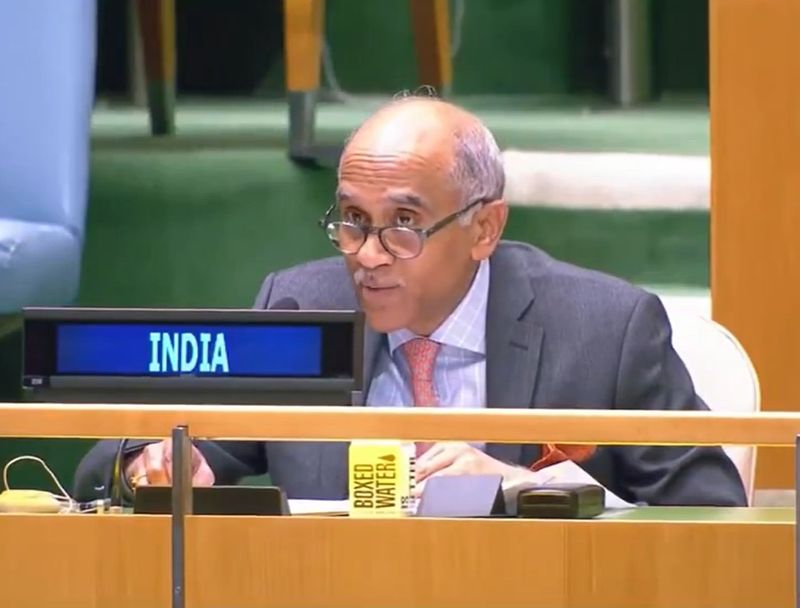

India has taken a sharp swipe at its western neighbour, Pakistan, accusing it of “fabricating imaginative tales of Islamophobia” even as it pointed to Islamabad’s own record on minority rights, including the treatment of Ahmadiyyas and Afghan refugees.Delivering India’s statement at a UN event marking the International Day to Combat Islamophobia, Ambassador Harish Parvathaneni said such selective narratives risk deepening divisions and undermining the universality of the United Nations framework.Addressing the meeting jointly organised by the Organization of Islamic Cooperation (OIC) and the UN Alliance of Civilizations (UNAOC), the Indian envoy cautioned against approaches that focus exclusively on one religion while ignoring broader patterns of religious discrimination.“History repeatedly shows how the politicisation of religion does not resolve grievances,” he said, warning that it instead lends legitimacy to polarising narratives.In a pointed reference, the envoy said India’s western neighbour had been attempting to internationalise “imagined” concerns of Islamophobia, even as it faced serious questions over “brutal repression” of certain communities and actions such as deportation of Afghan refugees and military operations during Ramadan.India underscored that it condemns violence and hatred in the name of religion “regardless of the faith involved,” and highlighted its own civilisational ethos of Sarva Dharma Sambhava, or equal respect for all religions.Describing itself as a country where followers of all major religions coexist, India said it remains “acutely aware” of the need to combat discrimination in all forms. It also stressed that the UN must retain its impartial and universal character rather than adopt religion-specific frameworks.The Indian side reiterated that the 1981 UN Declaration on the Elimination of All Forms of Intolerance and Discrimination Based on Religion or Belief remains a balanced instrument to address such concerns globally.Taking aim at the OIC, India said the grouping had been “systematically weaponised” to level “false and baseless allegations” against it. It asserted that Muslims in India, including in Jammu and Kashmir, freely elected their representatives and participated in democratic processes.“India is home to over 200 million Muslims, one of the largest such populations in the world,” the envoy said, rejecting claims of religious discrimination and asserting that the country’s social fabric is rooted in pluralism and peaceful coexistence.Reaffirming its commitment to combating religious hatred, India urged the UN to focus its efforts on promoting inclusive societies based on equality, dignity and the rule of law for all faiths.