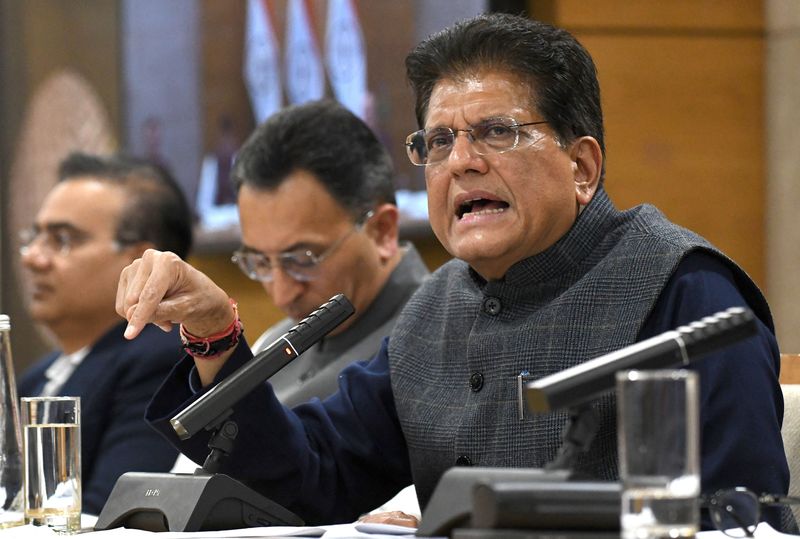
India and the US on Saturday unveiled a far-reaching framework for an interim trade agreement that marks a decisive reset in economic ties, sharply lowering tariffs, opening the world’s largest market to Indian exporters and laying the groundwork for a full-fledged Bilateral Trade Agreement (BTA).Prime Minister Narendra Modi welcomed the agreement, calling it “great news for India and the US”, and thanked President Donald Trump for his “personal commitment to robust ties” between the two countries. He said the framework reflected the growing “depth, trust and dynamism” of the India-US partnership.“This framework strengthens Make in India by opening new opportunities for our hardworking farmers, entrepreneurs, MSMEs, start-up innovators and fishermen. It will generate large-scale employment for women and youngsters, deepen investment and technology partnerships, strengthen resilient supply chains and contribute to global growth,” the Prime Minister said.According to a joint statement issued by both sides, India has expressed its intention to purchase $500 billion of US energy products, aircraft and aircraft parts, precious metals, technology products and coking coal over the next five years.The joint statement outlines reciprocal and “balanced” market access commitments that are expected to deliver immediate gains for the Indian industry, MSMEs, farmers and fishermen, while deepening supply chain integration and cooperation in technology and investment.Commerce and Industry Minister Piyush Goyal said the trade agreement would give Indian exporters unprecedented access to the $30 trillion US economy. “About $44 billion worth of Indian exports will enter the US market at zero reciprocal tariffs in the first phase,” he said, adding that once US President Trump signed the Executive Order, reciprocal tariffs on most Indian goods would be reduced to 18 per cent from the current levels of up to 50 per cent.The tariff reduction, Goyal said, would provide an immediate boost to labour-intensive sectors such as textiles, apparel, leather and footwear, while creating lakhs of new jobs, particularly for women and youth. “This is a very fair, equitable and balanced agreement. It opens massive opportunities for MSMEs, farmers, fishermen and India’s young workforce,” he said.Under the framework, the US will apply an 18 per cent reciprocal tariff on a wide range of Indian goods, including textiles and apparel, leather and footwear, plastic and rubber products, organic chemicals, home décor, artisanal products and select machinery.At the same time, tariffs will be reduced to zero on several high-value exports such as generic pharmaceuticals, gems and diamonds, aircraft parts and certain auto components, significantly enhancing India’s export competitiveness and reinforcing the Make in India programme.Of India’s total exports to the US, goods worth around $30 billion will attract the reduced 18 per cent tariff, while duties on exports worth about $12 billion, including steel, aluminium, copper and certain auto parts, will remain unchanged. Goyal noted that these higher tariffs applied uniformly to all countries and did not single out India.In a major relief to Indian manufacturers, the US has agreed to remove Section 232 tariffs on certain aircraft and aircraft parts and grant India tariff-rate quotas for auto parts. Negotiated outcomes have also been envisaged for generic pharmaceuticals and ingredients, contingent on the conclusions of the ongoing US Section 232 investigation.US Trade Representative Jamieson Greer said the agreement would unlock new opportunities for farmers and entrepreneurs in both countries. “President Trump’s deal making is opening one of the world’s largest economies for American workers and producers, lowering tariffs for all US industrial goods and a wide array of agricultural products,” Greer said.On India’s side, several US products will now enter the Indian market at zero or reduced duties, including Distillers Dried Grains with Solubles (DDGS), a key feed product used in animal husbandry. Select wines and spirits have also been permitted entry, with safeguards such as minimum import prices for alcoholic beverages.Cosmetics have been opened to increase competition, while several computer-related products—still largely imported—have received tariff concessions to ease market entry. Certain medical devices, including fibrescopes and laparoscopes, have also been granted preferential access.Goyal underlined that all concessions offered by India were selective and carefully calibrated. “Sensitive sectors remain fully protected. The openings reflect India’s strategic approach—balancing new trade opportunities with the protection of domestic industry and farmers’ interests,” he said.