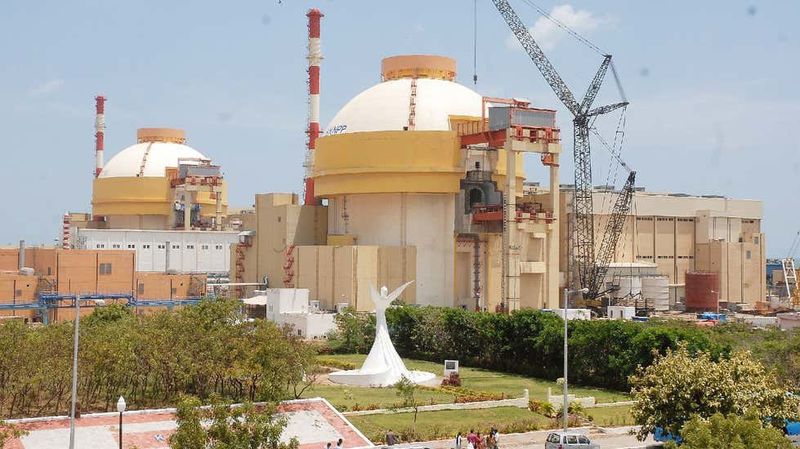

India’s Prototype Fast Breeder Reactor, marking the start of the second stage of its nuclear programme, has drawn praise from global atomic regulator IAEA.The Director-General of the International Atomic Energy Agency (IAEA), Rafael Grossi, said the first criticality achieved by the Prototype Fast Breeder Reactor (PFBR) at Kalpakkam, Tamil Nadu, was a key step forward in fuel sustainability and the future of nuclear energy.“The @IAEAorg will continue supporting the safe and secure development of India’s nuclear programme. Congratulations, Prime Minister @narendramodi,” Grossi said in a post on X.“Impressive progress by India in achieving criticality of the Prototype Fast Breeder Reactor at Kalpakkam, a key step forward in fuel sustainability and the future of nuclear energy,” Grossi said.India’s PFBR, which was over two decades in the making, is only the second such reactor in the world after Russia. The US and Japan gave up efforts to master the complex technology several decades ago.The International Energy Agency (IEA), based in Paris, also termed the first criticality milestone achieved by the PBFR an “important technological achievement”.“Congratulations to India, to Prime Minister Narendra Modi and to the scientists and engineers on this important technological achievement after many years of development,” the IEA said in a post on X.It said the PFBR, which achieved first criticality on April 6 at 8:25 pm IST, will use much less nuclear fuel than other reactors and lay a pathway towards a closed fuel cycle.Over the next few months, scientists will carry out low physics experiments and gradually increase power production before it is connected to the grid.The PFBR is the first-of-its-kind nuclear reactor to use plutonium-based mixed oxide as fuel and liquid sodium as coolant.It will also utilise the spent fuel of Pressurised Heavy Water Reactors, which form the mainstay of nuclear power in India at present.While the state-run Nuclear Power Corporation of India Limited (NPCIL) operates nuclear power plants in India, the PFBR is developed by the Bharatiya Nabhikiya Vidyut Nigam (BHAVINI).PFBRs are critical for India’s nuclear programme as the spent fuel from these reactors will be used to power the thorium-based reactors that form the third stage of the closed fuel cycle.The vision of the nuclear closed fuel cycle was laid down by Homi Jehangir Bhabha, who pioneered India’s atomic energy programme, with an aim to reduce nuclear waste.The Indian government has announced a nuclear energy mission that aims to produce 100 GW electricity through nuclear power.At present, India’s installed nuclear power capacity stands at 8.7 GW. An additional 6.40 GW nuclear energy projects are under construction or commissioning and 7 GW have been sanctioned and are currently undergoing pre-project activities.Upon completion of these projects, India’s nuclear power capacity is expected to reach 22.48 GW by 2031-32.Beyond this, the NPCIL plans to add another 15.40 GW through indigenous Pressurised Heavy Water Reactors and 17.60 GW through Light Water Reactors with foreign cooperation, bringing the total installed capacity to 55 GW.Additionally, BHAVINI is expected to contribute 3.80 GW through Fast Breeder Reactors while the remainder of the capacity will come from Small Modular Reactors, Bharat Small Reactors, and other advanced nuclear technologies developed with private sector collaboration.