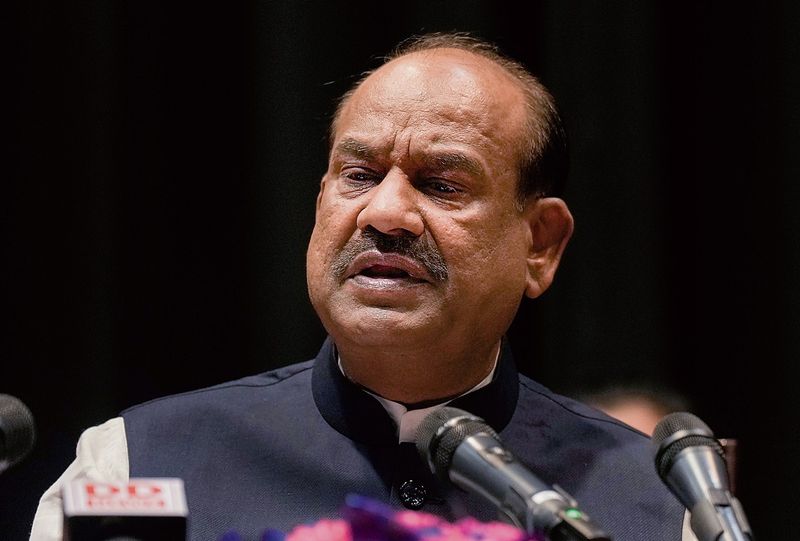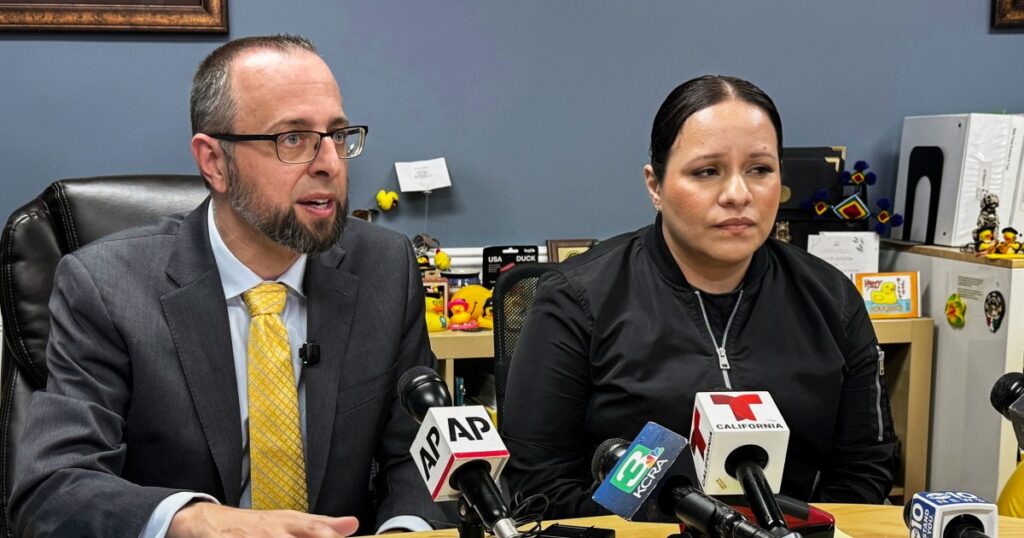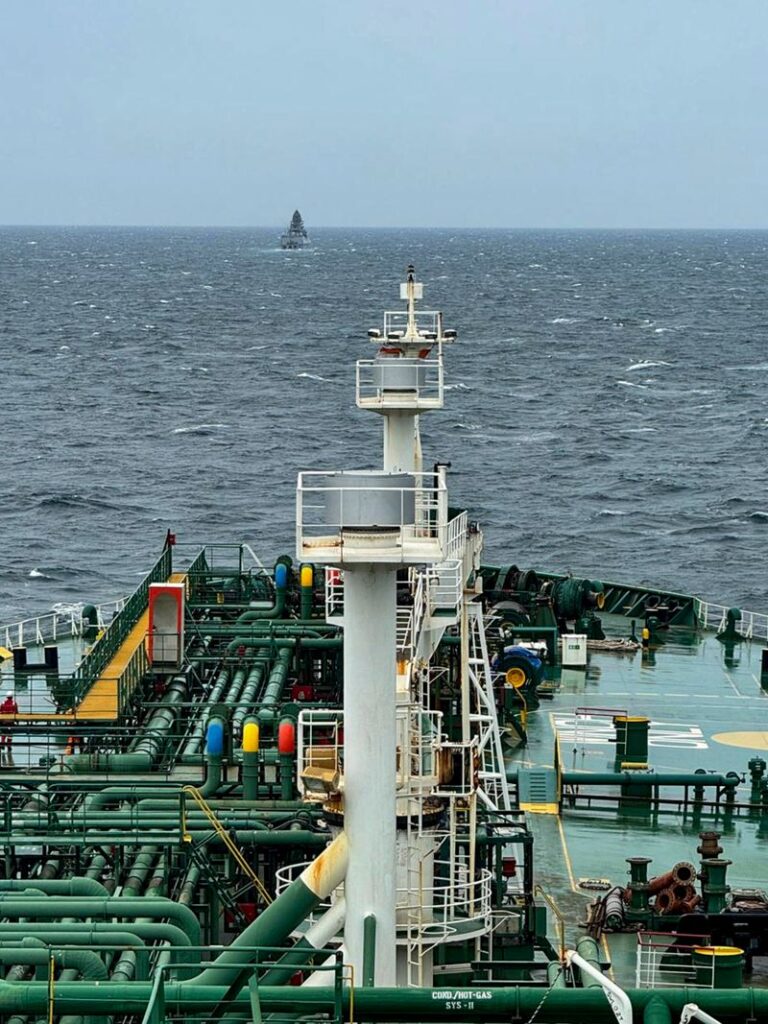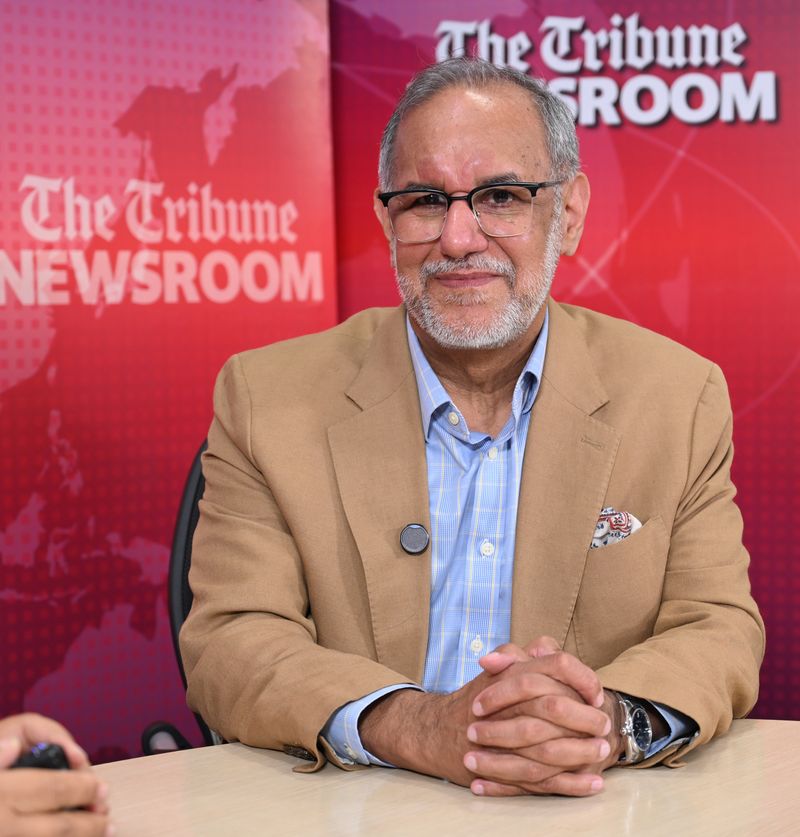

The 39-day war in West Asia has been put on hold for two weeks in the wake of a US-Iran agreement brokered by Pakistan. In this inaugural episode of The Tribune Newsroom, India’s former ambassador to the UAE and Egypt Navdeep Suri spoke to The Tribune Editor-in-Chief Jyoti Malhotra and reporters in the Newsroom on the politics of the war, why US President Donald Trump escalated the crisis, the dilemmas of the Gulf states and who won.Suri said it was a “privilege to be the very first guest for this inaugural edition”. He said The Tribune was associated with his growing-up in Amritsar and had been part of his consciousness for at least 50 years. “It’s the paper everybody in our family would read, and I still read, every single day, the old-fashioned way in print, except when I’m travelling, and those are the times when I go online and check it out,” he said.Excerpts from the interview:Jyoti Malhotra: Overnight, a ceasefire for two weeks has been brokered by Pakistan, China and others. What is your first reaction?Navdeep Suri: Thank God, or Alhamdulillah, as they say in the Arab world! This has been one of the most pointless, and most destructive conflicts in recent memory and most blatantly illegal. There was no UN cover for Iran to have attacked its neighbouring countries in the Gulf the way it has, nor to start asserting control over the Strait of Hormuz, which is an international waterway. I hope the ceasefire holds, although it is still doubtful if it also extends to Lebanon. Israel PM Netanyahu has said that it doesn’t.Who do you think has won?At a very human level, there are no winners in a war. At a political or strategic level, despite all the battering, Iran has come out on top. The objectives articulated by President Trump, US Secretary of State Marco Rubio and Secretary of Defence Pete Hegseth were an end to Iran’s nuclear programme as well as missile programme, and regime change.As of date, none of those key objectives has been achieved. The Islamic Republic is still intact, maybe under a different leadership, but the IRGC is still ruling the place. The nuclear stockpile of 440 kg of highly enriched uranium is still somewhere in Iran and Iran is showing no intention of giving up on its missile or drone programmes.However, there has been a fundamental change in status quo. Before February 27, the Strait of Hormuz was open to international traffic. Today, even the US has implicitly acknowledged Iran’s control over the Strait. It’s deeply worrying if Iran puts in a toll gate and (demands) $2 million per ship transiting through the Strait.At the end of the day, the political will of a nation and resilience it has displayed can overcome the most powerful military that the world has seen, even with Israel, the most powerful country in the Middle East. So two of the most powerful armies coming at you day after day, 15,000 sorties and all, and yet they’ve come out of it.When you look back at this period, you will see some degree of resurgence in Iran, that they (Iran) stood their ground — for them, survival is victory. When you look back at this period (you will remember this) when the decline of a once great American civilisation and power began.Were you surprised that the Iranians took on the Americans like this?Yes. Even though we expected resistance from Iran, the effectiveness with which they deployed asymmetric warfare tactics, the sophistication with which they used their drones, and the lessons that they learned from having been bombed in June 2025 under Operation Midnight Hammer was surprising. Their reaction at that time was to send waves of 100-200 projectiles and then see them neutralised. This time they’ve been far more judicious.I believe they had some help from the Russians and Chinese, especially from the Russians in terms of GPS and satellite data. When they struck the world’s largest natural gas processing facility in Qatar at Ras Lafan — which has 14 trains that produce the LNG, 20% of the world’s supply –they struck only two of the 14 trains and those two are partly owned by Exxon. I think Iran has put itself, potentially, in a position to be a much more, much stronger regional player than it was before February 28, despite the destruction.From an Iranian perspective, the softer target is Dubai, not Tel Aviv. Iranian drones can skim over the water and not be picked up by radars. So, they’re much harder to stop when they’re flying at that low altitude.Meanwhile, the dilemma of the Gulf countries, particularly Qatar, UAE and Saudi Arabia — which have good relations with Trump — was to use their influence in Washington and say, ‘don’t do this’. The first wake up call for the Gulf was that despite their interceding, Trump went ahead with the war anyway. So, the gold-plated 747 (aircraft) from Qatar or $1.2 trillion investment promised by the Emiratis or $800 billion of arms purchases by the Saudis came to naught.Their dilemma was, “Should we enter this war or should we maintain this is not our war?” If they enter and the Americans pull out (as they have), it leaves them high and dry against a large and angry neighbour. If they don’t do anything, you are left with a wounded, but still capable Iran.Besides, they also faced a dilemma about whether they wanted an Iran so weakened by constant bombardments that it can no longer be a threat? But then, they risk (having) one solitary power, Israel, belligerent and expansionist. So there are no good choices for the Gulf Arabs.How do you think India has played this Gulf war?This has not been the finest hour for Indian diplomacy. I think the Prime Minister Narendra Modi’s visit to Israel, his whole embrace of Netanyahu, getting a medal from the Knesset, all of that was badly timed.We knew that a war was imminent. So, it leaves two questions in my mind. Why go at that point? And if you did, did you try to use your leverage and friendship and relationship with Netanyahu to dissuade him from pursuing a course of action that has been so destructive to our national interest? Today, our GDP forecasts have been downgraded by everybody from Moody’s to Goldman Sachs to the IMF. So we’ve paid a real price for it.Additionally, (we should have) issued an immediate message of condolence when Khamenei was killed. This is standard protocol. It doesn’t cost you anything to do it. We were tardy in going to the Iranian embassy in Delhi to sign the condolence book. It happened five days later. Finally, the Foreign Secretary went.Third, you had an Iranian ship that participated in the International Fleet Review in Vizag. They were guests of the Government of India. They had saluted our President. Again, the delay (in reacting) from our side left much to be desired…I think we’ve sacrificed a degree of our much-wanted strategic autonomy. After that, we’ve been trying to claw back some of it.Vikramdeep Johal: Pakistan has emerged as a key mediator. What do you think are the diplomatic gains that Pakistan will make from this exercise?Trump has a pretty much a use-and-dispose policy, so I don’t know how long this honeymoon is going to last. Pakistan’s diplomacy has definitely gained a profile. (But) I would resist the temptation of looking at this as a zero-sum game, that Pakistan’s gain is our loss. I think whoever manages to bring this destructive war to a close, also benefits. If LNG starts flowing, whether it’s Turkey, Egypt or Pakistan – we’ve also benefited from the ceasefire.Sanjeev Bariana: Trump doesn’t listen to his own Congress, UN…What’s the way forward?The old order is clearly breaking down. Trump is openly dismissive of NATO. The two principal beneficiaries are Russia and China. The Economist had a lovely cover story a couple of days back, showing a very satisfied Xi Jinping and a quote from Napoleon, which says, “Never interrupt an enemy when he’s making a mistake.”Ruchika Khanna: Was the real purpose of the war to take away the enriched uranium? Now, what happens to cities like Dubai and Abu Dhabi?Netanyahu, specifically, has been obsessed about Iran’s nuclear programme for three-and-a-half decades. In 1992, as a young member of the Knesset, he said that Iran was barely six months away from making a nuclear bomb.In the Emirates, people say the malls are open and there’s no shortage of anything, although life is tense. The Emirati leadership has also gone out of its way to reassure expatriates. Then there are the $1.3 trillion in sovereign funds between Abu Dhabi Investment Authority and Mubadala and ADQ…They are very deep pockets that can be deployed to ride this period out.To the extent that tourism has collapsed, the layoffs have already started from the hospitality sector. Unless there’s a revival, the first persons to feel the pinch will be Indians, because we are 40 per cent of the country’s population.So, the impact on Indians is going to be disproportionate on remittances. We got $22 billion from the UAE alone last year. This sustains many, many families across Kerala to Punjab. What happens in the next two weeks is crucial. If the ceasefire translates into a durable peace, and I choose my words carefully, then the impact on Dubai and Abu Dhabi may be transient.Mohit Khanna: What is the status of the resistance inside Iran?By most standards, Iran is a regressive regime. The mistake the Israelis and Americans made was a binary thinking — ‘I hate the Khamenei regime, therefore, I will welcome Israeli intervention.’ You can hate with equal passion, the Khamenei regime and the Israeli intervention. Iranians are very smart people. They’ve seen what happened next door in Iraq after Saddam was toppled. I think the recognition is that even a bad government is better than no government.Bhartesh Thakur: What has India gained by getting closer to Israel?India has gained a lot. From Kargil to Operation Sindoor, Israelis have been critical in terms of providing us hardware, technology, intelligence, the works. There’s also the 41 centres of excellence they have established. But across the world, India had a certain moral standing. We were poor, but respected. Today, if we have aspirations of being the voice of the Global South, we will have to stand up occasionally, even against a friend like Israel, because what it is doing is so illegal.Rohit Bhan: What should India learn from this Iranian crisis?I think what Iran has demonstrated once again is that your multi-billion dollar, super expensive platforms are no use against the kind of asymmetric warfare that you’re beginning to see. A very senior Army General told me last week in Delhi, “I would place orders today on a factory that can give me 1,00,000 drones in the next six months.”Chandni Chandel: Will Iran rebuild its stockpile?That’s a million-dollar question. No one is asking, ‘Why were the Israelis killing Iranian scientists?’ They killed Mohsen Fakhrizadeh, the father of Iran’s nuclear programme, because they realised Iran could replace the damaged parts within six months. But it takes three decades or four decades to create a scientist of that calibre.The (Iranians) moved from (enrichment of uranium) from 3 per cent to 60 per cent. They could have moved from 60 per cent to 90 per cent and make the 440 kg of 60 per cent uranium. That’s still around somewhere.(Watch video of the interview on The Tribune’s YouTube channel)