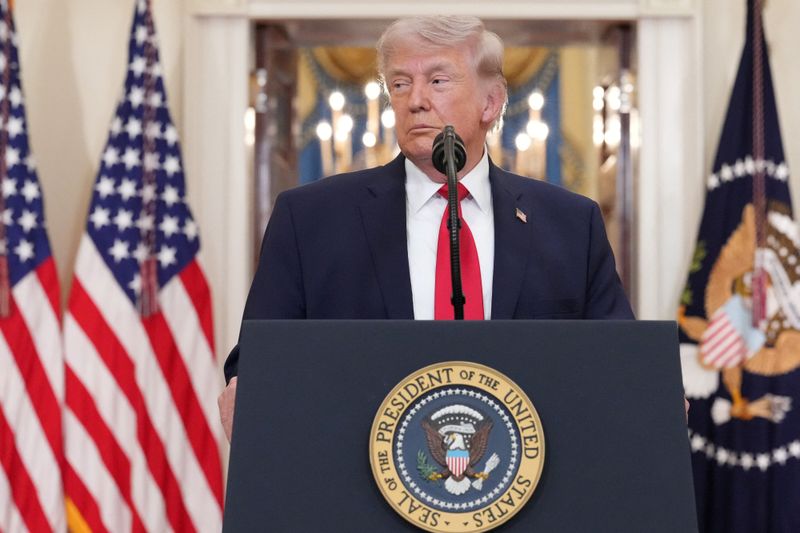

The absence of the United States from a UK-hosted virtual summit by the British foreign secretary on Thursday evening, which was attended by more than 60 countries, including India, tells the real story of the US-Israel war against Iran, which is now in its fifth week.Over the last few days, US President Donald Trump has done more to antagonise his own allies than any other US President in living memory — putting into danger an Atlantic alliance for the first time since the end of the WWII.He has insulted French President Emmanuel Macron and his wife, threatened to walk out of NATO and generally antagonised his partners in Europe.Not that his partners in Europe don’t want the Strait of Hormuz reopened as soon as possible. But European leaders favour negotiation with Iran over force, believing that military intervention could widen the crisis.The Strait remains one of the world’s most vital energy arteries, carrying a fifth of global oil and gas supply. Its disruption has already sent prices higher, with hundreds of vessels stranded and traffic reduced sharply.Britain’s foreign secretary, Yvette Cooper, described the closure as “a direct threat to global prosperity,” adding that Iran was seeking to “hold the global economy hostage.” The language is stark, and deliberately so.Trump, on the other hand, has now said that he wants to bomb Iran’s power plants.More than 40 countries joined a UK-hosted virtual summit this week after Iran closed the Strait of Hormuz, disrupting one of the world’s most critical energy routes. Governments agreed to pursue diplomatic pressure — including possible sanctions — to reopen the waterway, but stopped short of endorsing military action.The caution exposes a clear divide. Countries dependent on Gulf energy supplies want the route reopened quickly, but remain wary of escalation. President Trump has urged more decisive action, suggesting affected nations should “take care of that passage.” European leaders, by contrast, favour negotiation with Iran over force, reflecting concern that military intervention could widen the crisis.For India, the implications are immediate and concrete. A significant share of its crude oil and liquefied natural gas imports passes through the Strait of Hormuz, making any disruption there a direct transmission mechanism into inflation, fiscal stability and growth. Higher energy prices feed quickly into domestic costs, from transport to fertiliser, with wider consequences for both industry and agriculture.Beyond energy, the Gulf remains central to India’s trade and to the livelihoods of millions of Indian nationals working across the region. What may appear, from a European vantage point, as a distant maritime crisis is, for India, an economic and strategic exposure of the first order.Yet the response from the assembled coalition remains cautious, even procedural. Governments have spoken of using “every possible diplomatic, economic and coordinated measure” — including recourse to the United Nations — while deferring harder decisions. The emphasis is on pressure rather than enforcement.What makes this moment unusual is not simply disagreement, but absence. The United States did not participate in the summit, despite being central to the crisis. Nor is there any clear institutional framework through which collective action might be organised. NATO, once the anchor of Western security coordination, is largely peripheral to events unfolding in the Gulf.What emerges instead is a looser, improvised coalition with limited cohesion.In this context, the language of “freedom of navigation” begins to sound less like a guarantee than an aspiration. For decades, it rested on an implicit understanding: that the United States, backed by its allies, would ensure the openness of critical sea lanes. That assumption is now being tested.The reliance on sanctions and diplomatic pressure may yet prove effective, but not quickly. Iran faces real economic constraints, and coordinated pressure carries weight. But such measures take time, and each day of disruption reverberates through energy markets, supply chains and inflation expectations far beyond the Gulf.Nor is the hesitation seen over Hormuz an isolated case. It reflects a broader pattern: cautious responses in the Red Sea, incrementalism in Western policy on Ukraine, and a gradual shift from structured alliances to ad hoc coalitions. The machinery of collective security appears slower, more contested and less decisive than in earlier decades.None of this amounts to a collapse of the international system. The Strait of Hormuz will not remain closed indefinitely. Some combination of diplomacy, pressure and deterrence will eventually restore the flow of shipping. What matters is the manner in which that outcome is reached.The past week has revealed a system that no longer acts with automaticity or unity under pressure. It consults, qualifies and defers. In quieter times, such caution may be prudent. In moments of acute crisis, it carries its own risks.The challenge now is not only to reopen a vital sea lane, but to recover the capacity to act together when it closes. For countries such as India — heavily dependent on distant sea lanes yet with limited influence over the coalitions that secure them — that uncertainty carries particular weight. Until then, the world’s most important waterways remain exposed not just to disruption, but to delay, and to the growing question of who, if anyone, is prepared to act decisively when they are threatened.