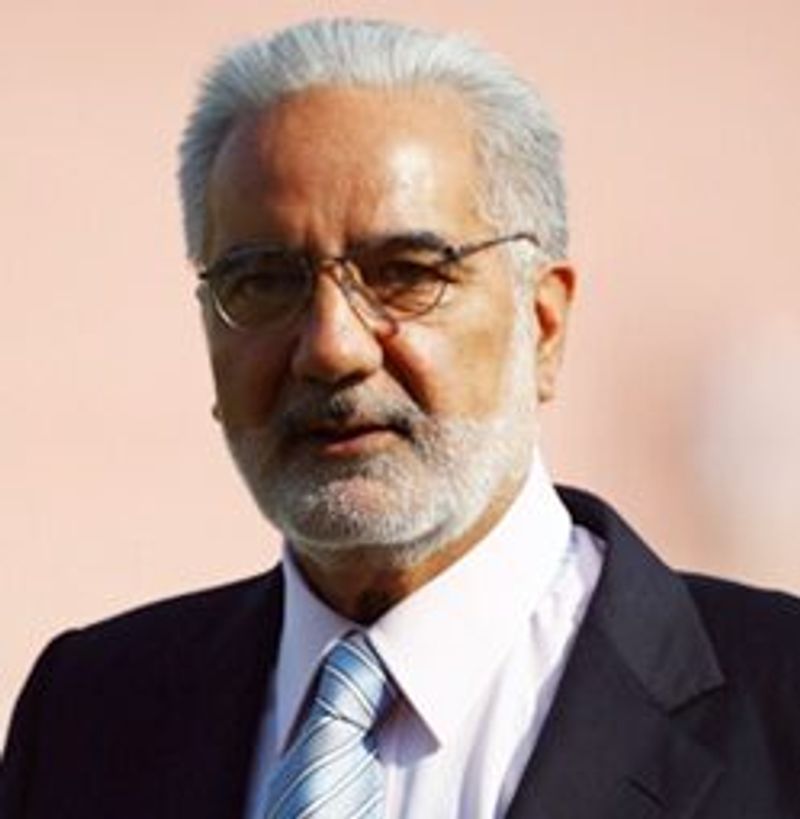
To judge people after they are no more is fraught with dangers of excesses and over-indulgence. Yet I must — not judge but record my impressions of Inderjit Singh Bindra. The news of his passing stirred memories, and how the inter-play of power, politics and sports shapes the future course of events.My initiation into sports journalism as a naive, idealistic 24-year-old coincided with his negotiating the Indian cricket board’s complex hierarchy with skilful brashness that stumped seasoned administrators. That he was to play a pivotal role in navigating India’s rise in a White-dominated sport was to come much later, not before he had set his own house in order and challenged the West-South control over cricket’s decision-making in India.The late Seventies to the early Nineties in Punjab was a turbulent time. Terrorism was planting its insidious roots, people lived in fear of violence and death, while politics was mired in confusion, cunningness, deception and survival games.Miraculously, cricket remained largely unaffected and even flourished. A callow youth like me, fresh from university, was suddenly pitchforked into this adult world full of deceitful intrigues, trying to make sense of people with an unbridled ambition to succeed. Even men who believed that all actions must have an ethical framework were stumbling, unsure of when and which move to make to stand steadfast.Bindra had taken charge of the Punjab Cricket Association at a relatively young age of 40. The strapping suave, urbane, English-speaking Sikh had made a name for himself as the Deputy Commissioner of Punjab’s Patiala district. His cleanliness drive of the congested lanes in the city had ingratiated him with the middle classes. He had an air of decisiveness about him, which would not tolerate dissent and “fools” easily.He began his career as an IPS officer before qualifying for the IAS to become a true-bred bureaucrat, and held many important positions in Punjab’s bureaucracy.For us, Chandigarh journalists, he held a cherished place in our hearts, especially when he would host the press corps for a sumptuous meal and the best of drinks. Ah! For a connoisseur and a gourmet, it won’t be misplaced to quote Wordsworth: “Bliss was it in that dawn to be alive, but to be young was very heaven.”While the world around us appeared a dangerous place, cricket flourished in splendid isolation. The man with meticulous taste and a desire to see Punjab cricket find a more acceptable place in Indian sports was unstoppable. When Mohinder Amarnath was dropped from the Indian team and called the selectors a “bunch of jokers”, Bindra lashed out at the board. He accused them of bias against the North players and challenged them to have a match between North Zone and the Rest of India.His outspokenness wasn’t limited to words; he aspired big and was willing to take chances. He knew the art of wooing the best brains in cricket, listen to what they had to say and implement many suggestions which threatened the status quo. His burning desire to see Punjab become a powerhouse of cricket turned him to seek the legendary Bishan Singh Bedi’s help. Bedi, with the specific mandate of complete control over all matters cricketing, guided Punjab to its first Ranji Trophy win in 1992-93.Bindra understood the value of international media and was in touch with some of the most influential cricket writers worldwide when India was trying to spread its wings in the International Cricket Council (ICC). While Jagmohan Dalmiya may have been rightly credited with masterminding India’s chess-like moves to gain control of the ICC, it was Bindra’s negotiating skills and understanding the “market value” of cricket that checkmated the White dominance.Bindra was one of the key men, along with NKP Salve and Dalmiya, who helped India become the first nation after England to host the World Cup in 1987. Even more significant was his role post-liberalisation in breaking Doordarshan’s monopoly over the live telecast of matches. More than Dalmiya’s shrewd calculations, it were his Punjabi roots and bravado that brought Pakistan firmly to India’s side as the neighbours — Pakistan, India, Sri Lanka — hosted the 1996 World Cup. India was now unstoppable.The market, propelled by the middle class benefitting from economic growth, was the driver that placed India at the helm of world cricket.Somewhere in this journey of Indian dominance which made Dalmiya the face of international cricket administration, Bindra felt slighted. He may not have been wrong to believe that he more than anyone else deserved to be the ICC president. He distanced himself from Dalmiya and became his strident critic, shaking the Indian board’s power equations.Even when Bindra’s influence was waning, his marketing acumen remained sharp as ever. People forget that the Indian Premier League (IPL) founder, Lalit Modi, was introduced, against all opposition, to the Indian board by Bindra. He made Modi vice-president of the Punjab Cricket Association in 2004 and four years later, Modi launched the IPL.In his later years, deteriorating health reduced him to become a mute spectator, unable to taste the fruits of the revolutionary seeds he had helped plant in Indian cricket’s fertile soil. For a world which loves pithy one-liners, it may not be wrong to say that IS Bindra shaped the cricketing destiny of a nation always in a flux.— The writer is the author of ‘Not Quite Cricket’ and ‘Not Just Cricket’