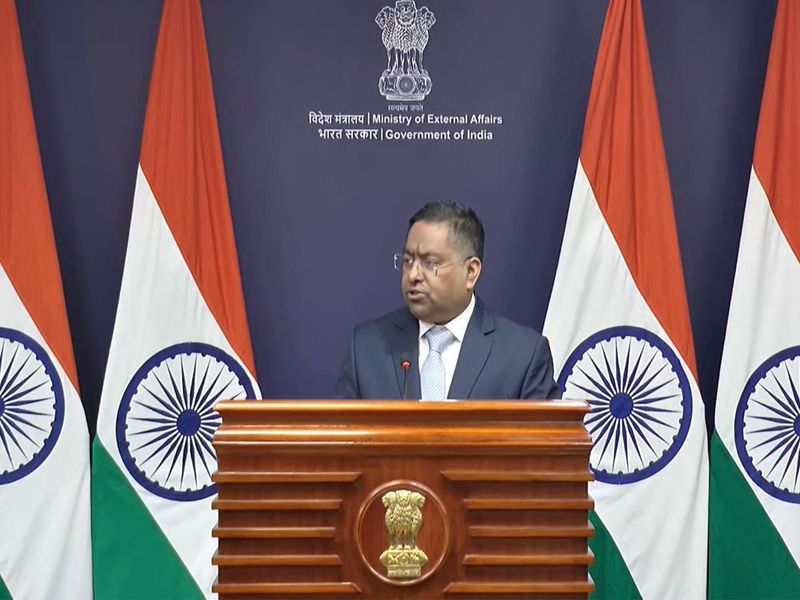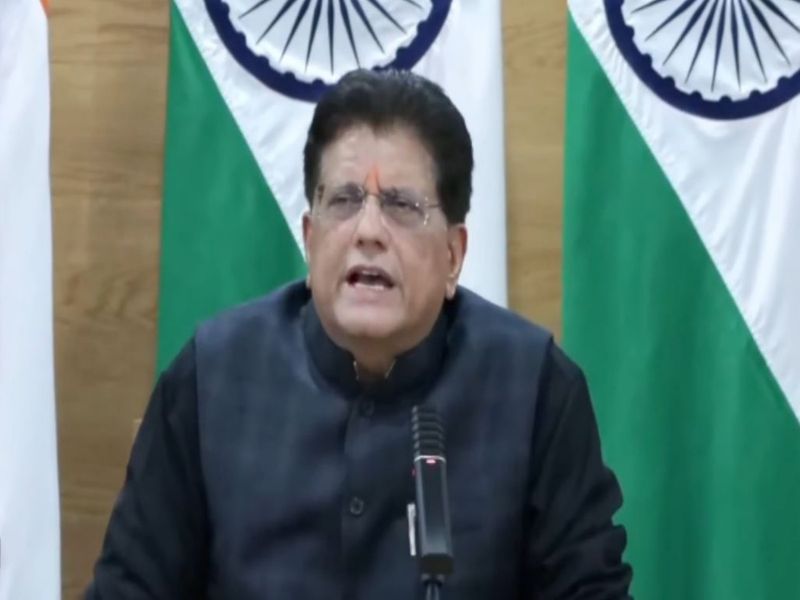
India and the US are set to operationalise the first tranche of their long-awaited bilateral trade agreement by mid-March, with Washington expected to significantly lower import duties on Indian goods, Commerce and Industry Minister Piyush Goyal said on Thursday, indicating that negotiations have entered the decisive phase.Goyal said the two sides were likely to finalise and sign a joint statement within next four–five days, after which the US tariffs on Indian exports would be reduced to 18 per cent from the existing 50 per cent. “The first tranche of the bilateral trade agreement is almost ready. Once the joint statement is signed, the first phase of this partnership will begin,” he told reporters.At present, Indian goods face a 50 per cent duty, comprising a 25 per cent reciprocal tariff and an additional 25 per cent levy linked to India’s purchase of Russian crude oil.Goyal said the reduced tariffs would be implemented through a US executive order, likely to be issued within days of the joint statement. The formal legal agreement, he said, was under drafting and was expected to be concluded by mid-March. He clarified that the pact did not include any investment commitments at this stage.The minister said the agreement was expected to provide further concessions after the legal framework was finalised. He also highlighted that the two countries were working towards achieving a $500 billion bilateral trade target, set in February 2025, which would require significant expansion in both exports and sourcing between the two economies.The minister said India’s rapid economic expansion was driving demand across sectors such as energy, steel, aircraft, ICT products and data centre infrastructure. He noted that India’s steel production capacity was projected to increase from the current 140 million tonnes to nearly 300 million tonnes in the coming years.India’s aircraft demand alone, he said, including existing and expected orders from Boeing, was estimated at $70–80 billion, which could rise to nearly $100 billion after accounting for engines and spare parts. He also pointed to the growing push for digital infrastructure, stating that significant concessions announced in the Union Budget for data centres could attract $100–150 billion in investments, which would require large-scale imports of equipment and technology.Commerce Secretary Rajesh Agrawal said India would reduce tariffs on American goods only after the legal agreement was signed, explaining that India’s tariffs were based on the most-favoured-nation (MFN) principle, while US tariffs were imposed through executive action. He said all items India had committed to source from the US—such as oil, LNG, LPG, aircraft, ICT products, laptops, smartphones and data centre equipment—were already part of India’s global import basket.Separately, External Affairs Minister S Jaishankar said the historic India-US trade deal was in the final stages of detailing and would be completed very soon. Concluding his visit to the US, Jaishankar described his engagements as productive and positive and said the agreement would open a new phase in bilateral ties, with expanding cooperation across trade, defence, energy, strategic affairs and critical minerals.Jaishankar said the India-US cooperation in critical minerals was advancing rapidly and further engagement was expected in strategic sectors in the coming days. He also participated in a high-level international meeting hosted by the US, which saw participation from over 50 countries, including the European Union.According to the Ministry of External Affairs, Jaishankar highlighted the challenges posed by excessive concentration in global supply chains and stressed the need for de-risking supply chains through structured international cooperation. He also outlined India’s efforts to build resilience through initiatives such as the National Critical Mineral Mission, the creation of a rare earth corridor and the country’s emphasis on responsible commerce.He conveyed India’s support for the FORGE initiative, launched as part of the evolving critical minerals partnership framework, underscoring the growing strategic convergence between New Delhi and Washington as the two countries move towards concluding the landmark trade pact.