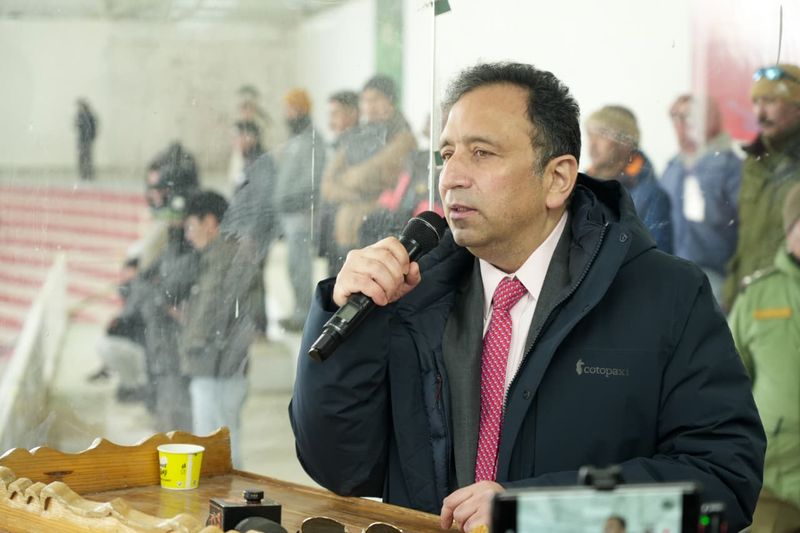

Ladakh can draw inspiration from Bhutan’s tourism model to preserve its fragile and pristine landscape and avoid the unplanned development seen in several hill stations across north India, Ladakh’s newly appointed Chief Secretary Ashish Kundra has said.Speaking to The Tribune soon after taking charge, Kundra said tourism—the primary economic activity in Ladakh—requires a focused and sustainable strategy to ensure long-term environmental and economic balance.“Within the tourism space in Ladakh, there is a need to get a focused strategy on sustainable tourism,” he said, adding that while several initiatives are underway, they remain largely fragmented.Outlining priority areas within the tourism sector, Kundra said immersive cultural experiences centred on Buddhist monasteries would be a key focus. “The second area is adventure tourism, including winter sports, followed by nature and wildlife tourism,” he said.However, Kundra stressed that regulation would be critical to prevent environmental degradation. “We can perhaps seek inspiration from the Bhutan model and ensure that tourism here does not become such that this pristine territory gets spoiled, as has happened in other hill stations in north India,” he said.Kundra said Bhutan’s follows a ‘High Value, Low Volume’ tourism policy that prioritises quality over quantity. “It’s not about how many tourists come, but how meaningful the experience is—for the guest, the host, and the land. This approach protects Bhutan’s environment and culture while ensuring tourism benefits local communities,” he explains.Highlighting the contrast between hill and plain urban environments, Kundra cautioned against unplanned construction. “What we have seen in other hill stations is reckless brick-and-mortar construction, which puts immense stress on utilities such as water supply, sewage and sanitation,” he said. “We need to prepare Himalayan-specific urban master plans and enforce them strictly.”Kundra also pointed to the untapped potential of winter tourism, particularly in Dras. “The economic opportunity for winter tourism in Dras is phenomenal, but the supporting infrastructure is lacking,” he said.He noted that Dras also holds significant historical importance due to its military legacy. “There is a war memorial and a museum, and the challenge is how to integrate all these experiences to create world-class tourism infrastructure,” he said.Despite the challenges, Kundra expressed optimism. “I personally feel Ladakh is still at a stage where things have not fallen apart to an irredeemable extent. This is the right time to plan carefully,” he said.Beyond tourism, the Chief Secretary identified Pashmina as a key priority area. “The wool comes from Ladakh, but there is negligible value addition here. We want to create the entire value chain and integrate it at a much higher level,” he said, adding that preliminary discussions have already begun.Kundra also highlighted significant opportunities in the agri-horticulture sector. “Ladakh produces some of the best apricots, sea buckthorn, and apples in certain regions. The focus now should be on value addition—not just for local sustenance, but to generate sustainable incomes for the people,” he said.