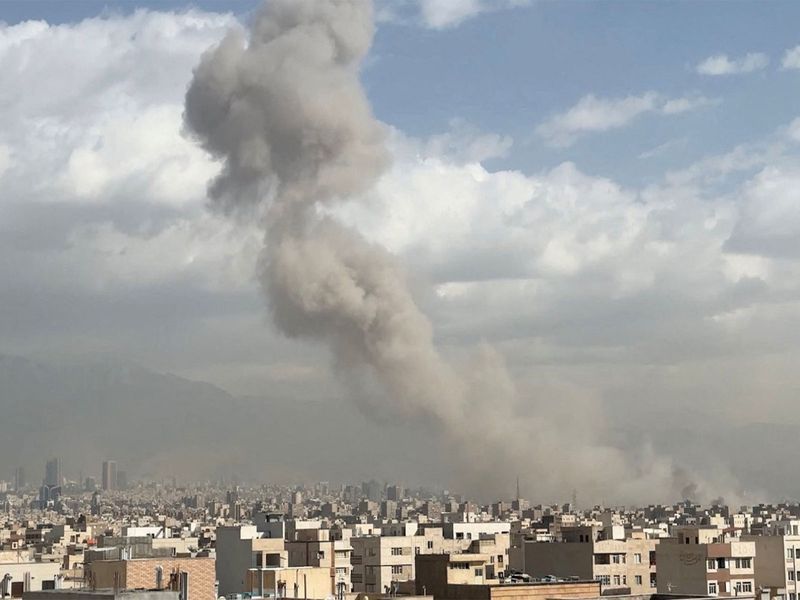

The war between Israel and the United States on one side and the Islamic Republic of Iran on the other did not begin in the skies last weekend. It is the culmination of a long-running shadow conflict and it entered an unprecedented phase with the confirmed death of Iran’s Supreme Leader, Ayatollah Ali Khamenei, in the opening wave of strikes.What was once an embedded campaign of assassinations, sabotage and covert penetration has now broken into overt state-to-state confrontation.For years, the blows were deniable. Magnetic bombs attached to scientists’ cars, mysterious shootings of Islamic Revolutionary Guard Corps officers, cyber-attacks on nuclear centrifuges and the theft of Iran’s nuclear archive were attributed by Tehran to Israeli intelligence, often with alleged American backing. Israel rarely confirmed. Washington publicly distanced itself. Iran vowed revenge.The covert conflict unfolded in laboratories, safe houses and intelligence corridors. Now it has erupted into visible warfare: the public declaration of a struggle that had long been taking place inside the Islamic Republic.The first widely reported incident in what analysts now see as part of that sustained campaign came in January 2010, when Masoud Ali-Mohammadi, a professor at Tehran University and consultant to Iran’s Atomic Energy Organisation, was killed by a remote-controlled bomb attached to his vehicle. Iranian officials immediately blamed Israeli intelligence. “Zionists and their accomplices are responsible,” an Iranian prosecutor told state media, framing the attack as part of a hostile foreign effort to undermine Iran’s nuclear programme.That same year, in November 2010, Majid Shahriari, a nuclear physicist involved in Iran’s uranium enrichment research, was killed by a magnetic bomb affixed to his car in a Tehran suburb. Iranian authorities again pointed to Mossad operatives and announced arrests. In July 2011, Darioush Rezaeinejad was shot dead outside his home. In January 2012, Mostafa Ahmadi Roshan was killed in a similar magnetic device attack. Taken together, the incidents established a consistent pattern: targeted killings of figures associated with Iran’s nuclear effort.Israel kept publicly silent on these deaths. But then defence minister Ehud Barak remarked in 2012 that he was “not shedding tears” for the scientists, a comment widely interpreted as tacit approval. Western intelligence officials, speaking on condition of anonymity to major outlets, said Israeli services were widely believed to be responsible for several of the incidents, though official confirmation was never offered.The tempo appeared to escalate in November 2020, when Mohsen Fakhrizadeh — described by Western and Iranian officials alike as a senior figure in Iran’s past nuclear weapons research — was assassinated near Tehran. Fakhrizadeh had been publicly identified by Israeli Prime Minister Benjamin Netanyahu in 2018 as central to Iran’s nuclear project; Netanyahu urged audiences to “remember that name” during a televised presentation alleging concealed nuclear documentation. After Fakhrizadeh was killed using remote-operated weaponry, Iranian officials accused Israel of directing the operation and announced arrests of suspects purportedly linked to Mossad.Israeli leaders did not claim responsibility. But the sophistication of the operation underscored the reach of those targeting Iran’s nuclear infrastructure. Fakhrizadeh’s death, occurring amid renewed diplomatic engagement efforts by the United States under President Joe Biden, highlighted the widening gap between covert action and public diplomacy.The campaign did not focus solely on scientists. In January 2020, the United States assassinated Qassem Soleimani, commander of the IRGC’s Quds Force, in Baghdad. Though that strike was an overt American military action, Tehran viewed it within the broader pattern of pressure directed at its regional and strategic capabilities and a moment when the shadow conflict briefly surfaced into open confrontation before receding again.In May 2022, Colonel Hassan Sayyad Khodaei was shot dead in Tehran. Iranian state news described him as a member of the Quds Force. Tehran blamed “elements linked to global arrogance” — a phrase commonly used to denote Israel and the United States. Subsequent reporting in major international outlets cited unnamed intelligence sources indicating Israeli involvement, though Israel did not officially confirm the claim.Alongside targeted killings, sabotage and cyber operations formed another strand of the campaign. The Stuxnet cyber-attack of 2010, later widely attributed in reporting to joint US-Israeli operations, damaged centrifuges at Iran’s Natanz enrichment facility. Subsequent explosions and unexplained incidents at nuclear sites were blamed by the Iranian authorities on foreign interference, deepening perceptions of penetration and vulnerability.Perhaps the most audacious episode occurred in 2018, when Israeli operatives removed a vast cache of Iranian nuclear documents from a storage facility in Tehran. Netanyahu publicly displayed the archive, presenting it as evidence of concealed nuclear activity. Iranian officials acknowledged a break-in but sought to minimise its significance. The episode nonetheless suggested an intelligence reach extending deep inside Iran’s security architecture.Throughout these years, Tehran repeatedly asserted that Mossad had recruited Iranian nationals to conduct surveillance and operations on Iranian soil. Iranian state media broadcast arrests and alleged confessions of “Mossad-linked agents”, though human rights groups cautioned that such confessions may have been extracted under duress. Israeli media, citing unnamed security sources, reported extensively on long-term efforts to infiltrate Iranian systems.For much of the past decade, the conflict remained calibrated and deniable. Israel conducted hundreds of airstrikes in Syria targeting what it described as Iranian weapons transfers to Hezbollah and other proxies, actions it rarely acknowledged but seldom denied. Iran expanded its regional footprint across Iraq, Syria, Lebanon and Yemen. Each side’s actions hardened rhetoric and narrowed diplomatic space.In public statements, key figures framed the divide starkly. Netanyahu said Israel would act “anywhere” to thwart Iran’s nuclear ambitions. US officials reiterated commitments to Israel’s security while pursuing intermittent diplomatic talks. Iran’s Supreme Leader, Ayatollah Ali Khamenei, repeatedly denounced Israel and vowed retaliation.As assassinations, sabotage, sanctions and retaliatory threats accumulated, the boundary between covert confrontation and open war grew thinner. With the confirmed killing of Khamenei in the opening strikes, that boundary has now collapsed entirely. What began as deniable operations in the shadows has culminated in the decapitation of the Islamic Republic’s highest authority, a development without precedent in the history of the modern Iranian state.The missiles now visible across the region are not the beginning of this conflict but its overt phase. The groundwork was laid over years — in laboratories, on Tehran’s streets, inside intelligence networks and across digital systems — long before the first declared strike.