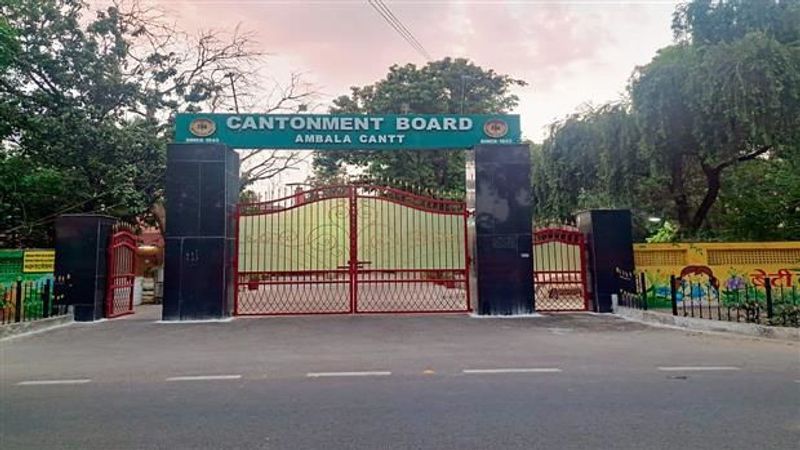

The Jan Vishwas (Amendment of Provisions) Bill, 2026, recently passed by the Parliament, signals a turning point in the legal history of India’s cantonments.While the Bill has a much wider canvas proposing decriminalisation across dozens of central statutes, its implications for the Cantonments Act, 2006, are significant.Why Cantonment Act needs to changeFor 61 cantonments under the Ministry of Defence, the amendments signal not just statutory tidying up, but a major shift in legal philosophy.The Cantonments Act has always stood apart from ordinary municipal law. It regulates civic life in notified cantonment areas, sanitation, roads, public health, water supply, buildings, markets, trade licences and local administration but does so in spaces shaped by military ownership, defence land management and security sensitivities.This dual character has historically produced a more control-oriented legal framework. Like many older statutes, the Act relied heavily on criminal law even for minor civic or regulatory lapses.Technical breaches were routinely cast as offences “punishable with fine”, thereby subjecting ordinary non-compliance to the machinery and stigma of criminal process.What the new law doesThe new law addresses the issue of needless punishments. The Ministry of Defence reviewed 38 criminal provisions in the Cantonments Act and identified 31 for decriminalisation and three for partial decriminalisation.Several contraventions that were earlier criminally punishable have now been converted into civil defaults, attracting administrative penalties. In provision after provision, the phrase “punishable with fine” has been replaced with “liable to penalty”. This shift marks the movement from a prosecution-led system to a compliance-oriented one.Mechanism to adjudicate penaltiesThe centrepiece of this reform is the insertion of Section 333A, which creates a formal mechanism for adjudication of penalties.Under this framework, the Chief Executive Officer of the Cantonment Board would be empowered to impose penalties for specified contraventions after giving the affected person an opportunity to be heard.The Act also makes an important conceptual clarification: a penalty under this framework is civil in nature, does not amount to a conviction, and the proceeding itself is not a criminal prosecution. An appeal lies with the President of the Cantonment Board.There are defined timelines for filing and disposal. This structural change will reduce unnecessary criminalisation of municipal and licensing defaults, lessen the burden on courts, and enable more prompt disposal of minor regulatory matters.Relief for tradersThe new adjudication mechanism will provide relief to traders, shopkeepers, property owners and residents in cantonment areas. This will mean a more proportionate response to first-time or technical breaches.For the administration, it will mean faster enforcement in areas such as sanitation, markets, licensing, public nuisances and building compliance.No blanket relaxationThe law does not provide blanket relaxation of regulatory standards. Instead, it adopts a calibrated and graded enforcement framework. Under this approach, initial violations are treated with relative leniency through the imposition of civil penalties.Repeat or subsequent breaches attract stricter, including criminal, consequences. The treatment of building-related violations reflects a nuanced balance between deterrence and fairness.PenaltiesUnder Section 244, which governs restrictions on the use of buildings within cantonment areas, a first contravention attracts a civil penalty of up to Rs 1 lakh.However, any second or subsequent violation escalates into criminal liability, with a conviction-based fine of up to Rs 2 lakh, along with additional daily fines for continuing non-compliance. A similar graduated enforcement mechanism is incorporated under Section 247 concerning unauthorized constructions.The intent is clear to extend leniency to first-time offenders while ensuring stringent action against habitual violators.The framework recognises that not every regulatory lapse warrants criminalization, yet it equally ensures that the law retains sufficient deterrent force to address repeated and deliberate non-compliance.Way forwardThe amendments will move the cantonment regulation away from a criminalisation-first model and toward a civil enforcement regime. That is a sensible and overdue transition, government officials say.Overall, the Jan Vishwas Bill represents a concerted effort to move towards a more citizen-friendly, efficient, and modern administrative framework, while maintaining necessary safeguards for public order, safety, and planned development, and will be seen as a modern, trust-based reform that reduces harassment and improves governance efficiency.