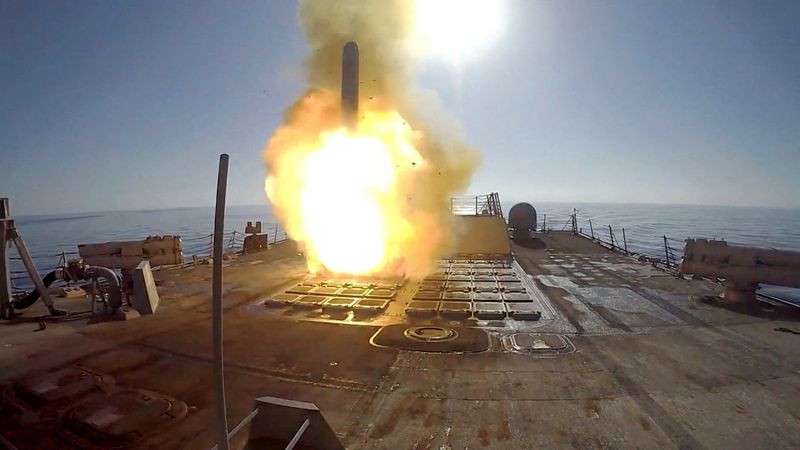

The West Asia war entered a dangerous new phase on Tuesday, with US Defence Secretary Pete Hegseth warning that the day would witness the most intense American strikes against Iran since the conflict began, even as Tehran claimed it was deploying heavier and more numerous missiles in response.Speaking amid the rapidly escalating conflict, Hegseth said the US would intensify its military campaign against Iranian targets, signalling a major expansion of the air and missile assault that began late last month.The war between the US-Israel alliance and Iran has already widened into a multi-front confrontation across the Gulf, raising fears of a prolonged regional conflict and a global energy shock.Meanwhile, Iran’s powerful Islamic Revolutionary Guard Corps (IRGC) rejected US claims that its missile capabilities had been crippled by the strikes. IRGC said its forces were now deploying missiles in greater numbers and with significantly heavier payloads, including warheads weighing more than one tonne.The statement was aimed at countering claims by Washington that Iranian military infrastructure had been severely degraded during the first phase of the war.Addressing reporters in Florida, US President Donald Trump said the war was a “short-term excursion” and insisted that US forces were close to achieving their objectives. However, he declined to provide a timeline for ending the conflict.Trump also warned Tehran against disrupting shipping through the strategic Strait of Hormuz, saying the US would respond with “immense force” if Iran attempted to block vessels moving through the narrow waterway.The US President criticised Iran’s decision to appoint Mojtaba Khamenei as the country’s new Supreme Leader following the killing of Ali Khamenei during the opening phase of the war. Analysts say the leadership transition could harden Tehran’s stance and complicate diplomatic efforts.Despite the tough rhetoric, Trump suggested the US campaign had significantly weakened Iran’s military capabilities and claimed the conflict was “nearing completion”.Iran, however, has warned that it could block regional oil exports if attacks continue. Iranian officials have said oil shipments from the Gulf could be halted until US-Israeli strikes stop.Tehran has also rejected calls for negotiations. Iranian Foreign Minister Abbas Araghchi said the country would continue fighting “as long as necessary”.The conflict has already triggered missile and drone exchanges across the Gulf, including Iranian strikes targeting US facilities and infrastructure in Bahrain and other regional locations.Israel has simultaneously expanded operations against Iranian-linked groups in Lebanon, launching strikes on positions of Hezbollah in Beirut following rocket attacks into northern Israel.Overnight, US-Israeli airstrikes hit several locations inside Iran, including a residential building in the city of Arak, killing at least five people and injuring several others, according to Iranian media reports.The bombardment campaign has also targeted oil depots and refining infrastructure, triggering large fires and raising concerns about severe environmental damage in parts of Tehran and surrounding regions.Civilian casualties from the war have crossed 1,300 in Iran, according to international estimates. The US military has also confirmed casualties among its personnel deployed in the region, highlighting the growing intensity of the confrontation.The war has severely disrupted shipping through the Strait of Hormuz, through which nearly 20 per cent of the world’s oil supply normally passes.Meanwhile, Russian President Vladimir Putin warned that oil flows through the strait could halt completely within a month if the conflict continues to escalate.Energy markets have reacted sharply to the hostilities. Global crude prices surged past USD 100 per barrel, the highest level in four years, amid fears of supply disruptions from the Gulf. Prices later retreated after Trump suggested the war might end soon and hinted at the possibility of easing restrictions on Russian oil to stabilise global markets.Even after the correction, oil prices remain significantly higher than pre-war levels, reflecting continued uncertainty in energy markets.Major Gulf producers, including Saudi Arabia, are scrambling to reroute shipments and adjust production strategies as shipping lanes face growing security threats. The chief executive of Saudi Aramco warned that the conflict could have “catastrophic consequences” for global energy markets if disruptions persist.The spike in energy prices is already pushing fuel costs higher worldwide and increasing political pressure on governments, including the Trump administration in the US.As the war enters its second week, diplomatic efforts to halt the fighting remain limited, with both Washington and Tehran signalling that military operations will continue for now.