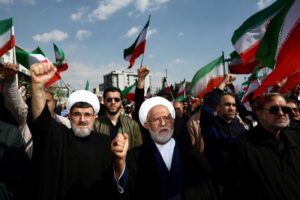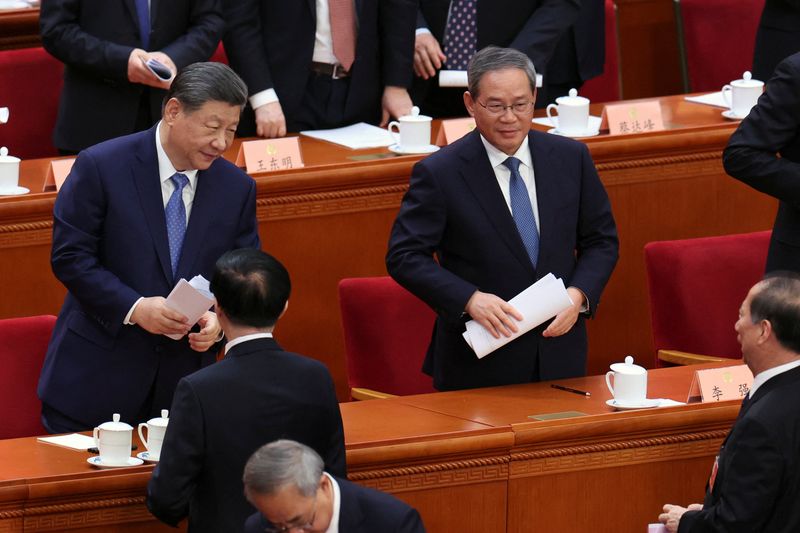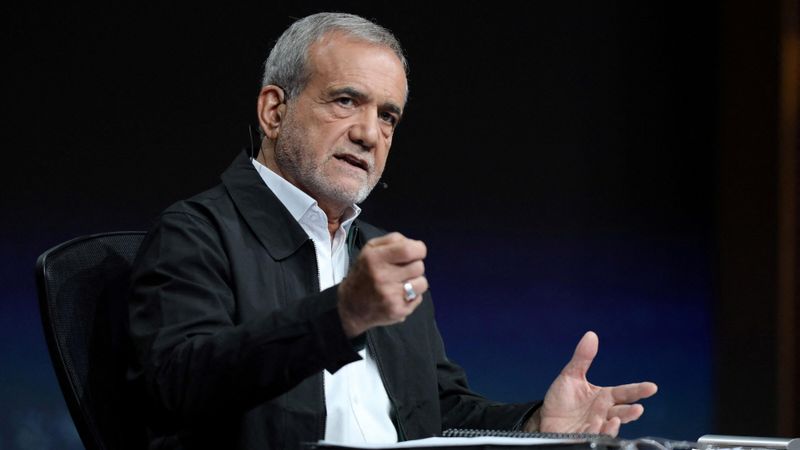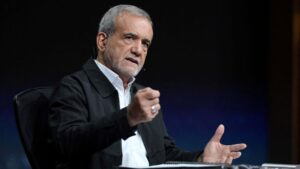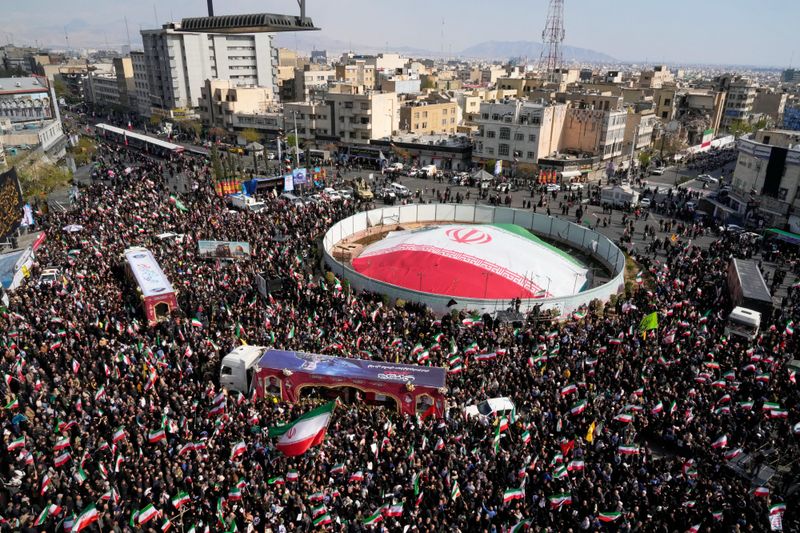

US President Donald Trump on Wednesday claimed that his Iranian counterpart Masoud Pezeshkian wanted a ceasefire even as the Islamic country’s Foreign Ministry spokesperson Esmail Baghaei dismissed the claim as “false and baseless”.This comes even as Bahrain, a close US ally that hosts the US Navy’s Fifth Fleet, is sponsoring a UN Security Council resolution seeking a “joint force” to reopen the Strait of Hormuz.In a post on social media on Wednesday, Trump said, “Iran’s new regime President, much less radicalised and far more intelligent than his predecessors, has just asked the US for a ceasefire.” However, it was not clear what Trump meant by “new regime President” as Pezeshkian has been Iran’s President since before the conflict began on February 28 and continues in the same role. A day earlier, Trump had said he could walk away from the war in two to three weeks once he felt confident Iran would not be able to build a nuclear weapon even if Tehran did not agree to a ceasefire.On Wednesday, setting terms for a ceasefire, Trump said it would only happen when the Strait of Hormuz “is open, free, clear”. Iran’s Revolutionary Guard, in a separate statement, said the strait “is firmly and decisively under the control” of its forces. “This strait will not be opened to the enemies of this nation,” it added.According to a report in The Wall Street Journal, the UAE is lobbying for a UN Security Council resolution that could authorise it to join forces with the US and other allies such as Saudi Arabia to reopen the strategic Strait of Hormuz. Bahrain is sponsoring the resolution, with a vote expected on Thursday. About one-fifth of the world’s traded oil passes through the Strait of Hormuz in peacetime.Meanwhile, in an interview with Al Jazeera, Iran’s Foreign Minister Abbas Araghchi acknowledged receiving direct messages from Trump’s envoy Steve Witkoff. He, however, said there were no direct negotiations and added that Iran had no faith in talks with the US.He also signalled Tehran’s willingness to continue fighting. “You cannot speak to the people of Iran in the language of threats and deadlines,” he said.Trump has been under growing pressure to end the war as oil prices have surged, pushing up the cost of gasoline, food and other goods. The spot price of Brent crude, the international benchmark, has risen more than 40 per cent since the start of the war, trading above $103 a barrel on Wednesday.Meanwhile, the Israel defence forces said the Israeli Air Force had dropped over 16,000 bombs in Iran since the start of the war, in more than 800 waves of strikes targeting air defence systems, ballistic missile launchers, weapon production sites, nuclear facilities, headquarters and military commanders.Iran also continued its attacks in the Persian Gulf on Wednesday. A cruise missile struck an oil tanker off Qatar’s coast, the Defence Ministry said, while other Gulf states were also targeted.The US has presented Iran with a 15-point plan aimed at achieving a ceasefire, including reopening the strait and rolling back its nuclear programme.Iran, however, maintains that its nuclear programme is peaceful and its five-point response includes retaining sovereignty over the Strait of Hormuz.