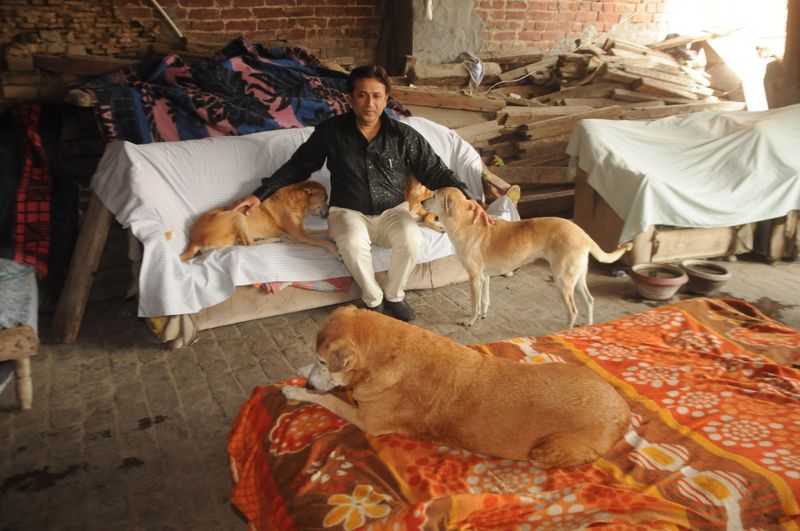

As India continues to debate the stray dog crisis and the Supreme Court of India reiterates that strays cannot be indiscriminately removed but must be managed through sterilisation, vaccination and regulated relocation under the Animal Birth Control Rules, one man in Amritsar is setting an example. He not only provides shelter to stray canines but also works to control their population in the densely populated locality of the walled city where he resides.Inside a 500-yard, two-storey house tucked into Kairoj Market in the walled city, a short walk from the Golden Temple, compassion has found a permanent address.Every morning, before the city stirs to life, Nitesh Singhal begins his day surrounded by wagging tails and eager eyes. What was once a storage godown on the ground floor of his house has been transformed into an organised shelter for homeless and injured dogs. The terrace above now serves as a safe play area where the animals stretch, play and recover after surgeries.His concern for stray animals began early in life, shaped by the sight of injured dogs left unattended on busy roads. “I couldn’t just walk away,” he recalls. That impulse to stop and help gradually evolved into a full-fledged commitment.Today, his home shelters more than a dozen abandoned and injured dogs. Each animal is sterilised, vaccinated and medically treated in accordance with Animal Birth Control norms. Dogs that recover are housed permanently within his compound — away from schools, hospitals and crowded public spaces.To ensure proper upkeep, he has employed two caretakers who manage feeding schedules, hygiene and timely medication. A significant portion of his personal income goes towards food, vaccines, emergency surgeries and post-operative care.Speaking on the stray dog issue that prompted the apex court to intervene, Singhal said the authorities concerned must implement animal birth control guidelines honestly and in both letter and spirit.Residents from nearby localities also approach him for help with injured strays.At a time when municipalities are struggling to implement policy directives and the national conversation remains sharply divided, this modest home offers a practical model rooted in balance. “Public safety and rules are important,” says Nitesh, adding, “but compassion matters too. We have to find a middle path.”