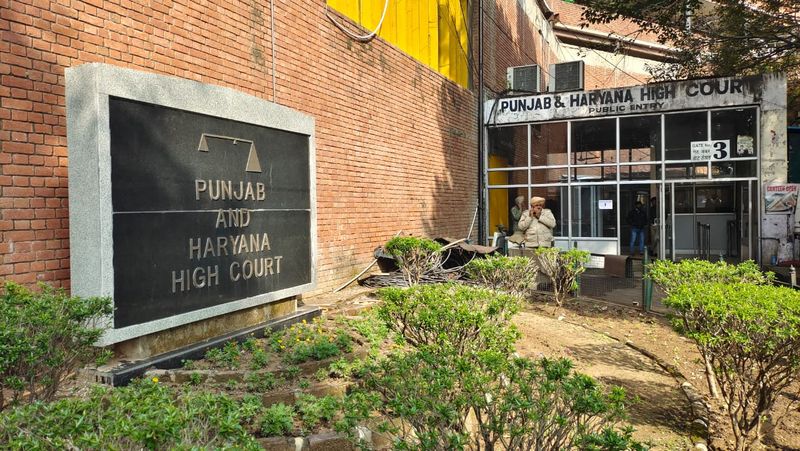
The Punjab and Haryana High Court has held that criticism, satire and reportage — even if uncomfortable or unpalatable to those in power — are protected facets of journalistic freedom of speech and expression, and that criminal law cannot be set in motion merely because a public functionary feels offended.Justice Vinod S Bhardwaj cautioned that the State action could not be based on subjective hurt or artificially inflamed sentiments. The bench was dealing with a petition by a law student-RTI activist, and three journalists. Issuing notice of motion to the state of Punjab for February 23, the bench ordered that further investigation in the case would remain stayed till the next date of hearing. The order was passed on January 12. In the detailed order now available, Justice Bhardwaj observed that the right of reporting, as an integral part of journalistic freedom of speech and expression, had repeatedly engaged judicial scrutiny.The bench noted that criticism and satire were “hardly cherished” by those holding public office and that reactions often manifested in the form of cyber-bullying, attempts at sullying reputations or even silencing critique.Justice Bhardwaj made it clear that mere offence felt by a public functionary could not be the benchmark for State action. “Merely because a person holding a public office feels offended may not be the yardstick on which State action is to be measured,” the court observed, adding that such assessment could not be influenced by projections sought to be portrayed by the State.Justice Bhardwaj asserted: “The yardstick always has to be that of ordinary prudence and a direct nexus. A remote possibility of some reaction or motivated artificial inflammation of sentiments or such display shall hold such person liable for such action and the criminal liability would not trickle to the authors. The test of conduct of a reasonable person with objective ordinary prudence also lies on the person who sets the criminal law in motion.”The court made it clear that legal principles did not change “on the basis of who the complainant or the accused may be. The uniformity of law and its universal application is what a court is required to do,” Justice Bhardwaj added.At the same time, the court clarified that it was conscious of the ethical responsibilities of the media. Justice Bhardwaj observed that while social media influencers and print or visual media were expected to adhere to journalistic ethics — reflecting commitment to truth, accuracy, independence and impartial reporting, and avoiding unfair, motivated or propagandist narratives — that aspect was yet to be examined in the case.The court added the State, at this stage, was required to demonstrate the existence of ingredients necessary for a prima facie offence. It added that allowing the criminal process to continue in the meantime would prejudice the rights of the aggrieved parties, which therefore required protection.