
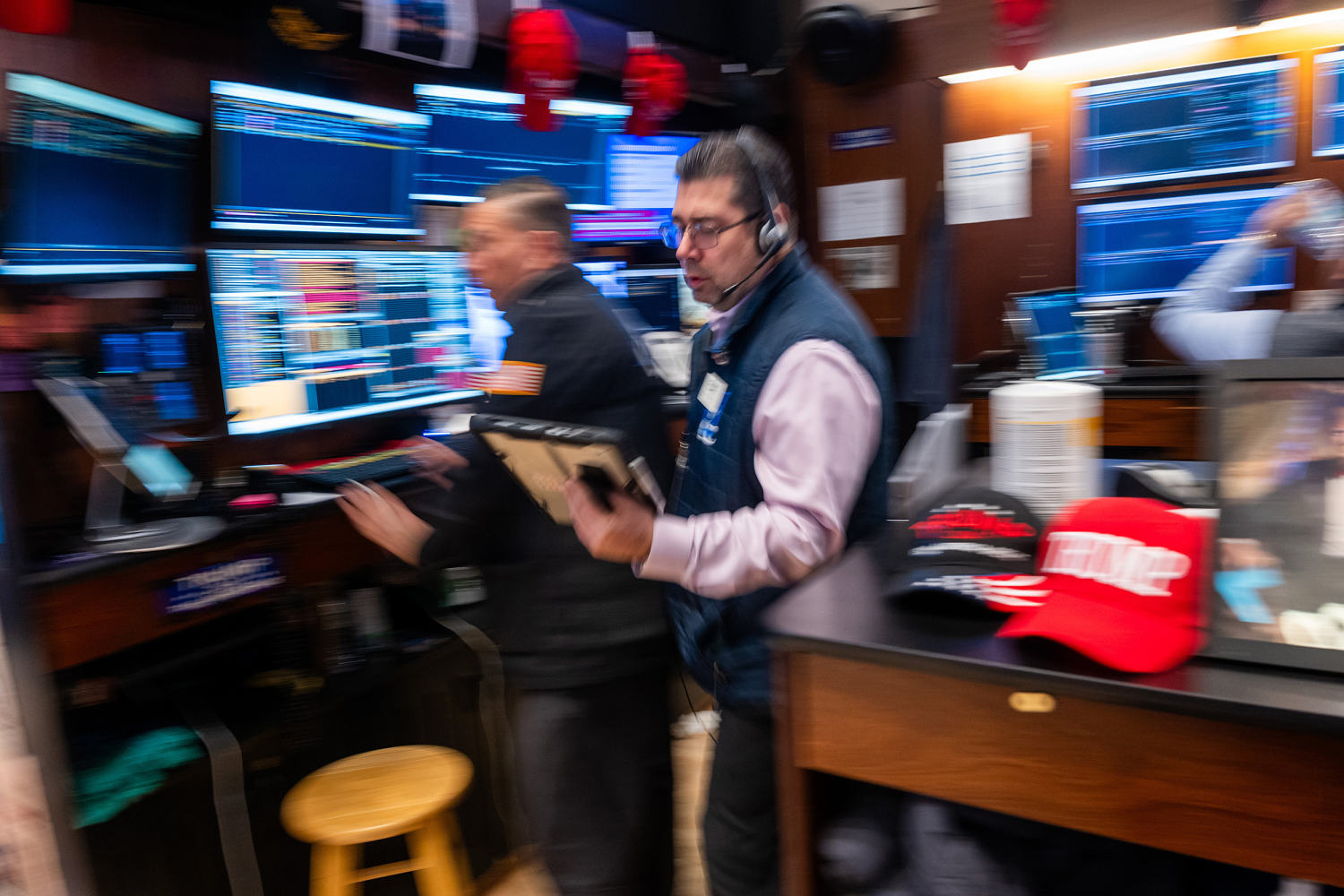
Oil prices swung sharply Tuesday as conflicting reports about shipping in the Strait of Hormuz drove oil prices down for much of the morning, then higher in the afternoon.U.S. crude oil plunged as much as 19%, slipping below $77 per barrel at one point. But the move faded, and WTI climbed to trading around $89 by 4 p.m. ET. International Brent crude also briefly dropped 17% to below $80 per barrel but later rose back to more than $90 per barrel.Oil’s move lower was accelerated by a social media post from U.S. Energy Secretary Chris Wright that was later deleted and denied by the White House. Wright had written on X that the “U.S. Navy successfully escorted an oil tanker through the Strait of Hormuz to ensure oil remains flowing to global markets.” White House press secretary Karoline Leavitt later said the opposite, telling reporters at a briefing, “The U.S. Navy has not escorted a tanker or a vessel at this time.” Leavitt also said the offer of a U.S. escort remained available to ships in the strait.Still, U.S. crude oil prices are up more than 20% since the start of the war.Stocks also closed mixed after a volatile trading session Tuesday. The S&P 500 ended lower by 0.21% after earlier rising almost 1%, while the Nasdaq Composite wrapped up the day flat and the Dow Jones Industrial Average fell 34 points. Energy ministers from leading industrialized nations met Tuesday morning to discuss options to respond to rising crude oil prices, but they did not announce a strategic release of petroleum reserves afterward, which was widely viewed as a front-line response in the effort to calm global markets.After the G7 meeting, French Finance Minister Roland Lescure, who also oversees energy policy, said officials had asked the International Energy Agency to “look into details that we could have at hand, were we to decide to use” international oil reserves to calm markets.Alluding to the absence of any news about a release, Lescure said, “The … potential release of inventories is not the only way forward. And as you know, the best way to solve the problem is to reopen the Strait of Hormuz.”In a separate statement, IEA Executive Director Fatih Birol said there would be a meeting of member governments later Tuesday “to assess the current security of supply and market conditions to inform a subsequent decision on whether to make emergency stocks of IEA countries available to the market.”Traders work Monday on the floor of the New York Stock Exchange.Spencer Platt / Getty ImagesA U.S. official told Jattvibe News on Monday that President Donald Trump was reviewing a number of other options to drive down prices, including restricting U.S. exports, intervening in the futures market and lifting some requirements of the Jones Act, which requires that domestic fuel be carried only on U.S.-flagged ships.The White House has also repeatedly said that the spike in energy prices was only “short-term” and would drop after the objectives of the war were met.”Policy measures may have limited impact on oil prices unless safe passage through the Strait of Hormuz is assured,” JPMorgan Chase commodities analysts said Tuesday morning.The strait normally carries ships responsible for more than 20% of the world’s oil supply to the global market. So far, since the war started, retail gas prices have risen 50 cents, a visible reminder to consumers about the impact it is having already.