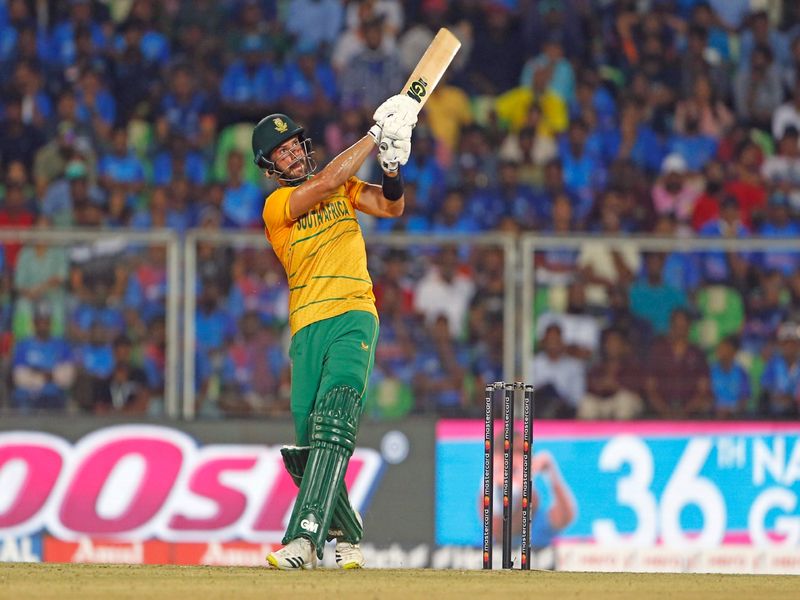
With the surround sound of politics and revenue-sharing finally settled, Sri Lanka is set to host the mother of all games on Sunday, a contest that carries far more than just the promise of cricket.India versus Pakistan is never merely the marquee act of a tournament; it is the emotional and commercial ignition point around which the competition finds its rhythm. India had launched Operation Sindoor to demolish Pakistan’s terror infrastructure in May 2025. As such, memory, grievance, pride and expectation travel with the teams onto the field, turning a cricket match into a moment of national theatre.Every T20 World Cup writes its own grammar. Some teams speak in raw power, others in control, and the best sides are fluent in both. As the tournament unfolds, India and Pakistan–cricket’s most scrutinised heavyweights, for both revenue and geopolitics–are revealing two distinct but equally potent templates for success in this volatile format. But their influence stretches beyond tactics and team balance. When these two meet, the tournament itself bends around the commercial gravity of the fixture.India’s strength lies in layers of disruption. Varun Chakravarthy remains the mystery card, a bowler who doesn’t merely take wickets but disturbs batting plans. His variations force batters into recalibration mid-innings, and in T20 cricket, thinking time is a luxury few can afford.At the top, the starts from Abhishek Sharma and Ishan Kishan have been decisive. When they get going, opposition plans are often upset within the powerplay itself. Add Suryakumar Yadav to the mix and the geometry of the field is constantly being redrawn; he fractures set patterns with a range of options that compress the bowler’s margin for error. Then comes Hardik Pandya’s devastation–the ability to flip a game in two overs, with bat or ball, gives India a finishing punch that travels across conditions. This is momentum-driven cricket, designed to take the game away early and never allow it to drift back.At the death, Arshdeep Singh has emerged as the reliable closer, marrying composure with execution under pressure–an underrated currency in a format that punishes even a single error.Pakistan, by contrast, are shaping contests through rhythm and restraint. Their batting template, illustrated in the win over the USA, showed the value of controlled aggression. Sahibzada Farhan’s 41-ball 73 provided the explosive lift at the top, seizing the tempo before the middle overs could settle into attrition. Babar Azam’s 46 off 32 balls was the counterbalance–an anchoring presence that ensured Pakistan retained structure while still progressing the rate. In T20 cricket, stability is often mistaken for conservatism; in truth, it is the scaffolding that allows late acceleration to have meaning.The real signature of Pakistan’s campaign, however, is being written with spin. Abrar Ahmed, Mohammad Nawaz, Shadab Khan and Usman Tariq have formed a frugal, intelligent quartet, suffocating the middle overs and forcing batters into low-percentage options. Usman Tariq’s stone-pelter, slingy action–complete with a pronounced pause–adds an element of visual and rhythmic discomfort. In a format built on timing, that disruption is often as valuable as sharp turn. The question if he will be cleared by the ICC will be known only at the toss when teams are exchanged.Pakistan’s willingness to use spin early, with Saim Ayub emerging as a powerplay option, reflects tactical boldness shaped by conditions rather than convention. The result has often been a spin-dominant finish–closing games through control rather than chaos.What links these two sides is not style, but clarity. India aim to overwhelm phases with momentum–early damage, middle-overs pressure through unpredictability, and late-overs devastation. Pakistan seek to shape phases–tempo up top, order through the middle and suffocation at the death. Both approaches recognise the central truth of T20 cricket: matches are not won in aggregate, but in pockets of control.There is also a deeper psychological contrast that history has taught us. Pakistan, for all their brilliance, have long been a side that can devastate when everything clicks and disintegrate when it doesn’t. Their ceiling is breathtaking; their floor, at times, startlingly low. India, on the other hand, are reliable on most days–a team built on systems, depth and repeatable processes. But reliability carries its own hidden danger. When a “reliable” team is put under the pump, when plans are disrupted early and momentum turns, the pressure of expectation can weigh heavier than on a side accustomed to volatility. In knockout cricket, that mental stress-test can be as decisive as any skill set.Hovering above these on-field templates, however, is the inescapable truth of the modern game: India vs Pakistan is not just a sporting contest, it is a commercial engine. Broadcasters build entire tournament projections around this single fixture. Advertising rates soar because viewership spikes dramatically when these two meet–10-second television slots command anything from Rs 40 lakh to Rs 1.6 crore, and a single India–Pakistan game is commonly valued at Rs 2,000– Rs 3,000 crore in total commercial impact. In pure economic terms, few fixtures in world sport can match its pull.That gravity explains why, even amid political tension and administrative brinkmanship, the fixture finds a way onto the calendar–through back-channel negotiations, neutral venues, legal wrangling and quiet compromises. Cricket’s administrators speak the language of rivalry and respect, but they operate in a marketplace of eyeballs and balance sheets. For host boards, broadcasters, sponsors and the ICC, this match is not merely a marquee event; it is a financial cornerstone that underwrites the economics of the competition itself. The tournament breathes easier once the fixture is confirmed, because its commercial heartbeat is secure.There is an irony here that cannot be ignored. As the curtain rises on profitability and two nations prepare to celebrate victory the following day, the borders remain a thin line between life and martyrdom. On the field, players exchange handshakes, jerseys and mutual respect. Off it, the fixture carries the weight of geopolitics, historical grievance and national sentiment. For a few hours, the game offers a curated normalcy–a spectacle that allows rivalry to be channelled into competition. The morning after, borders remain borders, and tensions remain unresolved. Cricket does not dissolve politics; it temporarily reframes them for consumption.As the tournament edges towards its knock-out nerve centre, this dual reality sharpens. Sudden-death cricket punishes imbalance. One bad over, one misread match-up, one loss of rhythm can tilt months of preparation. The teams that progress will be those who manage these pressure windows best–not just with skill, but with a coherent template they trust when the noise rises. Administrators, meanwhile, will continue to manage another kind of pressure: ensuring that the game’s most lucrative fixture remains both logistically possible and commercially potent.