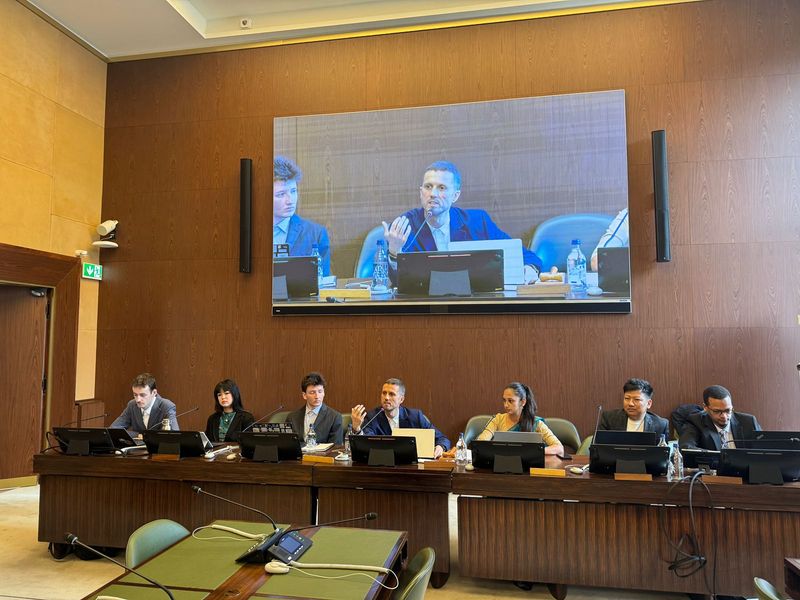

Geneva [Switzerland], March 19 (ANI): The Akshar Foundation highlighted its innovative education framework at a side event titled “Nai Talim 2.0: Crafting the Equitable AI Future” during the 61st session of the United Nations Human Rights Council (UNHRC).The event focused on integrating experiential learning with artificial intelligence (AI) and digital tools to promote equitable and inclusive education. Diplomats from the European Union, Portugal, India, Angola, and Sudan attended the session, engaging in discussions on leveraging technology to create fair learning opportunities globally.Students from the University of Oxford who are also representatives of the Akshar Foundation highlighted India’s evolving education model and its integration with artificial intelligence (AI).Joy Naysa Chang highlighted the importance of adopting a human-centred approach to AI in education, particularly in rural India.She noted that discussions with global leaders focused not only on the ethical dimensions of AI but also on its potential to transform access to education for underserved communities. Chang emphasised that India’s large youth population, coupled with policies prioritising literacy, numeracy, and equitable access, positions the country as an emerging global leader in education reform.Samuel Miguel Owen pointed to India’s renewed emphasis on vocational training under the National Education Policy (NEP) 2020 as a key differentiator from Western education systems.He observed that integrating vocational skills with digital learning equips students with practical, employable abilities while addressing socio-economic inequalities. According to Owen, this blended approach offers a more “context-specific solution” that could inspire reforms in Western education systems, where academic and vocational pathways often remain disconnected.Joshua James Kelly highlighted the resilience of students in Assam, where Akshar Foundation operates its flagship programmes. Despite challenges such as floods and economic hardship, students continue to attend school and actively engage in learning. Kelly praised the Foundation’s model of combining education with community-based vocational training, enabling students to contribute to local development while building future livelihoods. (ANI)(This content is sourced from a syndicated feed and is published as received. The Tribune assumes no responsibility or liability for its accuracy, completeness, or content.)