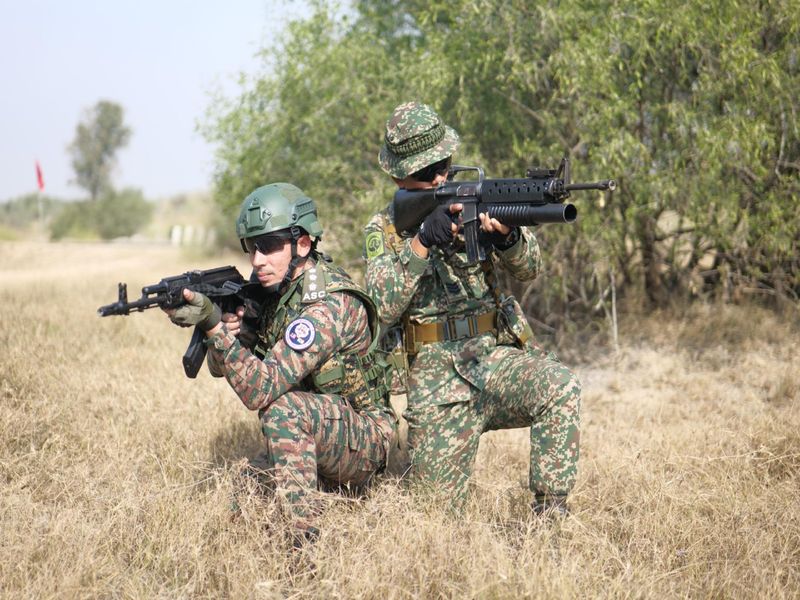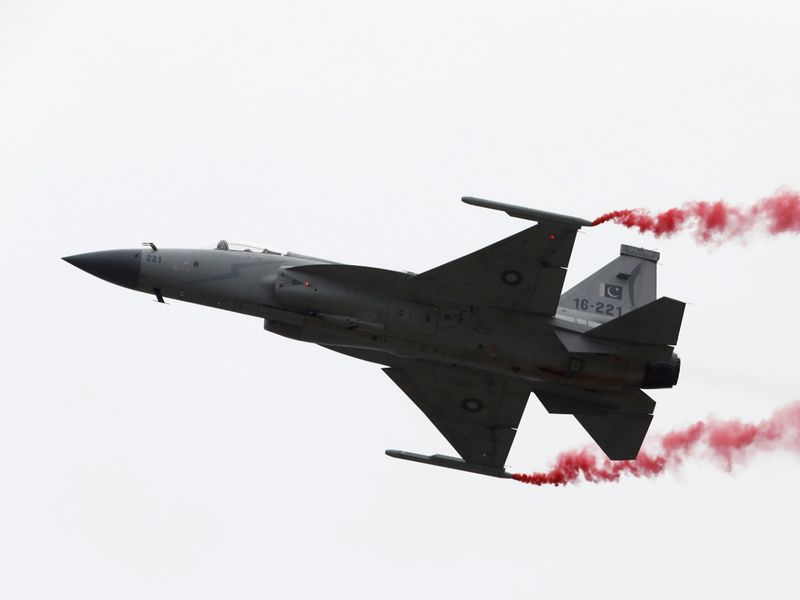

New Delhi [India], March 9 (ANI): Pakistan’s military hardware is now majorly sourced from China, with about 80 per cent of its arms imports coming from Beijing, according to a new report by the Stockholm International Peace Research Institute (SIPRI).Pakistan was the fifth largest recipient of major arms globally in 2021-25, up from tenth place in 2016-20. states. Its arms imports rose by 66 per cent between the two periods, accounting for 4.2 per cent of total global arms imports.China remained Pakistan’s main supplier, providing 80 per cent of its imported weapons in 2021-25, up from 73 per cent in 2016-20. Further, as per SIPRI, although China supplied major arms to 47 states in the period, 61 per cent of its arms exports went to just one state: Pakistan.The report also spoke about India’s position as the world’s second largest arms importer during the same period, with an 8.2 per cent share of total global imports.”India was the world’s second largest recipient of major arms in 2021-25 with an 8.2 per cent share of total global arms imports. Its arms imports are driven by its tensions with both China and Pakistan. These tensions have regularly led to armed conflict, as they did briefly between India and Pakistan in May 2025, with both sides using imported major arms,” the SIPRI report said.However, the report highlights that India’s total arms imports declined slightly over the past decade, partly due to its increasing ability to design and produce weapons domestically.”Indian arms imports fell by 4.0 per cent between 2016-20 and 2021-25. The decrease can be partly attributed to India’s growing ability to design and produce its own weapons–although there are often substantial delays in domestic production,” the report stated.As per the SIPRI report, India continues to rely heavily on foreign suppliers for several key systems. “India’s recent orders or planned orders–including up to 140 combat aircraft from France and six submarines from Germany–indicate its continued and probably increasing reliance on foreign suppliers,” it said.Over the past decade, India has also shifted its arms procurement away from Russia and towards Western suppliers, especially France, Israel and the United States.”Russia’s share of Indian arms imports dropped from 70 per cent in 2011-15 to 51 per cent in 2016-20 and then to 40 per cent in 2021-25,” the report noted.According to SIPRI Arms Transfers Programme senior researcher, Siemon Wezeman, concerns about China’s growing military capabilities continue to influence defence spending and arms purchases across Asia.”Fears over China’s intentions and its growing military capabilities continue to influence armament efforts in other parts of Asia and Oceania, which often still depend on imported arms,” Wezeman said.”For example, in South Asia, the high volume of arms that India imports is largely due to the perceived threat from China and to India’s long-running conflict with the main recipient of Chinese arms exports, Pakistan. Imported weapons were used in the 2025 clash between India and Pakistan, both nuclear-armed states,” the SIPRI analyst said.Globally, the report said the top five arms importers in 2021-25 were Ukraine, India, Saudi Arabia, Qatar and Pakistan, which together accounted for 35 per cent of total arms imports.The United States remained the world’s largest arms exporter, accounting for 42 per cent of global arms exports during the period. France was the second largest exporter with a 9.8 per cent share, while Russia ranked third with 6.8 per cent.Russia’s share of global arms exports declined sharply from 21 per cent in 2016-20 to 6.8 per cent in 2021-25, mainly due to major drops in exports to countries such as Algeria, China and Egypt.The analysis also noted that Europe accounted for the largest share of global arms imports for the first time since the 1960s, driven largely by the war in Ukraine and rising security concerns across the region.Europe accounted for 33 per cent of global arms imports, followed by Asia and Oceania at 31 per cent and West Asia at 26 per cent. (ANI)(This content is sourced from a syndicated feed and is published as received. The Tribune assumes no responsibility or liability for its accuracy, completeness, or content.)