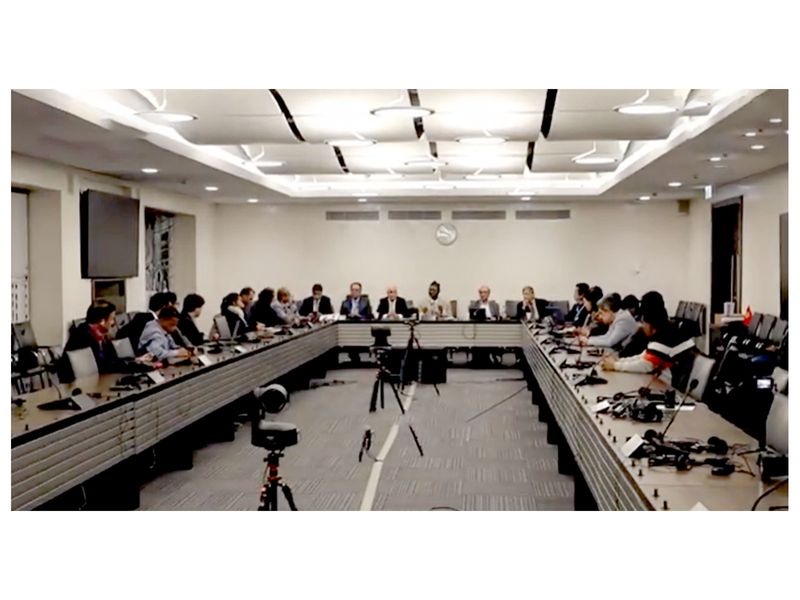

Geneva [Switzerland], March 26 (ANI): Human rights concerns in fast-growing economies, particularly Pakistan, came under sharp scrutiny during a side event titled Economic Growth and Human Rights Deprivation at the 61st session of the United Nations Human Rights Council (UNHRC) held at the Palais des Nations in Geneva.Organised by the International Career Support Association, the discussion brought together global experts to examine how rapid economic progress in Asian countries often overshadows persistent human rights violations. Speakers highlighted issues ranging from labour rights abuses and curbs on free expression to the wider social consequences of development policies that fail to prioritise citizens’ welfare.Japanese human rights activist Shun Fujiki delivered a strongly critical assessment of Pakistan’s record, stating that despite being bound by nearly 27 international human rights conventions, the country continues to witness severe violations. He pointed to widespread reports of enforced disappearances, torture, and killings, adding that many citizens are either fleeing the country or living under fear. Fujiki emphasised that while the aim is not to isolate Pakistan, the country must adhere to global standards to retain trade privileges such as the GSP+ status. He noted a significant lack of commitment to international treaties.Former Bangladeshi MP Dr Muhammad Habibe Millat stated that economic growth without democratic and civil freedoms is unsustainable. Reflecting on Bangladesh, he argued that stability, prosperity, and public satisfaction depend on restoring democracy, secularism, and equal rights for all citizens.Chairman of the World Sindhi Congress, Dr Lakhu Luhana, raised concerns about worsening poverty and inequality in Pakistan, particularly in Sindh. He stated that despite being resource-rich, the region has seen a rise in poverty, exacerbated by environmental degradation and unemployment. Luhana questioned the role of international stakeholders, particularly the European Union, asking whether their policies genuinely promote human rights or inadvertently support oppressive systems. He alleged that financial aid often strengthens existing regimes rather than benefiting vulnerable populations.The discussion concluded with a consensus that bridging the gap between economic growth and human rights remains a pressing global challenge. Experts called for stronger international accountability and cooperation to ensure that development is measured not just in economic terms, but in the protection of human dignity. (ANI)(This content is sourced from a syndicated feed and is published as received. The Tribune assumes no responsibility or liability for its accuracy, completeness, or content.)