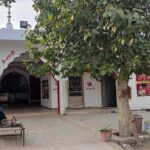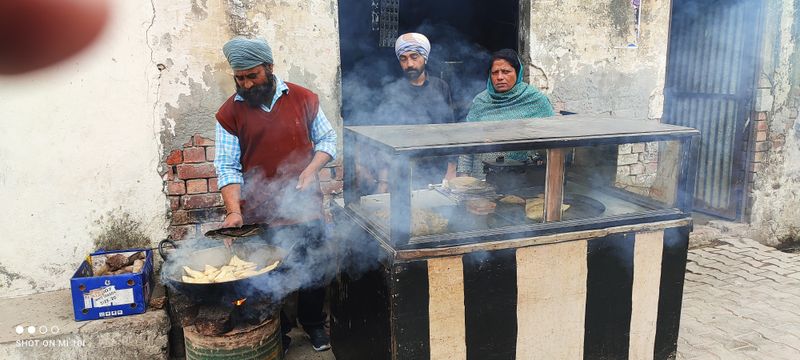
Sukhwinder Singh, a resident of village Dhotian, is relishing his ancestral profession of making pakoras. He is happy to ply his family business which has entered its fourth generation. This profession is not only providing him with a good income but has also made him successful socially. He has developed good contacts because he deals more than 500 customers daily. He has also gained much respect from the village elders and also senior politicians of the area. He is among the village elders and people come to him to get their problems resolved as he has contacts with the higher-ups in his profession.As his pakoras are very delicious, there is great demand for it in the village that has a population of more than 10,000. His pakora shop is located in the heart of the village. His wife Akwinder Kaur and young son Palwinder Singh too help him in dealing with the customers due to the heavy rush at his shop. He said his father Narinder Singh and grandfather Sohan Singh too ran pakora shops in the village, bringing the family popularity among residents. He said that his father and other family members knew better techniques of making pakoras which he learnt from them.Sukhwinder Singh said that he began working at the age of seven and residents prefer his pakoras made of onion, potatoes and other vegetables which are very delicious. He said his young son too helps him in the work and it helps him keep a watch on him because of the threat of drugs. He said that many villagers send him an SMS on his mobile and he makes home delivery to them too. Jasnoor Singh, Malkiat Singh and other residents of the village said that Sukhwinder Singh makes delicious pakoras and they often eat them and also order takeaways for their families.One of the elderly men in the village said there was a time when work in the village was done on the basis of the caste as the forefathers of Sukhwinder Singh, besides making pakoras, used to ensure water supply from the well (Khooh) of the village for the well-off families. This tradition ended with the change in time and when members of the downtrodden section progressed with access to education and employment opportunities.The elderly person said that in the rural areas, there was the tradition of cutting hair, sewing garments, performing farm labour and doing other work on the basis of caste. They were given their contribution (labour) twice a year —- after the harvesting of rabi crop and after the kharif harvest. The darji (tailor master) used to sew clothes of the villagers the whole year and was given payment after the harvest season.