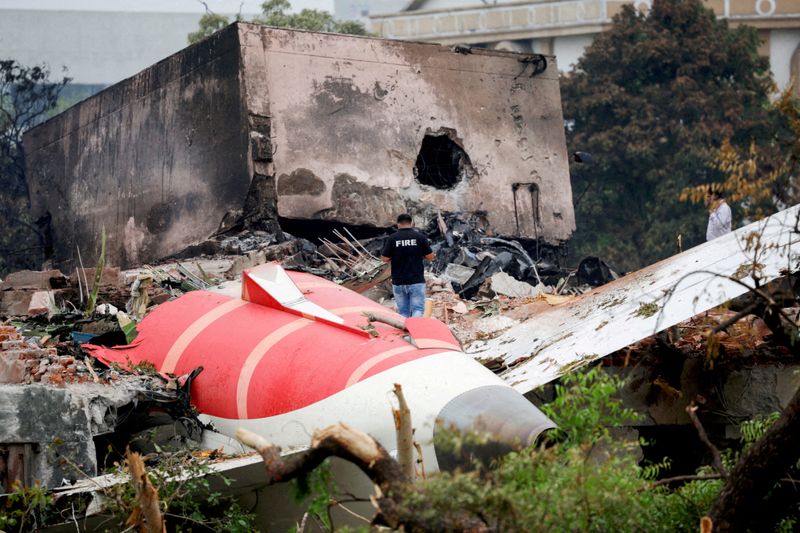

In a fresh intervention in the probe into the AI 171 crash on June 12, 2025, the Federation of Indian Pilots (FIP) has written to the Aircraft Accident Investigation Bureau (AAIB), urging a simulator-based reconstruction of the accident sequence after CCTV footage from the Ahmedabad airport allegedly showed signs of Ram Air Turbine (RAT) deployment during take-off, raising questions over whether the crash was triggered by a technical failure or pilot action.In the communication to the Director General of AAIB, FIP president Captain CS Randhawa pointed to CCTV frames that allegedly show a “small dark object” emerging and enlarging under the aircraft belly at the RAT location while the aircraft was still on its take-off roll. The sequence, the body claims, appears consistent with RAT door opening or deployment.Association’s concernsCCTV footage from the Ahmedabad airport has allegedly showed signs of Ram Air Turbine (RAT) deployment during take-off, raising questions over whether the crash was triggered by a technical failure or pilot action. RAT is an emergency backup propeller system that deploys on aircraft during total electrical or dual-engine failure.The pilots’ body has demanded that this visual evidence be synchronised with the Digital Flight Data Recorder (DFDR) timeline cited in the preliminary report.As per the recorded sequence on June 12, the aircraft crossed V1 (take-off speed) at 08:08:33 UTC, achieved rotation at 08:08:35 UTC, and lifted off at 08:08:39 UTC. Within seconds, both fuel cut-off switches moved from ‘RUN’ to ‘CUTOFF’ at 08:08:42 and 08:08:43 UTC, followed by the RAT hydraulic pump supplying power at about 08:08:47 UTC.The FIP has argued that aligning the CCTV imagery with these timestamps was essential to determine whether the RAT deployment preceded or followed the fuel cut-off events, a distinction that could fundamentally alter the direction of the investigation.The body has further sought a full-flight simulator reconstruction with time-synchronised overlay of the imagery under two scenarios — an electrical failure triggering automatic RAT deployment, and manual movement of fuel control switches by the crew. “The purpose is to ascertain whether the root cause relates to a technical failure or to deliberate pilot action,” the communication said.This demand builds on an earlier technical representation by the FIP when it highlighted inconsistencies in RAT deployment timing. The body had pointed to discrepancies between OEM documentation and the AAIB’s recorded DFDR sequence. While manufacturer data indicates RAT deployment signals may be triggered 10 to 15 seconds after electrical failure, the preliminary report reflects a significantly shorter four-second interval between the second fuel cut-off and hydraulic power availability.The FIP has argued that such a variation is not trivial and could impact conclusions on whether the sequence was system-driven or human-induced. It has also sought clarity on the exact DFDR parameters used to determine RAT deployment and hydraulic activation.Significantly, the body has cautioned against drawing premature conclusions amid speculation in sections of foreign media regarding pilot action. It has stressed that accurate sequencing of RAT command, deployment and hydraulic availability is essential before attributing cause.Calling for “procedural fairness and accurate technical determination”, the FIP has urged the AAIB to defer the final report until the simulator-based correlation exercise is completed and formally incorporated.