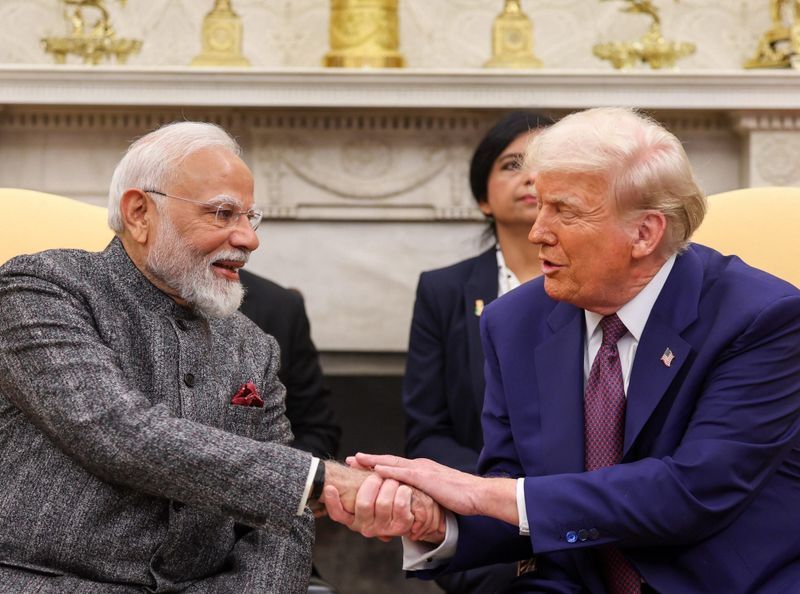
Asserting that his government’s “Reform Express” is benefitting common citizens in a big way, Prime Minister Narendra Modi on Sunday said his top three reform priorities for the next decade will be continued structural reforms, deepening innovation, and further simplification of governance.In an interview with PTI, Modi also said that by temperament, he is never satisfied as he believes that public life demands a certain constructive restlessness, a constant urge to do more, to improve faster, to serve better.He was asked whether he was satisfied with the progress made on the reform front. Asked to prioritise three economic reforms for the next decade, Modi said, “Our direction is clear, rather than limiting it to a fixed number.”First, we will continue structural reforms that improve competitiveness and productivity. Second, we will deepen innovation in technology, manufacturing, and services. Third, we will simplify governance further so that citizens and businesses can operate with greater ease and trust,” he said.Also read: ‘Carefully scripted, desperate PR exercise’: Congress slams PM Modi’s PTI interviewModi said reforms have helped the common citizen, the menace of middlemen has reduced, and infrastructure expansion has improved connectivity and cut down logistics costs.”Often, there is a limited understanding of the word ‘reforms’ as referring only to the economy and industry. But reforms in the social sector are as important.”Programmes like Aspirational Districts and Aspirational Blocks have transformed lives in areas once neglected as backward. Similarly, the PM-JANMAN scheme identifies those tribal communities that have been particularly disadvantaged and works for their welfare,” the prime minister said.On the progress made by the “Reform Express”, he said, “I must say that by temperament, I am never fully satisfied. I believe public life demands a certain constructive restlessness, a constant urge to do more, to improve faster, to serve better. So yes, there is always a strong desire to achieve more for our people and take our country forward.”Modi said it is also important to acknowledge the scale of progress achieved in the journey of the “Reform Express”.”Reform is the commitment of this government, something we have shown in letter and spirit. I am proud to say that we have moved from incremental adjustments to systemic transformation,” he said.Giving examples, he said the Goods and Services Tax (GST) reform with its two-slab structure has eased the burdens of households, micro, small, and medium enterprises (MSMEs) and labour-intensive sectors.”We have changed the definition of small companies, which has helped reduce compliance costs. The FDI reform, allowing 100 per cent FDI in insurance, has led to better choices for people, especially the middle class,” he said.The PM further said several outdated laws are now history.”Earlier, there were no ministries specifically focused on developing crucial sectors, such as skill development, fisheries, cooperatives, and AYUSH. We have changed that, and now, each of these sectors is thriving.”For decades, the country waited for labour reforms. It was our government that initiated those, ensuring that workers’ interests are protected and that businesses thrive,” he said.Modi said India is a digital leader in the world today, and it was made possible by a fundamental reform in how the people of the country transact, via the UPI platform.”For our youngsters, reforms have created an ecosystem where aspiration is supported by opportunity. India has emerged as one of the world’s leading start-up ecosystems. Young innovators today can convert ideas into enterprises with far fewer obstacles than before,” he said.For MSMEs, which are the backbone of India’s economy, reforms have improved access to credit, simplified tax processes and strengthened integration into global value chains, the prime minister said.”At the same time, we have significantly increased the investment and turnover limits for MSMEs to ensure that they can continue to receive these benefits while they grow and integrate into global value chains,” he added.Not a ‘now or never’ moment but a ‘we are ready’ moment: PM hails Budget 2026This year’s Budget was not a ‘now or never moment’ born out of compulsion but a ‘we are ready’ moment born out of preparation and inspiration, Prime Minister Narendra Modi said on Sunday, asserting that it reflects India’s “yearning” to become a developed nation.In an exclusive interview with PTI, Modi asserted that none of his government’s budgets have been made with an attitude of creating a run-of-the-mill ‘bahi khata’ documents, as “that is not our approach”.Recalling that a few years ago, he had declared from the ramparts of the Red Fort, Yahi Samay Hai, Sahi Samay Hai”, Modi said a “now is the time” sense of purpose has always been there within his government.”But today, that sense of urgency has become a national conviction, a whole-of-society resolve. There is a new confidence in our nation,” he said.”Our national character has revealed itself even in times of different kinds of challenges, and we are a bright spot of growth even in difficult global circumstances,” he said.Women to play most important role in creating Viksit Bharat: PM ModiPrime Minister Narendra Modi on Sunday said women will play the most important role in creating Viksit Bharat, and initiatives taken by the government will empower them.In an exclusive interview with PTI, the prime minister said that in the past few years, it has been a matter of pride that Indian women are leading the way in various domains of science and technology.”Whether it is space or start-ups, they are making a great impact,” he said.Trade talks could never conclude under UPA rule due to its economic mismanagement: PM ModiIn a sharp take-down of trade negotiations during the UPA government, Prime Minister Narendra Modi on Sunday said its “economic mismanagement” left India unable to negotiate from a position of confidence and could never conclude any talks.In an exclusive interview with PTI, Modi said India’s deals signed with Australia, New Zealand, the UK, the EU, and the US have opened access for MSMEs, particularly in labour-intensive sectors, to export to these regions with near-zero tariffs or tariffs much lower than those of other exporting countries.PM Modi says Viksit Bharat in sight, urges pvt sector to do its bitPrime Minister Narendra Modi on Sunday hailed the latest Budget and a spate of global trade deals signed by his government as foundations for Viksit Bharat, and urged the private sector to step in “more aggressively” and “boldly” now.In a wide-ranging interview with PTI, Modi blasted the UPA government for failing to achieve substantial trade agreements and asserted that women will play the “most important role” in Viksit Bharat.