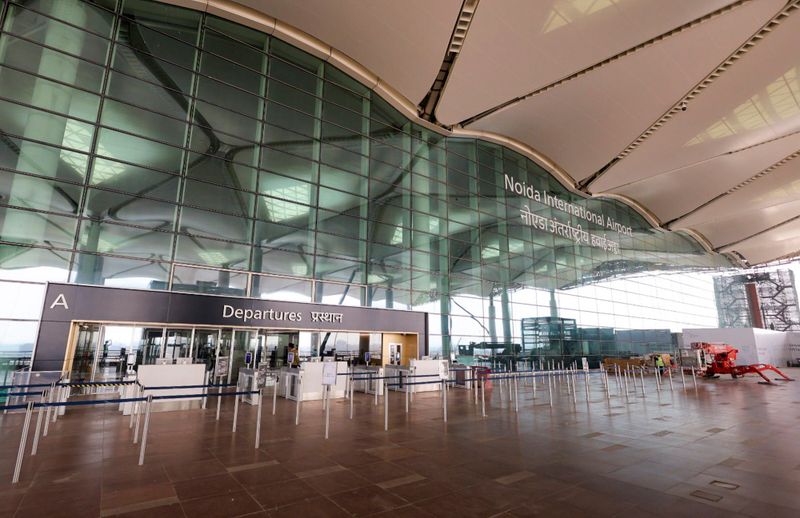

Prime Minister Narendra Modi will inaugurate the first phase of the Noida International Airport at Jewar on Saturday, marking a major expansion of air infrastructure in the Delhi-NCR region. Backed by Swiss operator Zurich Airport International AG, the project is designed to scale up to 70 million passengers annually, positioning it as a long-term solution to rising air traffic and congestion in North India while strengthening India’s global aviation footprint.The airport will become the second international gateway for the region after Indira Gandhi International (IGI) Airport, which has been operating close to capacity amid steady growth in passenger traffic. Authorities are planning a dual-airport system, where Jewar and IGI together handle future demand, improve efficiency and support the region’s emergence as a global aviation hub.In Phase I, the airport will handle 12 million passengers per annum, with infrastructure designed for rapid expansion. It features a 3,900-metre runway capable of handling wide-body aircraft and is equipped with advanced navigation systems, including Instrument Landing System and modern airfield lighting, enabling all-weather, round-the-clock operations. The airport has been assigned the IATA code DXN.Strategically located along the Yamuna Expressway, the project is expected to significantly improve travel access for residents of Noida, Greater Noida, Agra and large parts of western Uttar Pradesh. For many travellers in these areas, Jewar could become the most convenient departure point, cutting travel time to the airport and reducing dependence on IGI.The airport is also planned to be seamlessly connected with road networks, upcoming metro links and rail corridors, strengthening last-mile connectivity across the region.The Directorate General of Civil Aviation (DGCA) has granted the aerodrome licence for public use, while the Bureau of Civil Aviation Security (BCAS) has cleared the project on the security front, paving the way for commercial operations once final approvals and airline schedules are in place.Flight operations are expected to begin within 45 days to two months after inauguration. Initial services are likely to focus on domestic routes, with international operations planned later in 2026. Airlines such as IndiGo, Akasa Air and Air India Express are expected to lead early operations. Early indications suggest that direct flights to around 10 major Indian cities could be rolled out in phases within the first 45 days of operations.The airport is being developed by Yamuna International Airport Private Limited, a wholly owned subsidiary of Zurich Airport International AG, under a public-private partnership model with the Uttar Pradesh and Union governments. The concession period runs for 40 years from October 1, 2021, with Phase I involving an investment of around Rs 11,200 crore. Financing for the project includes a major credit facility from State Bank of India.The terminal has been designed by a consortium including Nordic, Grimshaw, Haptic and STUP, while Tata Projects Ltd is the engineering, procurement and construction contractor executing the project.Apart from passenger services, the airport has a strong cargo focus. An integrated cargo terminal is being developed by Air India SATS Airport Services Pvt Ltd, with an initial handling capacity of 2.5 lakh metric tonnes per annum, expandable to 18 lakh metric tonnes. This is expected to improve air freight efficiency and support sectors such as e-commerce and manufacturing.Built with sustainability as a key focus, the project incorporates low-carbon construction practices and renewable energy use, with long-term plans for net-zero emissions operations.