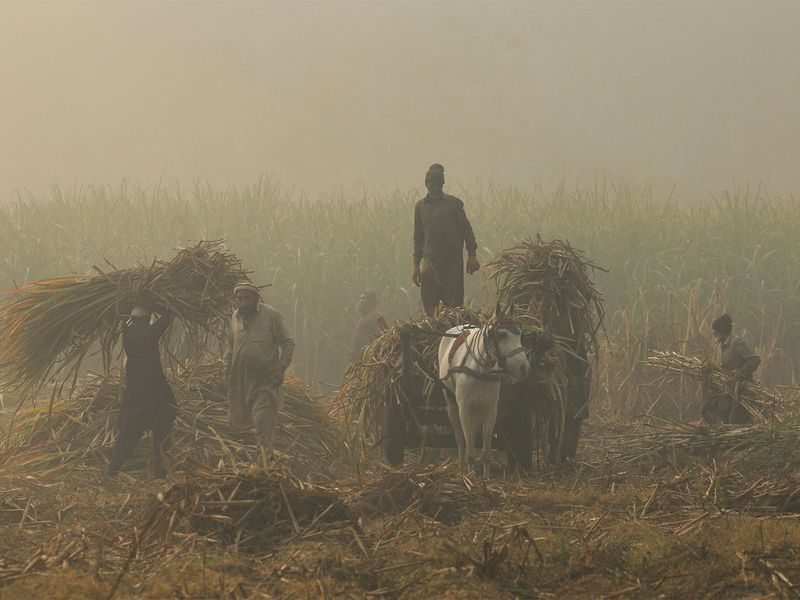
Islamabad [Pakistan], February 12 (ANI): Pakistan’s agriculture sector continues to drift from one preventable crisis to another as farmers make sowing decisions without credible forward guidance. With nearly all growers operating on small landholdings, the absence of coordinated planning repeatedly turns routine harvests into financial disasters, as reported by Dawn.According to Dawn, cultivators typically rely on last season’s returns instead of dependable projections about demand, exports or global supply. When a crop fetches good prices one year, acreage surges the next. The market then becomes flooded, prices collapse, and farmers absorb heavy losses. Conversely, when planting declines sharply, the country is pushed toward imports, and consumers end up paying more.While the crops may change, the malfunction never does. The imbalance has been especially visible in vegetables. During peak arrivals, growers often plough mature produce back into the soil or send it for animal feed because market rates fail to cover even harvesting and transport expenses. Tomatoes, onions, radish, cauliflower and leafy greens have all hurt farmers in recent seasons, and potatoes and cabbage are now facing similar distress. Yet these losses remain largely undocumented.Potatoes, spread across huge tracts this year, show how a glut can threaten farm incomes at scale. At the same time, warning signs are emerging in export-oriented crops. Rice acreage has expanded even as shipments abroad have weakened, raising fears of another oversupply episode. Meanwhile, cotton continues to lose area as farmers complain of taxation, costly inputs and lack of supportive pricing, as highlighted by Dawn.Experts argue that Pakistan has the technology to respond. Satellite monitoring, remote sensing and predictive models could estimate acreage soon after sowing, generate early production forecasts and enable timely policy action. Authorities could also chase export windows before markets are overwhelmed. Growers are unlikely to accept directives that compromise earnings. However, clear evidence of looming oversupply may persuade many to scale back. When food is dumped, the loss extends beyond farmers; it wastes scarce water, land and capital, as reported by Dawn. (ANI)(This content is sourced from a syndicated feed and is published as received. The Tribune assumes no responsibility or liability for its accuracy, completeness, or content.)