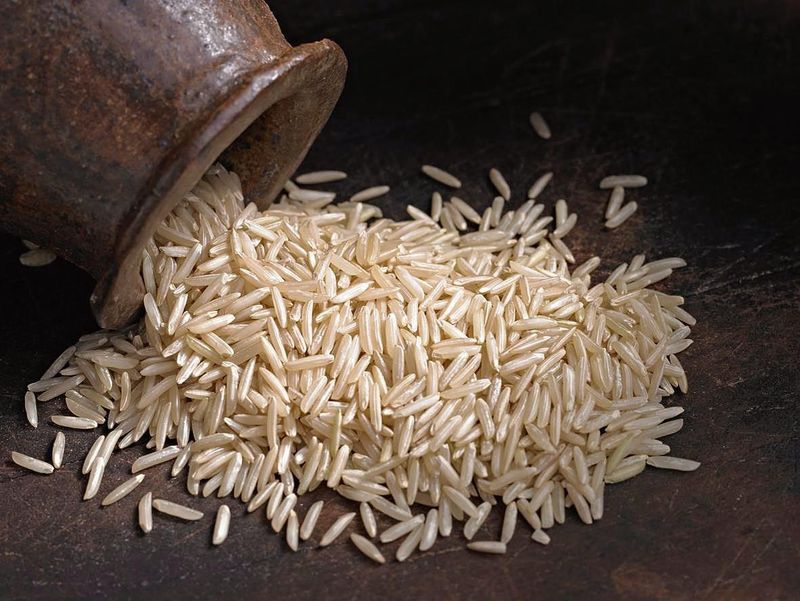

The escalating Iran conflict has created a sense of uncertainty among Punjab exporters having business interests in West Asia, Europe, the Americas as also Russia and other Commonwealth of Independent States (CIS) countries.A majority of them is engaged in the export of basmati rice, hosiery, auto components, sports goods and hand tools, amongst others.With most of their consignments already heading towards destinations in Iran, Saudi Arabia, the UAE and Qatar, fear has set in about the fate of these shipments as also payment delays.Apprehending trouble, the Indian Rice Exporters Federation (IREF) has issued an advisory to its members not to undertake any new cost, insurance and freight (CIF) commitments for countries in the Gulf region, and conclude sales, wherever feasible on FOB (free on board) terms so that freight, insurance and related risks remain with the international buyer.Ranjit Singh Josan, a prominent rice exporter from Punjab, said, “The pressure on basmati exporters is intense. This conflict will directly affect the long-standing basmati rice trade between India and Iran. Iran has historically been one of the largest buyers of Indian basmati. After the commercial release of Pusa Basmati 1121 by the Indian Agricultural Research Institute in 2003, and its official notification in 2008, exports to Iran increased sharply. At one point, shipments reached nearly 1.5 million tonnes per year, bringing major changes to farming patterns in Punjab and Haryana.”In recent months, due to rising tensions, direct shipments from India to Iran had already slowed down. Exporters were relying on the old route through Jebel Ali Port in Dubai from where smaller vessels carried goods to minor Iranian ports. Trade sources say nearly 3,00,000 tonnes of basmati were shipped to Iran through this route in the past three months,” he said.Josan added that now, concerns are growing over banking restrictions, delays in international payment settlements and rising risks in the Red Sea and the Strait of Hormuz.”Iran’s state trading body, Government Trading Corporation of Iran (GTC), had recently issued purchase instructions for about 1,60,000 tonnes of Indian basmati rice. After the outbreak of war, uncertainty has deepened. Exporters are hesitant to dispatch consignments without secure payment guarantees. Large shipments risk getting stuck at Indian ports, which could put pressure on domestic prices,” said Josan, who is also the vice-president of The Basmati Rice Millers and Exporters Association, Punjab.Exporters from the state also fear that freight and insurance rates would rise. Several global shipping lines have reportedly instructed vessels to halt or avoid certain ports. Currency instability is another major worry. During earlier sanctions, the Iranian currency sharply depreciated, causing payment delays for exporters.Vikas Jain, MD of Oswal India, who exports to many West Asian countries, told The Tribune, ” Most exporters are in panic mode as no one knows the outcome of the war or what will happen to our shipments that are en route to these countries,” he said.The exporters contacted by The Tribune said that they also feared that the possible disruption at Bandar Abbas Port, Iran’s largest commercial port, may impact not only Iran but also trade linked to Afghanistan, Turkmenistan, Turkey, Uzbekistan, Tajikistan, Armenia and Russia. “If diversions become prolonged, shipments may increasingly have to reroute via the Cape of Good Hope, adding an estimated 15-20 days to transit time for Europe and the United States,” said SC Ralhan, president, Federation of Indian Export Organisations.He said that though Indian exporters have demonstrated resilience in navigating past disruptions, sustained instability in these critical trade corridors would warrant close monitoring and calibrated policy support to maintain competitiveness.