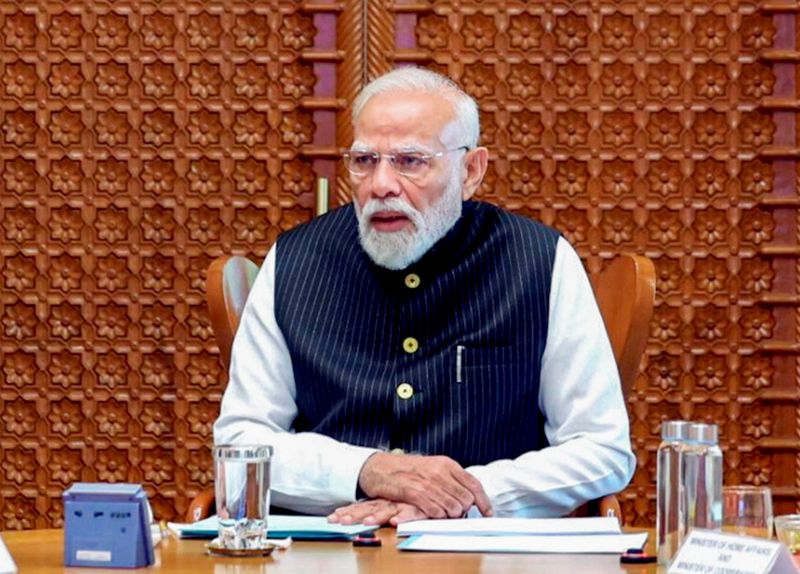

As the West Asia conflict entered the fourth week with no signs of abatement, Prime Minister Narendra Modi on Sunday chaired a meeting of the Cabinet Committee on Security (CCS) to review the impact and discuss mitigation.At this first high-level government review since the crisis began on February 28, the PM asked ministers to prioritise safeguarding the citizens at all costs and draft short, medium and long-term measures to tide over the crisis.The PM has directed the formation of a group of ministers and a group of secretaries to assess the impact of the ongoing war and finalise solutions. At the end of the meeting, the PM’s message to the ministers and officials was, “No inconvenience should come to the citizens”.In a rerun of the Covid-19 response when India adopted a whole-of-government approach, the PM has directed all stakeholders to work together. “All arms of the government should work together to ensure least inconvenience to the citizens,” the PM said, asking for proper coordination with state governments to ensure no black marketing and hoarding of important commodities took place.The meeting saw Cabinet Secretary TV Somanathan make a presentation on the global situation and measures taken so far by India and those being planned by the ministries concerned.“The expected impact and measures taken to address it across sectors like agriculture, fertilisers, food security, petroleum, power, MSMEs, exporters, shipping, trade, finance, supply chains and all affected sectors were discussed. The overall macro-economic scenario in the country and further measures to be taken were also discussed,” a statement later said.The government said the effects of the war on India were assessed today and counter-measures, both immediate and long-term, were discussed.“A detailed assessment of availability for critical needs of the common man, including food, energy and fuel security, was made. Short, medium and long-term measures to ensure continued availability of essential needs were discussed in detail,” a PMO note on the deliberations said.The meeting dwelt in detail on the impact of the conflict on farmers and their requirement for fertilisers for the kharif season.“The measures taken in the past few years to maintain adequate stocks of fertilisers will ensure timely availability and food security. Alternative sources of fertilisers were discussed to ensure continued availability in the future,” the statement said.The government added that there would be no power supply shortages as adequate supply of coal stocks at all power plants would be ensured.On the front of crude and natural gas, several measures were discussed to diversify sources of imports required by chemicals, pharmaceuticals, petrochemicals and other industrial sectors.To firewall the Indian economy, it was decided to develop new export destinations to promote Indian goods in the near future.“Measures proposed by different ministries will be prepared and implemented in the coming days after consultation with all stakeholders,” an official said.The PM earlier remarked that the conflict was an evolving situation and the whole world was affected in some form.“In such a situation, all efforts must be made to safeguard the citizens from the impact of this conflict,” the official said.This was the first PMO-level review of the impact of the West Asia crisis.The CCS meet was attended by top ministers, including Rajnath Singh (Defence), Amit Shah (Home), Nirmala Sitharaman (Finance), S Jaishankar (External Affairs), Piyush Goyal (Industry), ML Khattar (Power), Ashwini Vaishnaw (Information).Principal Secretaries to the PM — PK Mishra and Shantikanta Das — and National Security Adviser Ajit Doval were also present.