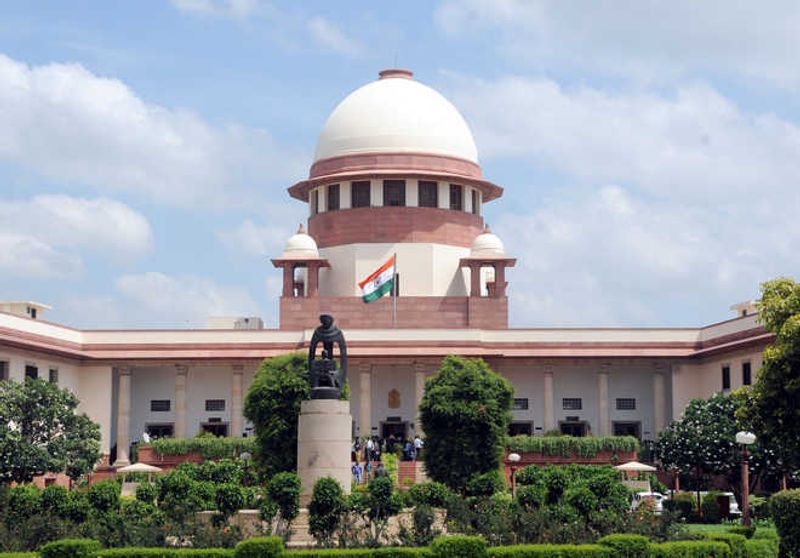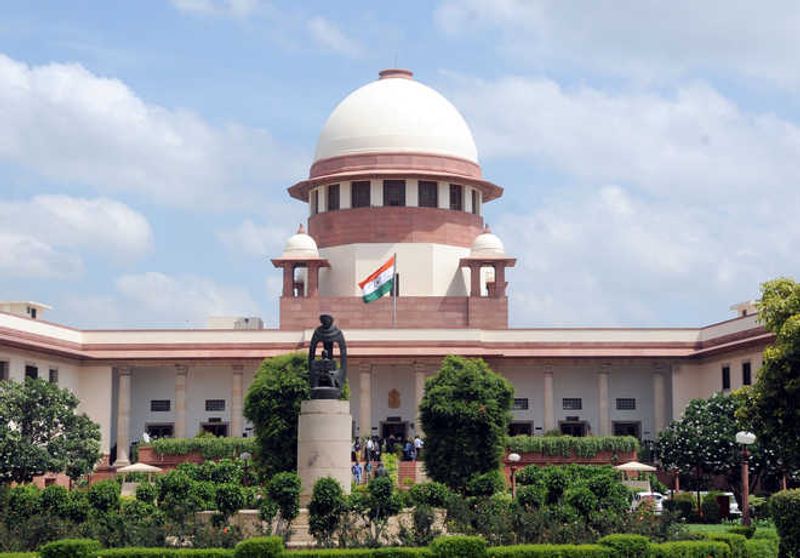

The Supreme Court on Tuesday allowed deployment of civil judges with an experience of at least three years from neighbouring Odisha and Jharkhand for the timely completion of the special intensive revision (SIR) of electoral rolls in West Bengal ahead of the Assembly elections.Citing “trust deficit” between the West Bengal Government and the Election Commission, a Bench led by Chief Justice of India Surya Kant, Justice Joymalya Bagchi and Justice Vipul M Pancholi had on February 20 issued an extraordinary order for the deployment of judicial officers, including retired judges, from West Bengal for the conduct of the SIR in the state.On Tuesday, the Bench expanded the scope of its order to include civil judges from Odisha and Jharkhand with an experience of at least three years for the timely completion of the SIR exercise. The order came after the Calcutta High Court Chief Justice wrote to the Supreme Court on February 22 that 250 judicial officers had been assigned the task of deciding about 80 lakh claims and objections under the logical discrepancy and unmapped categories.Logical discrepancies in progeny linking with the 2002 voter list include instances of a mismatch in the parent’s name and the age difference between a voter and his/her parent being less than 15 years or more than 50 years.Highlighting the enormity of the exercise, the Bench noted that even if each judge decided 250 cases a day, it would take 80 days to complete the SIR exercise.In view of this situation, the Bench ordered that “if the Calcutta High Court Chief Justice feels that further human resource is needed, he may approach the Chief Justices of the Orissa and Jharkhand High Courts to draw serving and retired judicial officers of those states in similar rank who shall be entrusted with completing the verification work in West Bengal.”It said, “Travel, board and lodging of such officers shall be borne by the EC.”The Bench, which had on February 20 allowed the poll panel to publish the final electoral rolls on February 28, clarified that the EC can issue supplementary lists as the verification process proceeds.The top court exercised its plenary powers under Article 142 of the Constitution to enlist voters in the supplementary electoral rolls to be part of the final list to be published on February 28.The Bench also issued a clarification on the documents that can be accepted for processing claims and objections.“The order of this court on September 8, 2025, where Aadhaar was allowed as a proof of identity and the order of this court passed on the writ petition relating to the Madhyamik Admit Card and Certificate shall be admitted. We state that all such documents, whether electronically uploaded or physically handed over before February 14, 2026, shall be considered,” the Bench ordered.On February 20, the Bench had lamented that constant bickering between the West Bengal Government and the EC was delaying the SIR process in the state.“There is an unfortunate blame game of allegations and counter-allegations which shows trust deficit between two constitutional functionaries, i.e. the state government and the EC. Now, the process is stuck at the stage of claims and objections of the persons who have been included in the logical discrepancy list,” it had said.