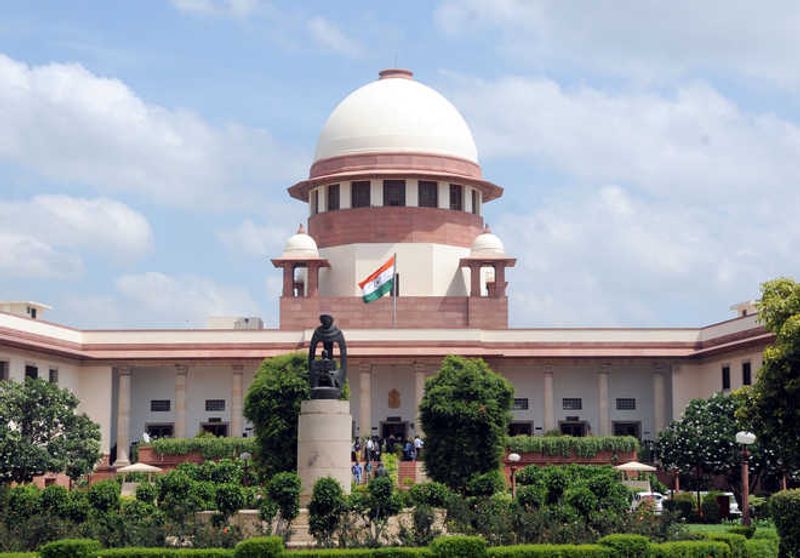
The Supreme Court on Wednesday issued notices to the Centre and the Election Commission on a petition seeking direction to them to extend postal ballot facility to student voters, especially those enrolled in educational institutions outside their home constituencies.A Bench led by Justice Vikram Nath asked the Centre and the poll panel to respond in four weeks to the petition filed by 24-year-old Jayasudhagar J of Tamil Nadu National Law University after senior advocate K Parameshwar pointed out that a person under preventive detention was allowed to cast his vote through postal ballot but a student voter was not allowed to do so.Parameshwar submitted that under section 135B of the Representation of the People Act, 1951, a holiday is declared in public offices on the day of polling but university students do not get leave.The PIL urged the court to issue directions to the respondents to extend the postal ballot voting facility to student voters, especially electors enrolled in educational institutions outside their home constituencies and to create an effective mechanism enabling them to exercise their right to vote.According to the EC’s notification dated February 8, 2024, there are about 1.84 crore voters in the age group of 18 to 19 years, most of them being first-time voters (students), the PIL contended.In addition, there were around 19.74 crore voters in the age group of 20 to 29 years, which also include a large number of students studying in colleges and universities for their UG, PG, and PhD courses, it stated.”This shows that students and young people together make up a very large part of the voting population in our country. If this important section of society is ignored, and no steps are taken to provide them a leave or a holiday on the day of polling or a postal voting opportunity many of them will not be able to cast their votes. As a result, their participation in the election process becomes very limited,” the petition said.”Students, despite being a sizable and distinct class of electors who face genuine and unavoidable practical impediments in travelling to their home constituencies on polling day, are not recognised as a separate category eligible for any alternative voting mechanism. The present legal framework, therefore, effectively disables them from exercising the constitutional right to vote,” it said.The plea further said that this omission is arbitrary and violative of Article 14, the freedom of speech and expression under Article 19(l)(a), and the right to life and dignity under Article 21.”Under the Representation of People Act 1951, employees are granted paid leave under Section 135B of the Representation of the People Act, 1951, and specific classes such as service voters and persons on election duty are granted postal ballot facilities under Section 60 read with Rule 18 of the Conduct of Elections Rules, 1961, but students are unjustifiably excluded without any intelligible differentia or rational nexus.”This categorical exclusion, which operates solely on account of their status as students despite their fundamental rights being equally implicated, is arbitrary and unconstitutional,” the plea said.It prayed before the court to direct the respondents to broaden the scope of postal voting to include students, thereby ensuring that the voices of young voters, first-time electors, and future leaders of the nation are not silenced but meaningfully enabled to participate in the democratic process.The plea further sought a direction to the respondents to frame guidelines or make amendments in the Conduct of Elections Rules, 1961, to incorporate provisions ensuring that students are not deprived of their right to vote either by lack of leave or by denial of postal voting facility.Section 60 of the Representation of the People Act, 1951 specifies the special procedure for voting by postal ballot by certain classes of people and governed under Conduct of Elections Rules, 1961.