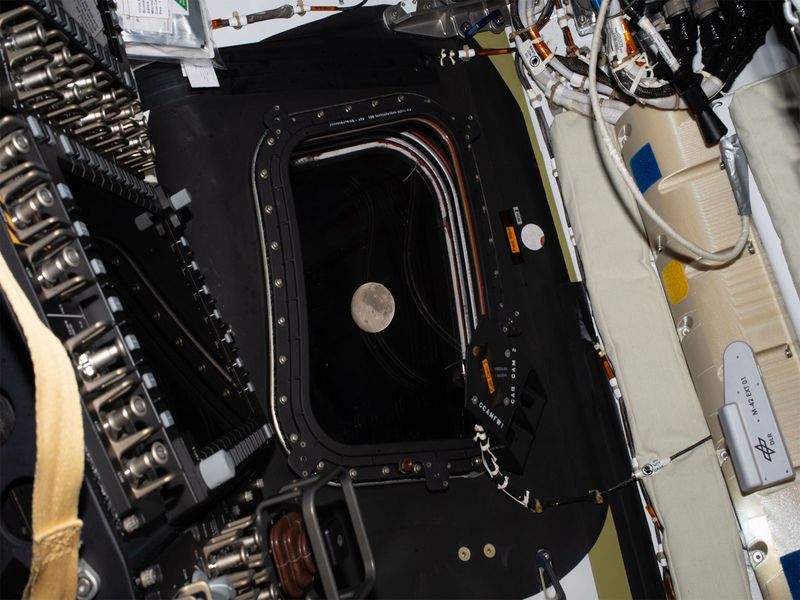

Florida [US], April 6 (ANI): The National Aeronautics and Space Administration (NASA) on Monday said the crew of Artemis II is preparing for a historic lunar flyby that will take humans farther from Earth than ever before.In a post on X, NASA described the moment as something “that’s never before been seen by human eyes”, noting that the astronauts aboard the Orion spacecraft will soon observe the Moon’s far side – a sight not witnessed by humans since Apollo 17.”Morning routine: Wake up, shave, make the bed, witness something that’s never before been seen by human eyes. The Artemis II crew is preparing for today’s lunar flyby, when they will see the Moon’s far side,” the post read.According to a NASA blog update, for flight day 6, during which the crew will fly by the moon, the astronauts began their day as their spacecraft approached the Moon, waking up about 18,830 miles away.The crew includes NASA astronauts Reid Wiseman, Victor Glover, and Christina Koch, along with Canadian Space Agency astronaut Jeremy Hansen.They were awakened to the song “Good Morning” by Mandisa and TobyMac and also received a recorded message from Jim Lovell, who flew on the Apollo 8 and Apollo 13 missions.NASA said the spacecraft is expected to surpass the record for the farthest distance from Earth travelled by humans at approximately 1:56 pm EDT, exceeding the mark set by Apollo 13 during its 1970 mission.At its peak, around 7:07 pm EDT, the Orion spacecraft will reach about 252,760 miles from Earth, compared to Apollo 13’s 248,655 miles.As per NASA, the lunar observation phase is scheduled to begin at about 2:45 pm EDT.During the roughly seven-hour flyby, the Orion spacecraft will be close enough to the Moon to allow the crew to conduct detailed observations of geological features on the lunar surface, including the far side.The Artemis II mission marks a key step in NASA’s plans to return humans to the Moon and advance future deep space exploration. (ANI)(This content is sourced from a syndicated feed and is published as received. The Tribune assumes no responsibility or liability for its accuracy, completeness, or content.)