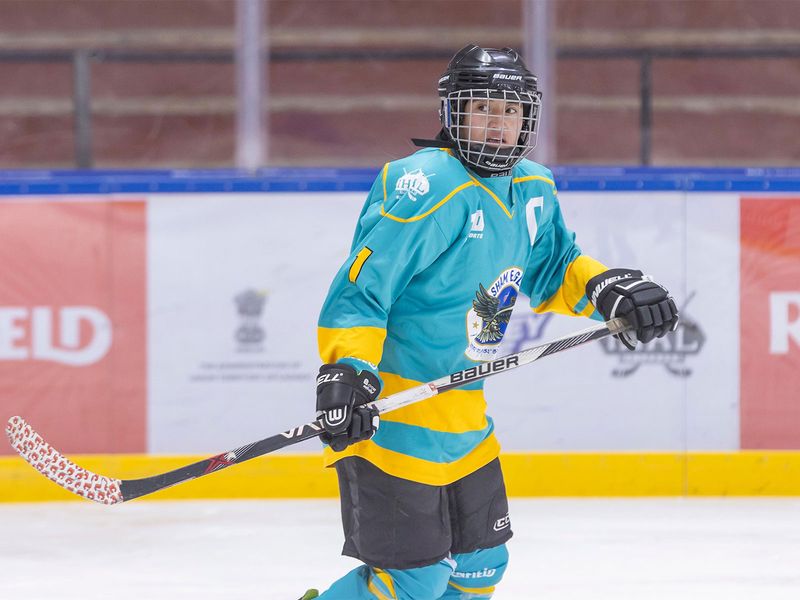

Leh (Ladakh) [India], March 17 (ANI): The Ice Hockey League Season 3 saw Sham Eagles emerge as women’s champions after a strong run through the tournament. Captain Semzes Dolma spoke about her journey in the sport, growing into a leadership role, handling pressure in key moments, and the steady rise of women’s ice hockey in Ladakh.Spanning regions from Leh and Nubra to Changthang, Sham, Kharu, Drass, Kargil, Shakar Chiktan, and Zanskar, Season 3 has reflected rising competitive standards and growing community engagement, culminating in Humane Warriors and Sham Eagles to claim the championship in men’s and women’s competitions respectively. The competition was held from January to February this year. Shakar Chiktan Queens emerged as runners-up to Shams Eagles in the women’s competition.Speaking about how her ice hockey journey began and how she grew into a leadership role, Semzes said, “I started playing ice hockey because it was part of winter life in Ladakh. At first, it was just about enjoying the game with friends and seniors from my region. Over time, when I began competing in more serious tournaments, I realised the responsibility that comes with representing your team.””Leadership did not happen suddenly. It came gradually from training consistently, supporting teammates, and learning to stay calm in difficult moments. When you play for many years, younger players naturally start looking up to you. As captain, my role is not just to score goals, but to keep the team united and focused,” she added as quoted by a press release.Reflecting on her hat-trick in the semi-final and her goal in the final, Semzes said, “Knockout games always carry pressure, especially when you are the captain. But I try not to go into a game thinking that I have to score. My responsibility is bigger than that. I have to keep the team organised, communicate clearly, and make sure everyone stays confident.”Before important games, I focus on simple things like positioning, discipline and reading the play early. In the semi-final, the hat-trick happened because the team worked well together. The goals were the result of collective effort and good coordination, not individual brilliance.””In the final, scoring early gave us belief, but I reminded the team to stay balanced. In high-intensity games, momentum can shift quickly, so the focus has to remain steady from start to finish. As captain, I feel the pressure, but I see it as a responsibility. It pushes me to stay calm so the team can stay calm,” she continued.Talking about the round-robin format introduced this season, she said, “The round-robin format made the competition more honest and demanding. Earlier, sometimes one or two games would decide everything. But this season, because every team played each other, we had to stay consistent from the first game until the end.””It also helped us understand our weaknesses early. After facing one team, we could go back, analyse where we struggled, and adjust before the next game. That improved our communication and tactical awareness.””For women’s teams especially, regular competition matters. When you face different opponents with different strengths — fast attackers, strong defenders, disciplined goalkeepers — you grow faster. The Ice Hockey League has started creating that kind of environment where every game feels meaningful, not casual,” she continued.Sharing what winning the title meant to her personally, Semzes said, “Personally, this title feels like the result of steady effort over many months. Being captain means you carry the emotions of the team. When we won, I did not just think about the final game; I thought about all the early practices, the injuries, the tough training sessions in freezing temperatures.””It also means a lot because this league has now completed multiple seasons. When something continues every year, it builds belief. As players, we prepare knowing that this platform will be there. Winning it gives satisfaction because you know the competition was strong and structured.”For me, lifting the trophy as captain was not just about one season; it felt like a step forward for our team and for women’s Ice hockey in Ladakh,” she continued.Speaking about the growth of women’s participation in ice hockey, she said, “One of the biggest changes I have seen is commitment. More girls are not just trying the sport; they are staying with it. They are training regularly, improving fitness, and taking their roles seriously within the team.””Another important shift is the way the community has come together around the sport. When over 4,000 fans attend a women’s final, it sends a strong message. It shows that people are watching, supporting and celebrating women’s ice hockey. That kind of environment gives players confidence. You feel that your effort matters.””Families are also more supportive when they see the energy around the games. The sport is no longer just a winter activity; it has become something people look forward to. Seeing younger girls in the stands asking about training and positions makes me hopeful. It shows they are thinking beyond just watching. They want to be part of it. If this community support continues, I believe women’s Ice hockey will keep growing naturally,” she concluded. (ANI)(This content is sourced from a syndicated feed and is published as received. The Tribune assumes no responsibility or liability for its accuracy, completeness, or content.)