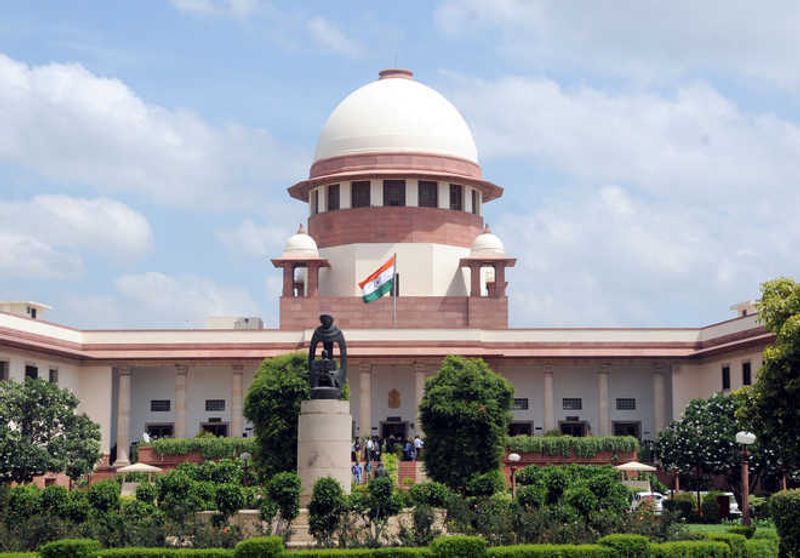
The Supreme Court has ruled that state police authorities can investigate and file a chargesheet against Central Government employees when it comes to the offences of bribery and corruption under the Prevention of Corruption Act.“The PC Act does not specifically envisage a separate procedure for conducting investigation. The offences under the PC Act can be investigated by the state agency or by the central agency or by any police agency…,” a bench of Justice JB Pardiwala and Justice Satish Chandra Sharma said in an order on Monday.Interpreting Section 17 of the Act, the bench said with the qualification that the police officer shall be of a particular rank, “Section 17 does not exclude or prevents the state police or a special agency of the state from registering a crime or investigating cases relating to bribery, corruption and misconduct against Central Government employees”.The top court dismissed a petition filed by one Nawal Kishore Meena – a Central Government employee — challenging the Rajasthan High Court’s decision upholding the legal authority of the state police to investigate him.The top court said, “We find no error, not to speak of any error of law, in the impugned judgment and order passed by the high court.”It said the state police or their Anti-Corruption Branch (ACB) can proceed with a probe against a central government employee without prior approval/ consent of CBI.The bench said that cases of corruption by the Central Government are investigated by CBI – created under the Delhi Special Police Establishment Act — and the cases of bribery and corruption by the state government employees are probed by the state police.Noting that the Criminal Procedure Code (CrPC) is the parent statute providing for investigation, inquiry into and trial of cases, the bench said unless there’s specific provision in another statute to indicate a different procedure to be followed, the provisions of CrPC cannot be displaced.“In other words, the existence of a special law by itself cannot be taken to exclude the operation of CrPC unless the special law expressly or impliedly provides a separate provision for investigation, the general provision under Section 156 of the CrPC (which empowers the police to probe cognisable offenses) shall prevail,” the bench said.The top court sought to emphasise that “Section 156 of CrPC authorises any police officer in charge of a police station to investigate a cognisable offence without the order of the Magistrate. The word ‘police station’ has been defined in Clause (s) of Section 2 of the Code to mean “any post or place declared generally or specially by the State Government, to be a police station, and includes any local area specified by the State Government in this behalf”. The Vigilance and Anti-Corruption Bureau (VACB) is also a wing of state police.”“Although the law and order including investigation of different criminal cases is a State subject and generally such matters are being investigated by the State, yet the relation between the state police and CBI is supplementary to each other and as per the CBI constitution and inter se arrangement between CBI and state police there are several areas where CBI and the police require inter se cooperation and support,” it noted.