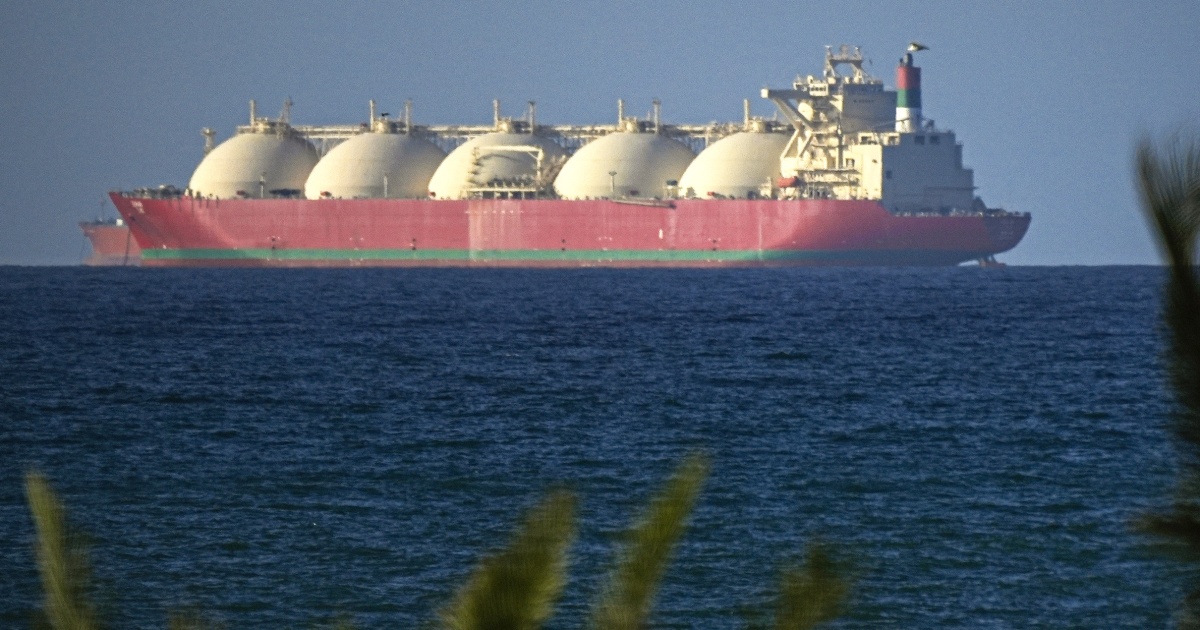

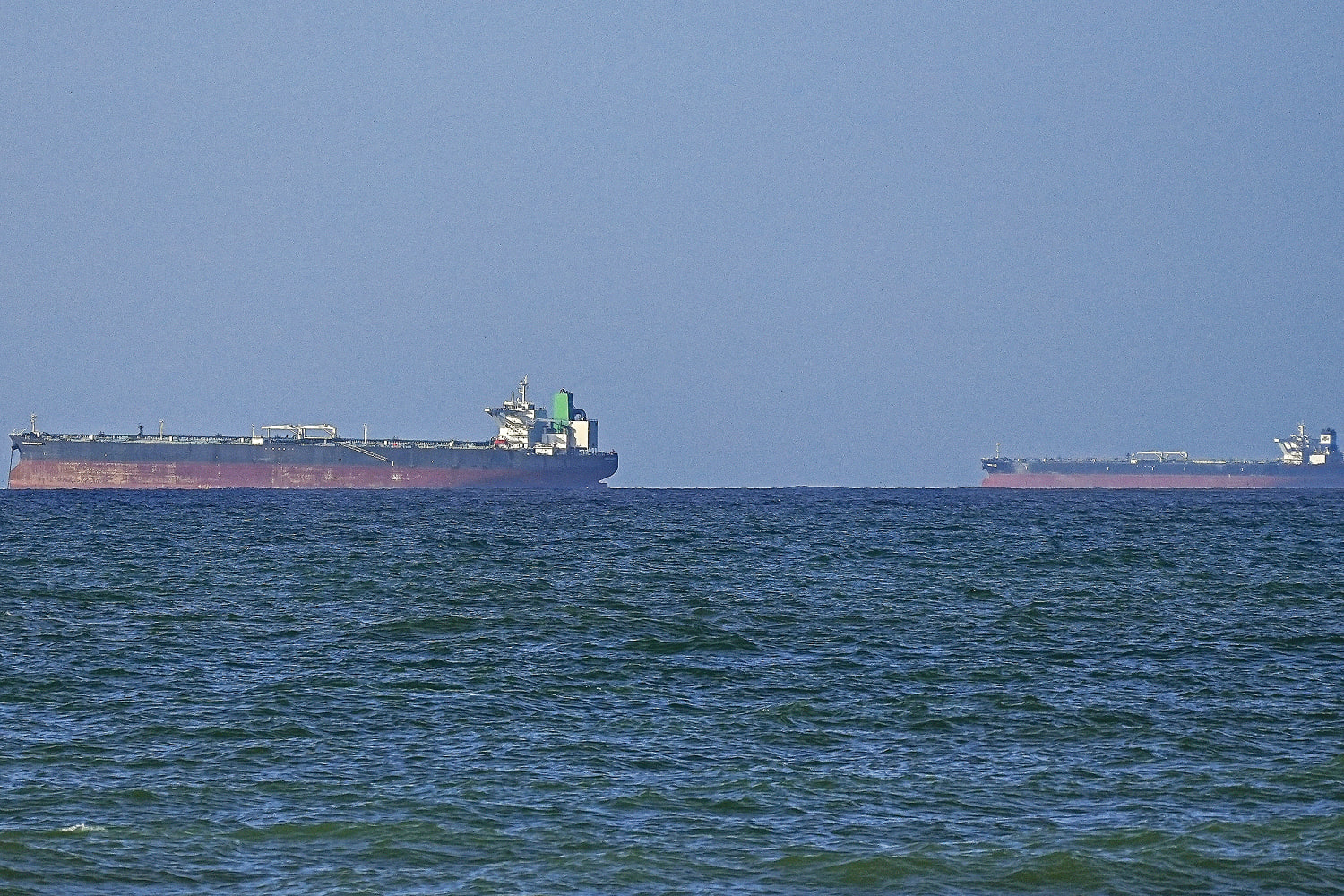
Ships trapped in the Persian Gulf “will be interested in leaving as soon as it is safe to do so,” said Jakob Larsen, chief safety and security officer at BIMCO, a leading organization for shipowners, charterers, brokers and agents. But the industry, he said, was awaiting “technical details from the U.S. and from Iran on how to transit the Strait of Hormuz safely.”Open or not?Iran has insisted that ships wanting to transit the strait must secure its permission and has suggested it retains the right to impose a fee for passage. The Iranian navy released a map late Wednesday indicating it may have mined the strait and outlining the designated shipping lanes vessels should use to transit safely. It directs outbound ships leaving the Persian Gulf along a route just south of Larak Island, while inbound vessels must follow a route north of the island — both closer to Iran’s mainland than the route often taken before the war. A large portion of the strait, marked in a rectangular box that also includes Oman’s territorial waters, is designated in the map as “hazardous.” Iran’s naval forces have issued a map identifying alternative shipping routes in the Strait of Hormuz in order to avoid sea mines.Islamic Republic of Iran Broadcasting via X / via X“We have to be very careful for the security and safety of tankers and vessels,” Saeed Khatibzadeh, the country’s deputy foreign minister, told ITV News in an interview published Thursday.This language from Tehran contrasted with that of American officials, who at one point insisted the strait had reopened.Frustrations are clear in the Gulf, whose economies are hugely dependent on the waterway and energy exports.“This moment requires courtlarity. So let’s be clear: the Strait of Hormuz is not open. Access is being restricted, conditioned and controlled,” Sultan Al Jaber, chief executive of Abu Dhabi’s national oil company and a United Arab Emirates government minister, said in a post on LinkedIn on Thursday.00:59Israeli strikes on Lebanon threaten U.S.-Iran ceasefire00:0000:00Meanwhile, French Foreign Minister Jean-Noël Barrot said the European Union and its partners were “finalizing” plans to set up a mission to escort ships.“Work is well advanced” for the mission to be deployed “once calm has been fully restored,” he told France Inter radio, though it was unclear how this mission might interact with Iran’s stance. Uncertainty and fear continued to scramble the global shipping industry on the second day of the truce.Chinese ships were among a long line of vessels waiting for clearance to leave the strait, said Muyu Xu, a Singapore-based analyst with Kpler. She said that the overall picture was still confusing and cited how last week Iran said it was accepting Chinese yuan as payment for transit, but then changed to a preference for cryptocurrency.Ships “don’t know whether they need to pay first, or they go past first and then Iran sends a bill? It’s just a lot of uncertainty,” she said.It was also unclear whether paying Iran could put shipping companies in violation of international sanctions. While President Donald Trump suggested in an interview with ABC News that the U.S. and Iran could establish a “joint venture” to charge tolls, U.S. allies in the Gulf and a succession of European leaders made clear Thursday there should be no tolls or restrictions on the critical shipping route. Europe is dependent on energy imports from the region. “Full restoration of freedom of movement in the Strait of Hormuz is needed, and it must not be subject to any restrictions,” said Italian Prime Minister Giorgia Meloni.Iran’s ‘tollbooth’ systemThe seemingly selective system for the passage of ships across the strait has been dubbed Iran’s “tollbooth” system, the legality of which was questioned by maritime law experts.“The charging of fees or tolls would be an extreme outlier and would set a dangerous precedent,” said John Stawpert, marine principal director at the International Chamber of Shipping. “The reopening of the Strait of Hormuz must respect maritime law and custom, and not restrict freedom of navigation and innocent passage through tolls,” he said.Iran has not ratified the United Nations Convention on the Law of the Sea (UNCLOS) guaranteeing the right to transit passage, however, which complicates the legal questions.“Iran is claiming a right to restrict traffic flow that contravenes its interests,” Mark Chadwick, a principal lecturer in law at Nottingham Trent University, said in an email. But he said it was “unclear what international law has to say about this, given its fragmentary and horizontal (consent-based) nature.”Commuters make their way past a billboard with a sentence reading ‘The Strait of Hormuz remains closed’ at the Enqelab Square in Tehran, on Sunday.AFP via Getty ImagesHe pointed to the Bosphorus Strait, where Turkey charges a toll of $5.83 per ton under a system that has global agreement.“If something similar were to be introduced in Hormuz, it would likely also require broad international agreement,” said Chadwick, who deemed it unlikely.It is also unclear how such a toll system would sit with Oman, which lies directly across the strait from Iran. Oman is a party to UNCLOS and is therefore obligated to allow uninterrupted transit through the strait. “Both the inbound as well as the outbound traffic in that particular area crosses the Omani territorial sea,” said Alexander Lott, a research professor at the Arctic University of Norway’s Norwegian Centre for the Law of the Sea.What about Oman?An arrangement that sees Iran splitting the collected toll with Oman is also highly unlikely, experts say. Oman is closely aligned with its Gulf neighbors, whom analysts view as determined to ensure the strait’s return to prewar status.“Oman simply doesn’t have a relationship with Iran that it would sacrifice the world for it,” said Mehran Haghirian, director of research and programmes at the Bourse & Bazaar Foundation, in a phone interview. “It will not put itself in danger with five of its most important partners in the GCC (Gulf Cooperation Council).”Vessels passing through the Strait of Hormuz on Wednesday.Shadi J. H. Alassar / Anadolu via Getty ImagesAll of this leaves the situation unresolved and difficult to predict for markets, firms and the legion of seamen and women on which the world relies.After weeks of haggling with authorities, Rex Pereira secured three emergency visas to leave the oil tanker where he had been stranded for over a month.The shipman embarked on Sunday for an over 48-hour journey that would take him from the Iraqi port where his vessel was anchored to Saudi Arabia and Kuwait, before finally meeting his wife and parents in his hometown of Mumbai. “The ships which are already stuck near the Strait of Hormuz, they just want to escape from there,” Pereira, 28, said. “Most of the seafarers, I feel they didn’t sign up for all this. They just want to be home,” he said.Jattvibe News previously reported on Pereira’s journey, which included witnessing an endless barrage of missiles flying overhead. He arrived home Tuesday. But many others like him, and the ships on which they’re stuck, are still waiting.