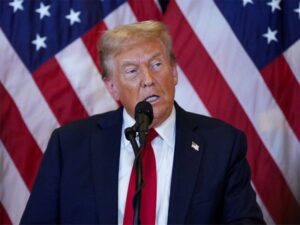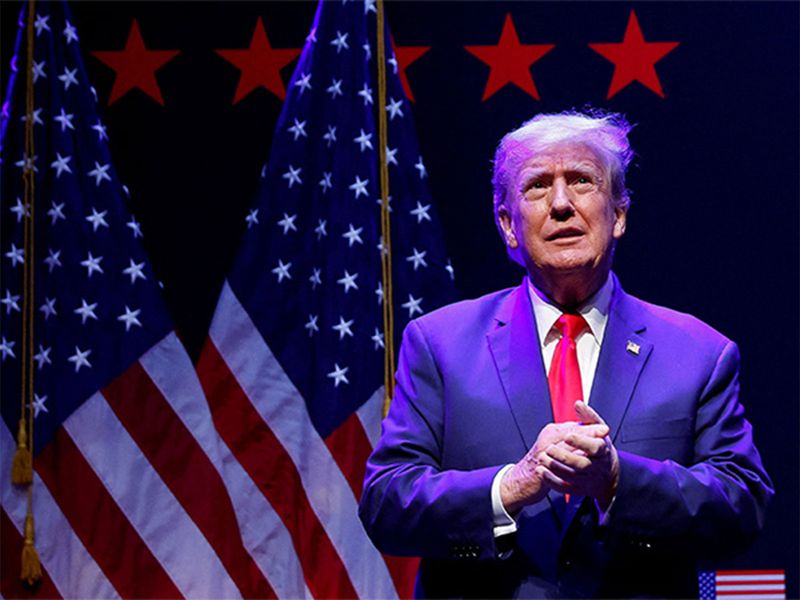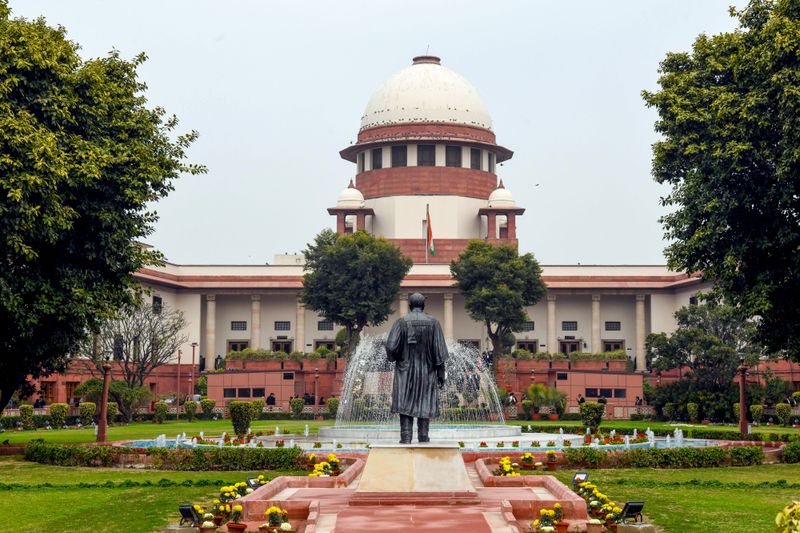
The Supreme Court’s decision to strike down many of President Donald Trump’s tariffs came as a relief to many small-business owners struggling under the weight of higher prices. But uncertainty still reigns as the administration pushes ahead with other kinds of tariffs and companies figure out if they will get refunds.“The administration framed these tariffs as strength,” Richard Trent, the executive director of Main Street Alliance, an organization which represents more than 30,000 U.S. small businesses, said in a statement to Jattvibe News. “What our members experienced was chaos. Rates jumping overnight. No phase in. No planning horizon.”Using national emergency powers, the Trump administration has collected more than $130 billion in tariff revenue — essentially a tax shouldered by American businesses and consumers. Trump unveiled the tariffs last April during what he called “Liberation Day,” which sent shock waves across the economy and markets, straining relationships with long-standing U.S. trade partners as some countries saw their tariff rates more than double.For many American businesses, it will be hard to reverse the effects of the levies.“The burden on our business has been substantial — leading to layoffs and halting all growth plans,” said Rick Muskat, president of New York-based shoe company Deer Stags Concepts. Andrea Englisis, president of New York-based distribution service Athenee Importers & Distributors, added she paid tariffs with money that would have gone to salaries. “If there was an announcement that tariffs would not be reimposed, I would look to hire for two open positions I have,” she said.That’s a big if. Even with the high court’s ruling, the administration could reimpose tariffs under different trade laws. Trump and Treasury Secretary Scott Bessent have already suggested those options exist. On Friday, Trump said he would implement a 10% global tariff under a different authority.“Nobody really expects tariffs to go away because of this decision,” Scott Lincicome, vice president of general economics at the libertarian Cato Institute, told Jattvibe News in a phone interview prior to the decision. “They’re just going to get replaced with other tariffs.”Lincicome said the broader economic impact of Friday’s decision may be more limited than it initially appears.“As much as I wish this were a silver bullet,” he said, “it just ain’t.”Refunds to the rescue?The Supreme Court did not directly spell out how potential refunds would be handled. Justice Brett Kavanaugh, as part of his dissent, noted the potential fiscal implications, writing, “The Court says nothing today about whether, and if so how, the Government should go about returning the billions of dollars that it has collected from importers.”Bessent said in a Sept. 7 interview on “Meet the Press” that if the administration lost at the Supreme Court, the government would be forced to issue refunds for about half the collected tariff revenue. For many businesses, that money could serve as a lifeline. “If tariff refunds were returned quickly, our first priority would be rehiring American workers,” said Sarah Wells, CEO and founder of the Virginia-based company Sarah Wells Bags. It’s a sentiment echoed by others. Melkon Khosrovian, co-founder of California-based Greenbar Distillery, said refunds would allow him to begin hiring again and provide more confidence in the outlook for his business.Meanwhile, Patrice Gerber, owner of California-based home decor company Kouboo, said she would roll back price increases her company imposed because of the tariffs — but only if refunds are granted and no new duties replace them. Still, some business owners caution that tariff refunds alone may not reverse broader economic damage.“Many U.S. consumers feel uncertain about their finances and consequently they are not buying as much, especially for discretionary expenses,” said Tom Wetzel, owner of Red Raven Games, a board game publishing company based in Utah.“When I say the damage cannot be refunded,” he continued, “I mean that our market has taken significant losses due to our customers’ job loss and inflation, and these issues would not be cured by a tariff refund.” That caution comes amid uneven economic conditions. While inflation has cooled overall, sticky costs in categories such as food and shelter persist, and recent hiring gains have been concentrated in just two sectors, elder care and construction, underscoring that fragile consumer mindset. “I had to raise my prices, but I just feel like with me raising them, it made customers not want to shop with me because my target demographic is Black audiences, Black women, who are being affected by layoffs, so that could contribute to it as well,” said 32-year-old Domonique Brown, who owns home decor, apparel and accesory brand Domoink in Pomona, California.‘Big win’ for farmersThe agriculture industry also welcomed the decision, albeit with a large degree of caution. “We appreciate the Court providing clarity on tariff authority. However, many family farmers and ranchers have already felt the consequences of this tariff agenda,” the National Farmers Union, an advocacy group, said in a statement. “We urge the administration not to pursue similar tariffs under other authorities, and we call on Congress to exercise its oversight role to ensure trade policy supports — not undermines — America’s family farmers and ranchers.”In December, the Trump administration announced a one-time, $12 billion “bridge payment” to American farmers “in response to temporary trade market disruptions and increased production costs.” At the time, the administration blamed those hardships on “disastrous” Biden-era policies that “resulted in record high input prices and zero new trade deals.”John Boyd Jr., president and founder of the National Black Farmers Association, celebrated the court’s Friday decision.“I got a big win,” he told Jattvibe News over the phone. “The Supreme Court is still the law of the land. And I think they got this one right.”Boyd said Trump’s tariffs drove up general input costs for his 1,600- acre farm in Virginia — including fertilizer, diesel and machinery parts — and hurt heavily produced commodities such as corn, wheat and soybeans by disrupting export relationships with major buyers like China.“We lost all of our export buyers in this country,” he said, adding that the industry as a whole lost close to $57 billion — nearly five times the administration’s December payout. If refunds are provided, he said, he would use the money to pay off outstanding bills.Still, Boyd cautioned, the ruling “doesn’t fix everything,” but he said that the decision sends an important message for the future. “This is a wake-up call to this president that you can’t run this country like the Wild, Wild West,” he said. “The damage has been done, but we still got to go forward in this country.”