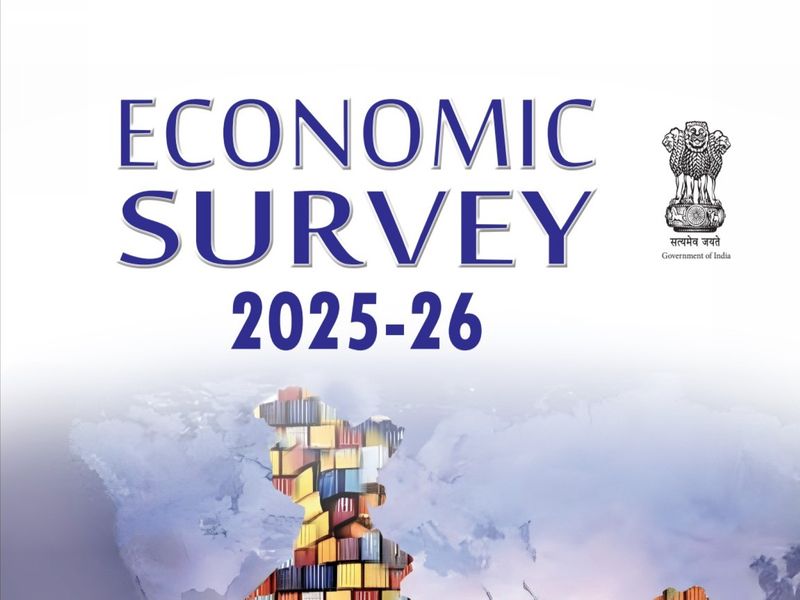

In an increasingly fragmented global system, India’s economic strategy must shift decisively towards a disciplined form of swadeshi to protect growth and self-reliance, the Economic Survey 2025-26 said.India must pursue its near-, medium- and long-term policy priorities of import substitution, strategic resilience and strategic indispensability simultaneously.The survey said the country is operating in an environment where access to inputs, technologies and markets can no longer be assumed to be frictionless or permanent. Export controls, technology-denial regimes, carbon border mechanisms and industrial policies in both the West and East signal the end of naïve globalisation. “In such circumstances, swadeshi becomes a defensive as well as offensive policy lever,” it said, adding that it is a means to ensure continuity of production in the face of external shocks and a pathway to building enduring national capabilities that reinforce economic sovereignty.Swadeshi must, however, be a disciplined strategy, as not all import substitution is feasible or desirable. “Protection without productivity-enhancing investment, capability upgrading and export orientation creates fragility rather than strength,” the survey said.Drawing on East Asian experience, the survey outlined the role of an entrepreneurial state in supporting this progression. Industrial policy, it said, has a far better chance of success when accompanied by institutional reforms, an outcome-oriented bureaucracy, tolerance for failure with learning (errors are acceptable; stagnation is not) and credible withdrawal of support, where exit is as important as entry.Prime Minister Narendra Modi has repeatedly urged the public and business community to embrace swadeshi. To reduce India’s reliance on imports from countries such as China, the government has launched several initiatives to promote indigenous production.The survey further framed a progression from swadeshi to strategic resilience to strategic indispensability, in which intelligent import substitution invests in national strength and ultimately embeds India in global systems, so that the world moves from “thinking about buying Indian” to “buying Indian without thinking”.