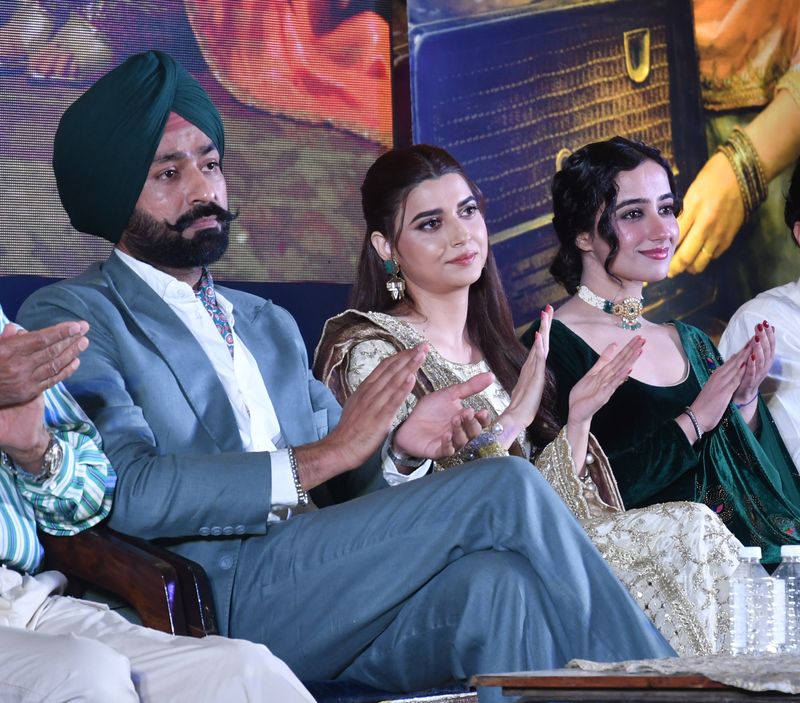

Rabb Da Radio 3 arrives as a heartfelt continuation of a beloved Punjabi franchise, bringing together Tarsem Jassar, Nimrat Khaira and Ronak Joshi in a story that blends emotion, culture and social reflection. At the trailer launch on Wednesday at Chandigarh, the film’s cast and creators offered a glimpse into the long journey behind the project.For Tarsem, the film carries deep personal resonance. Reflecting on the franchise, he shared, “The first song, the first win, the first love — that feeling never really goes away. I stepped into the film industry with Rabb Da Radio, so it will always be special. Even with Rabb Da Radio 3, it feels like that first moment all over again.”He also highlighted the time and dedication behind the story, “We worked on this script for three-and-a-half years. At times we felt it needed more; at others, we stepped back — but we wanted to ensure it felt honest.”Nimrat described her experience as both emotional and fulfilling, emphasising her connection to the narrative. “I’m very happy to be part of such a beautiful story,” she said. “I promise that every emotion you see in this film comes straight from the heart.” She also praised the collaborative environment on set, calling it an honour to work with a team so committed to authenticity.Ronak spoke candidly about joining the film, admitting she initially felt nervous stepping into such a well-regarded franchise. “Being part of Rabb Da Radio 3 feels like a blessing. On set, I learned so much from Nimrat di,” she said. Nimrat and Ronak play sisters who become devrani-jethani (sisters-in-law) caught in family tension. Highlighting the film’s deeper cultural significance, Ronak added, “This is not just a story — it’s the soil of Punjab, its language, its bonds. That’s what makes it special.”Writer Jass Grewal and director Harry Bhatti emphasised the importance of creative freedom in shaping the narrative. “For any writer or filmmaker, it’s essential to have the freedom to give your hundred per cent,” they noted. “We were fortunate to have producers who trusted us and allowed us to tell the story the way it needed to be told.”Speaking about the film’s thematic core, Jass added, “Punjabiyat is not something you simply write — it’s something you feel. That spirit drives this story.” Staying true to its theme, the film was shot in the winter. With sun playing hooky, some scenes took two to three days to complete, yet the team remained undeterred.Actor Malkeet Rauni spoke passionately about the film’s message, “A family that respects its members thrives. Today, we are slowly losing respect — for our language, our culture, even for one another. This film reminds us why those values matter.”Quoting celebrated writer Surjit Patar — ‘Mai Raahan te nahi turda, main turda haan ta raah ban de’ — he likened the team’s effort to forging a new path in Punjabi cinema.Reflecting on his own journey, Tarsem added, “Debuting with a film like Rabb Da Radio could have been the worst commercial decision, but it felt right. I was quite inexperienced back in 2017 — it was as if the story was written for me, and I didn’t have to act much.”The title Rabb Da Radio itself is symbolic — representing an unseen, constant connection between human emotions and a higher truth. The film suggests that life is tuned to a deeper frequency, guided by a divine presence, and the third part aims to stay even truer to that emotion and spirit of Punjabiyat.The second instalment went on to win a National Award, a milestone the team views as a significant achievement and has pushed the team to take their work even more seriously. Tarsem also acknowledged the responsibility of filmmakers in today’s competitive landscape, “Our films now release alongside big-budget Hollywood productions made on massive budgets. If audiences are paying the same ticket price, it’s on us to deliver that value — and we’ve tried our best to do that.”Rabb Da Radio 3 is set to hit cinemas on April 3.